Start-Stop System Acting Up? Here’s What I See in the Shop
Alright, so your car’s start-stop system isn’t kicking in anymore. Before you panic and assume it’s a major breakdown, let me tell you what I’ve learned over 25 years in this business: in most cases, it’s actually working exactly as it should. It’s just disabling itself. Think of it as a smart kid who knows when to sit out a game.
The powertrain control module (PCM) — that’s your car’s brain — it’s constantly monitoring dozens of conditions. We’re talking everything from battery charge to cabin temperature. If even one of those parameters isn’t just right, the system says “Nope, not today,” and stays off. You might see a grayed-out ECO icon on your dash, or a message like “start-stop not available,” or a specific warning light. I’ve seen them all.
Here’s the critical takeaway:
When this system disables itself, your engine and transmission aren’t in any immediate danger. It’s a built-in safety mechanism, not a sign of mechanical failure. But — and this is a big “but” — you shouldn’t just ignore it. More often than not, the root cause is tied to your vehicle’s electrical system. We’re talking the battery, or that intelligent battery sensor (IBS) that’s always giving me grief. If you leave it, you’re looking at a potential no-start situation down the road. So, it’s not just about saving a few drops of fuel; it’s about catching early signs of a weakening charging system before it leaves you stranded.
My Approach to Diagnosing Start-Stop Issues
When a car rolls into my bay with a start-stop complaint, I don’t start guessing. That’s a waste of time and money. My first move is always to understand what the vehicle’s computer is actually seeing. This system is smart, it’s evaluating real-time data from a bunch of different modules:
-
Battery state of charge (SOC) and overall voltage stability.
-
Engine coolant temperature.
-
Cabin climate demands (is the A/C blasting? Defrost on?).
-
Brake pedal input and steering angle.
-
Even whether the doors are closed or the seatbelt is buckled.
Every single one of these has to be within factory specifications before the system will allow an auto-stop. If it’s not, it’s a no-go.
Now, here’s where a lot of DIYers hit a wall: a basic OBD2 code reader just isn’t going to cut it. You need a professional-grade diagnostic scan tool. I’m talking about something that can read live parameters from the body control module (BCM), the battery energy management (BEM) system, or the PCM. Without that, you’re just swapping parts blind, and I’ve seen too many people throw hundreds of dollars at a problem they could have diagnosed in minutes with the right tool.
To help you narrow things down, I’ve put together a little table based on what I typically see. It’s a good starting point for figuring out where to focus your diagnostic efforts:
| Symptom / DTC | Likely in Start-Stop System | Common External Mimics | Definitive Test to Confirm Source |
|---|---|---|---|
| System Inactive, No DTCs | Failed system-specific component (e.g., intelligent battery sensor) or unmet prerequisite (e.g., low SOC on auxiliary battery). | General vehicle state (A/C demand, defrost on, steering angle, door ajar). |
Connect a professional-grade scan tool. Monitor all Start-Stop enabling parameters in live data. Verify each prerequisite against factory specs. |
| System Inactive with Start-Stop Related DTC | Fault in the system’s dedicated electrical circuit or component. | Generic charging system fault or network communication error. |
Perform bidirectional control of the system’s actuators with the scan tool. Test circuit integrity with a digital multimeter at the component connector. |
| System Inactive with Generic Battery/Charging DTC | Failure of the Intelligent Battery Sensor (IBS) or the auxiliary battery itself. | Failure of the main 12V battery, alternator, or main charging cables. |
Load test the auxiliary battery. Test the IBS for power, ground, and data line signal with a multimeter. |
Honestly, the real diagnostic key is that live data. If all those monitored parameters show “Ready” and the system still won’t engage, then you’re likely looking at a failed component or a communication issue within the system itself. But if even one parameter says “Not Ready,” that’s your starting point. Focus there — don’t even think about replacing parts until you’ve chased down that specific “Not Ready” condition.
The Usual Suspects: What Actually Fails
Once you’ve ruled out all the normal reasons the system might inhibit itself (like the A/C being on full blast or the engine not being warm enough), the actual hardware failures usually boil down to a few key components. Here’s what I typically find:
-
Intelligent Battery Sensor (IBS): This little guy is usually mounted right on the negative battery terminal. Its job is to constantly report voltage, current, and temperature back to the BEM system. If its internal circuits fail or it loses communication, the system gets bad data and just disables itself. I honestly see more IBS failures than most people expect — especially on vehicles that have a lot of electrical accessories or those that make frequent short trips.
-
Auxiliary AGM Battery: A lot of systems, like Ford’s Auto Start-Stop or GM’s Auto Stop, use a secondary battery. This smaller AGM unit (often tucked away in the trunk or under a seat) is there to power accessories like your HVAC blower during those engine-off periods. These batteries degrade over time, just like your main battery, especially if they’re regularly deeply discharged. When they lose capacity, the system won’t engage.
-
Enhanced Starter Motor: These aren’t your grandpa’s starters. They’re built to handle three to five times more start cycles. But even with that, they wear out. I’ve seen solenoid issues, brush wear, or bearing failures. When that happens, the PCM sees it can’t guarantee a reliable restart, so it disables auto-stop as a precaution. Smart, really.
-
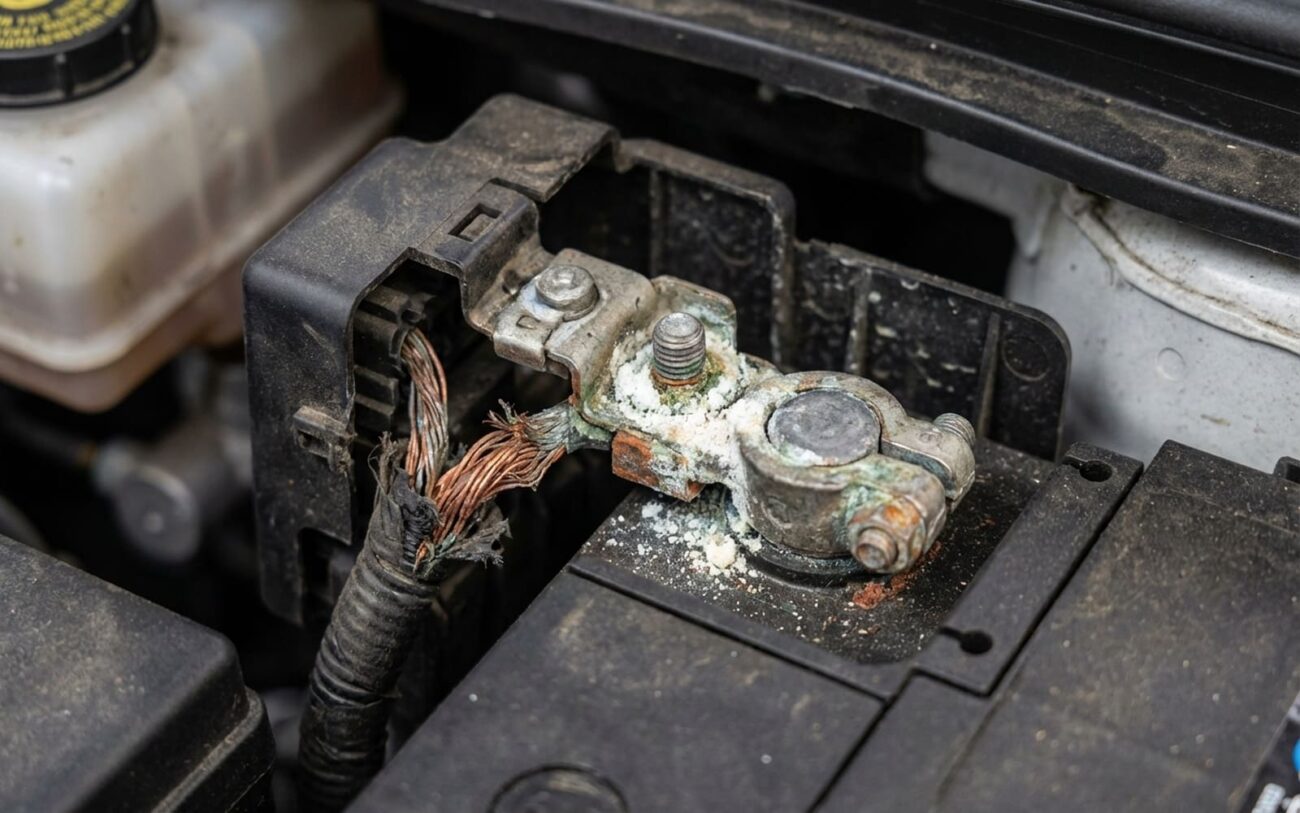
Wiring and Connectors: Don’t overlook the simple stuff. Corrosion, loose pins, or damaged harnesses can interrupt critical signals. I’ve seen it, especially around the auxiliary battery fuse block. For example, some 2017–2020 Chrysler Pacifica Hybrids had known issues with connector corrosion at the auxiliary battery, leading to intermittent start-stop faults. While there are specific technical service bulletins (TSBs) for those, similar connector problems can pop up in any vehicle with a dual-battery setup.
It’s really important to draw a clear line between a specific start-stop system failure and a general vehicle issue. A weak main 12V battery or a failing alternator isn’t a “start-stop system failure” — it’s a broader charging system problem that simply causes the start-stop system to disable itself. Always test the entire electrical system before you go assuming some rare, expensive component is at fault.
How I Fix It: From Quick Swaps to Major Jobs
[DIY-FEASIBLE] Auxiliary Battery Replacement
[DIY-FEASIBLE] Intelligent Battery Sensor (IBS) Replacement
[PROFESSIONAL-ONLY] Enhanced Starter Motor Replacement
I label this one “professional-only” for a reason. Starters are often buried deep under intake manifolds or tucked right up against the transmission bellhousing. Access is usually tight, and the bolts are frequently torque-to-yield, meaning they stretch and need to be replaced, or they require very specific tightening angles. You’ll need a full set of metric sockets, a long breaker bar, and a torque wrench with an angle gauge. Some applications, like certain BMW EfficientDynamics or Mercedes-Benz ECO Start/Stop models, require precise torque specs followed by an additional rotational angle — get it wrong, and that starter could loosen or fail catastrophically. Plus, many systems require a post-replacement relearn procedure via a scan tool. This isn’t a job for the driveway mechanic.
[TEMPORARY] Recharge and Reset
How I Confirm the Repair Actually Worked
Never, ever assume the system is fixed just because you replaced a part. That’s a rookie mistake. Validation requires two things: your scan tool and a real-world test drive. After replacing something like the auxiliary battery or IBS, I’ll drive the vehicle for at least 15 minutes under mixed conditions — city and highway. While I’m driving, I’m monitoring live data: the battery SOC should be rising and staying above 75%, and all those start-stop enabling conditions should now show “Ready.” Then, at the next few stops, the engine should shut off automatically and restart smoothly. That’s how you know it’s right.
For an enhanced starter replacement, the test is a bit simpler: the engine should crank quickly and consistently, and the start-stop system should function across multiple stops without hesitation. If it hesitates or skips stops, you’re going right back to the live data — something’s still not meeting the criteria. That same diagnostic scan tool you used for diagnosis is absolutely essential for final verification. Without it, you’re just guessing, and that’s not how we do things in my shop.
What’s This Going to Cost, and Is It Even Worth It?
Costs are always going to vary by vehicle and how much of a pain it is to get to the part, but here’s a realistic breakdown based on what I see:
| Repair Type | DIY Cost (Parts) | Shop Cost (Est.) | Success Rate | Secondary Risk if Failed |
|---|---|---|---|---|
| Auxiliary Battery | $150–$300 | $350–$500 | High (when properly registered) | Unregistered battery leads to improper charging and premature failure. |
| IBS | $80–$150 | $200–$350 | High | Incorrect installation or failed calibration can cause parasitic drain or false SOC readings. |
| Enhanced Starter | $250–$600 | $600–$1,200 | High | Improper torque or missing relearn can cause starter damage or no-restart events. |
When you’re weighing whether to fix it, you really have to consider the vehicle’s age and overall value. If you’re looking at $1,000+ in labor for a starter on a 10-year-old car, it might honestly make more sense to just disable the system permanently. Some technicians can reprogram the PCM to ignore those start-stop conditions using a high-end scan tool. Now, this might affect resale value since those ECO features are often advertised. Still, for drivers who couldn’t care less about the tiny bit of fuel savings, it’s a practical economic decision.
Keeping It Working in the Future
Prevention starts with understanding one simple fact: start-stop systems are completely dependent on a healthy, well-maintained electrical system. The biggest threat I see? Chronic undercharging. Those AGM batteries don’t handle deep discharges well at all. If you’re mostly just driving short distances, your alternator never gets a chance to reach full output, and the battery never fully recovers. Over time, that degrades the battery and, eventually, triggers the system to disable itself.
Here’s what I recommend to my customers:
-
If your car sits for long periods, or you only do short trips, use a smart battery maintainer. Make sure it’s designed for AGM batteries.
-
Take occasional longer drives — 30 minutes or more — to give the alternator a chance to fully charge everything up and allow the system to relearn.
-
Keep an eye on your vehicle’s information display. If it says “Battery Charging” or “Start-Stop Not Available Due to Battery,” act early. Don’t wait for a fault code to pop up.
-
During routine maintenance, especially if you’ve noticed reduced system activity in extreme temperatures, ask your tech to check the IBS data with a scan tool.
