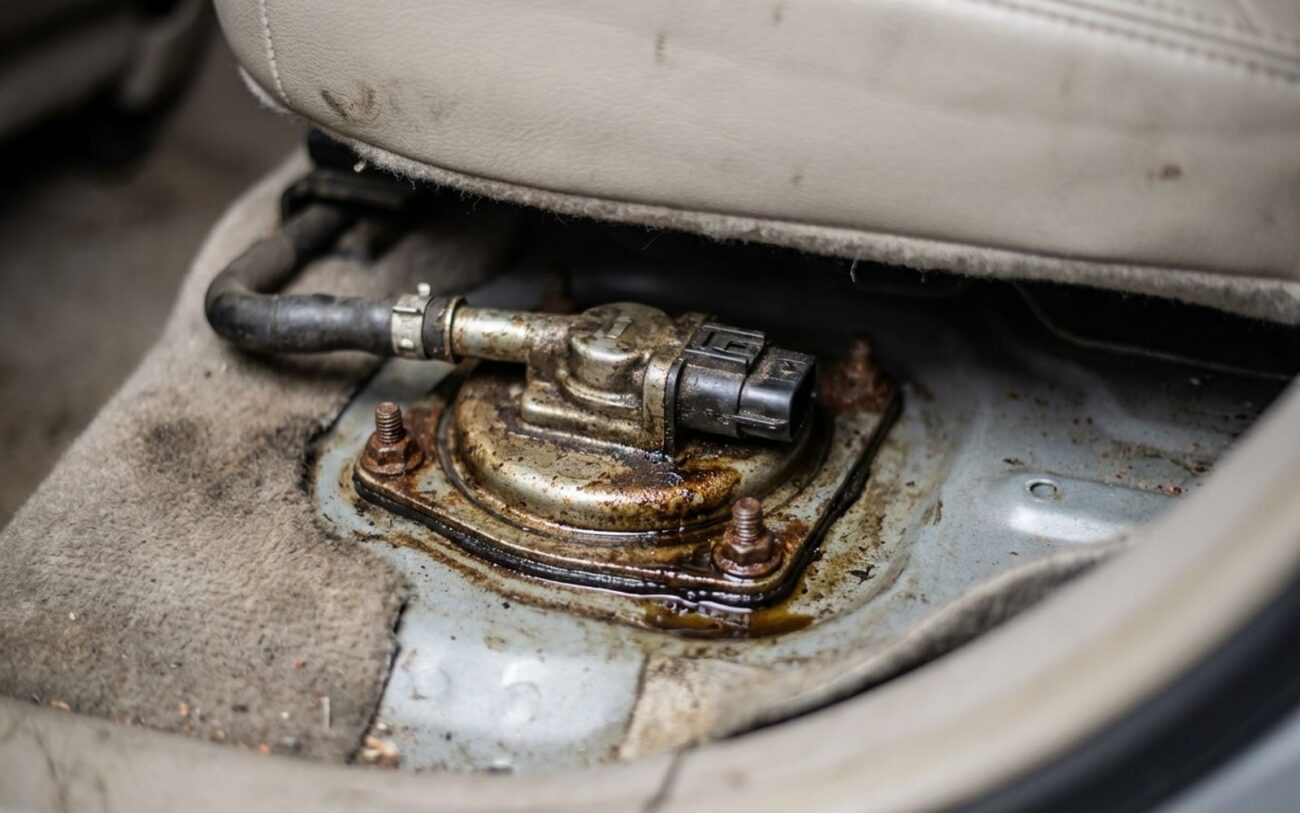
Listen up. When you turn that key, you hear a quick, low hum from under the back seat, right? That’s your fuel pump doing its job—priming the system, building pressure so the engine fires right up. It should last a second or two, then go quiet. That’s normal. But if that hum changes, if it turns into a constant whine, gets louder when you hit the gas, or just won’t shut up after the engine starts… well, then your fuel pump is trying to tell you something, and it ain’t good news.
I’ve heard that noise thousands of times in my 25+ years in the shop. It’s the sound of a pump on its last legs, its internal parts wearing out, fighting to keep up. A healthy pump is a quiet pump once it’s done priming. A noisy one? It’s struggling to maintain proper pressure and flow, and it’s only a matter of time before it quits altogether. And when it quits, it usually leaves you stranded.
Is It Really the Fuel Pump? Don’t Guess.
Alright, so you’ve got a suspicious hum. Before you go dropping a fuel tank or shelling out hundreds for a new pump assembly, you absolutely have to confirm the source. Trust me, I’ve seen it too many times: a customer comes in, or even another tech, who’s already replaced the pump only to find the real problem was something else entirely—a noisy alternator bearing, a loose heat shield, or even a failing EVAP component. That’s wasted time, wasted money, and a frustrated customer. We verify first.
Here’s a quick breakdown of common symptoms, what they usually point to with the fuel pump, and more importantly, what else could be making that noise. And then, how to actually test it.
| Symptom | Likely Fuel Pump Cause | Common Mimics (Don’t Get Fooled!) | My Go-To Test to Confirm |
|---|---|---|---|
| Constant hum with key ON, engine OFF | Normal prime cycle extended, or a worn motor struggling to build pressure. | EVAP system solenoids (they click and buzz), fuel level sender motor, even a faulty relay. |
Grab your mechanic’s stethoscope. Pinpoint the noise at the fuel pump access panel (if you have one). Then, disconnect the pump’s electrical connector. If the noise stops instantly, you’re on the right track. But first, always check for proper power and ground at that connector with a multimeter. A bad connection can make a good pump sound bad. |
| Humming changes with engine load or RPM | Motor struggling due to internal wear, a partially clogged inlet strainer, or voltage drop under load. | Alternator bearing whine, power steering pump, transmission pump, even a loose belt. |
Connect a reliable fuel pressure gauge to the rail test port. Watch that pressure at idle, then give it some rapid throttle blips. If the pressure drops more than 10 psi below spec while that noise gets louder, you’ve got insufficient fuel delivery. That’s a strong indicator of a failing pump. |
| Noise accompanied by hesitation, hard starting, or stalling | Worn motor or impeller can’t maintain consistent fuel volume or pressure. | Clogged fuel filter (if equipped), failing fuel pressure regulator, restricted fuel line, even dirty injectors. |
This is where a fuel volume test comes in. Disconnect the fuel line at the rail, route it into a graduated container, and activate the pump for about 15 seconds (using an OBD2 tool or a jumper wire at the relay). Compare that output to the factory spec—most vehicles need at least a pint (16 oz) in that time. Low volume combined with that whining noise? That pump is definitely on its way out. |
And don’t forget the electrical side of things. I’ve seen plenty of weird issues caused by components around the pump. On many Ford and Lincoln models, for example, there’s a Fuel Pump Driver Module (FPDM) mounted near the tank. If that module fails, or its connector gets corroded (which is pretty common, especially in salt-belt states), it can cause buzzing, erratic pump speed, or even a complete shutdown. Same goes for a degraded fuel pump control module in other vehicles; inconsistent voltage will make the pump cycle abnormally or whine. Always check voltage drops and grounds.
Sometimes, it’s not even a fuel system component. A loose heat shield, a fatigued fuel tank strap, or even an in-line secondary pump (you’ll see these on some diesels and performance vehicles) can create sounds that echo through the chassis, making it sound exactly like an in-tank issue. That’s why isolating the noise source with a stethoscope is so critical before you commit to any major repair.
Why Fuel Pumps Give Up (and Get Noisy)
A fuel pump is a pretty simple device at its core: an electric motor spinning an impeller inside the fuel tank, pushing fuel under pressure to the engine. They’re designed to last a long time—100,000 miles or more, typically. But the real world is tough on parts, and I’ve seen plenty fail much sooner. There are three main reasons these pumps start acting up and making noise.
1. Mechanical Wear: The Grind of Daily Use
Inside that sealed motor, you’ve got carbon brushes and a commutator. Over time, they just wear down. Think of it like brake pads, but for an electric motor. As they wear, resistance goes up, the motor draws more current, and it starts running hotter and, you guessed it, noisier. The armature bearings can also degrade, allowing the rotor to wobble a bit. That’s what often creates that distinct high-pitched whine you hear, especially when you accelerate and the pump is working harder.
2. Contamination: The Silent Killer
This one’s insidious. Rust, sediment, or varnish from old, stale, or low-quality fuel can wreak havoc. It clogs the pump’s inlet strainer (that little sock filter), or worse, scores the impeller and its housing. Even a tiny restriction means the motor has to work overtime, increasing noise and dropping fuel flow. That filter sock is your first line of defense, but it’s small and can get overwhelmed pretty quickly if your tank is dirty or you’re running on fumes a lot.
3. Thermal Stress: Running on Empty
Here’s a big one that most people don’t think about: heat. The fuel itself actually cools the pump motor. If you consistently run your tank below a quarter full, that pump isn’t fully submerged in fuel. It runs hotter than it was designed to. Over time, that heat degrades the motor windings, insulation, and internal seals. I’ve pulled pumps from vehicles that were always run on empty, and you could see melted plastic components and cooked wiring. Clear signs of chronic overheating, and a surefire way to shorten a pump’s life.
One other thing that doesn’t usually make noise, but is a common failure point, is the internal check valve. Its job is to hold pressure in the fuel line when the engine is off. If it fails, fuel drains back into the tank. You won’t hear a whine, but you’ll get long cranking times, especially after the car sits overnight, because the pump has to re-prime the entire system from scratch.
Okay, It’s the Pump. Now What? Your Repair Options.
Once you’ve confirmed the fuel pump is the culprit, you’ve got a few ways to go. In my experience, there’s usually only one right way.
Replace the Entire Fuel Pump Assembly My Strong Recommendation
This is the proper fix for most vehicles, and honestly, it’s the only one I recommend in my shop. Modern fuel pumps are almost always sold as complete assemblies. That means you get the motor, the fuel level sender, the strainer (sock), and usually a new tank seal and locking ring all in one unit. Replacing the whole thing at once avoids future headaches with a faulty fuel gauge or a leaky seal. It’s a job that’s [DIY-FEASIBLE with strict safety precautions] if you’re mechanically inclined.
Here’s what you’ll need:
- A high-quality OEM or reputable aftermarket fuel pump module. Don’t cheap out here.
- Fuel line disconnect tools (they’re specific to your vehicle’s quick-connect fittings).
- A good trim removal tool set and a socket set.
- New locking ring and tank seal (even if included, double-check quality).
- Crucial safety gear: Gloves, eye protection, and a fire extinguisher within arm’s reach. You’re dealing with highly flammable fuel.
My Procedure (General Steps):
- Depressurize the fuel system. This is critical. You can usually do this by cycling the key a few times without starting, then pulling the fuel pump fuse/relay and running the engine until it dies. Or, if your vehicle has one, use the Schrader valve on the fuel rail.
- Locate the access panel, usually under the rear seat or in the trunk. If there isn’t one, you’re dropping the fuel tank, which is a much bigger job and often best left to a pro.
- Disconnect the electrical connector and all fuel lines. Use the correct disconnect tools—don’t try to pry them off, you’ll just break something.
- Remove the locking ring. This often requires a special fuel tank wrench or a brass punch and hammer. Be careful not to damage the plastic tank flange.
- Carefully lift out the old assembly. Pay attention to the float arm position so you can install the new one correctly. Watch for any debris falling into the tank.
- Install the new unit. Make sure the new tank seal is perfectly seated and the float arm moves freely without obstruction.
- Reassemble the locking ring, torquing it to factory specifications (usually somewhere between 35–50 in-lbs, but check your service manual).
- Reconnect everything. Double-check all connections before you even think about turning the key.
If you have to drop the tank, that’s significantly more labor and risk. Always inspect the tank interior for any debris, rust, or contamination before putting the new pump in. You don’t want to ruin a new pump right away.
Replacing Just the Pump Motor (Inside the Assembly) Almost Never Worth It
This is labeled [PROFESSIONAL-ONLY or advanced DIY], but honestly, I rarely do it. It involves disassembling the entire sender assembly to swap out just the electric motor. Yes, the parts are cheaper, but the risks are high. The fuel level sender unit is delicate, and properly resealing the housing is incredibly difficult. A poor seal can lead to dangerous fuel leaks, inaccurate fuel gauge readings, or even vapor leaks that trigger a check engine light. Unless the manufacturer specifically sells the pump as a standalone service part (which is rare these days), you’re gambling with a critical safety component. I’ve seen more problems created this way than solved.
Fuel Additives Temporary / Last-Resort Gamble
Some folks try a concentrated fuel system cleaner, like Techron or ISO-HEET, hoping it’ll dissolve varnish and quiet a noisy pump. I’ll be honest: in my career, I’ve seen it work maybe once or twice, and even then, it was temporary. More often, it makes things worse. This is a [TEMPORARY / LAST-RESORT] solution at best. The cleaner can dislodge accumulated debris that then clogs the inlet strainer overnight, leading to sudden, complete fuel starvation. Plus, it does absolutely nothing for worn bearings, degraded brushes, or actual electrical faults. Use it only if you’re absolutely desperate to get a few more miles out of it while you’re waiting for the real repair parts to arrive, and understand you’re taking a risk.
Don’t Just Assume It’s Fixed: Verify the Repair
Alright, new pump’s in, everything’s buttoned up. Don’t just assume it’s fixed because the noise is gone. You’ve got to validate that repair, or you might find yourself back at square one (or worse, stranded again). Here’s my checklist:
-
Listen to that prime cycle again: Turn the key to “on,” but don’t start it. You should hear that brief, healthy 1–2 second hum from the rear, then silence. No sustained whine, no gurgling, just a quick, clean prime.
-
Check the fuel pressure: Connect your mechanical gauge to the fuel rail test port. Pressure needs to be spot-on to factory specifications at idle, and it needs to hold steady under load. For many direct injection engines, you’re looking at 55–62 psi. Give the throttle a few quick snaps—the pressure should rise and stabilize quickly without dropping out.
-
Monitor with a scan tool (if you have one): If your vehicle has an OBD2 fuel pressure PID, watch it in real-time while driving. This is great for catching intermittent drops that a static gauge test might miss.
-
Perform a thorough leak check: With the system pressurized (key on, engine off), inspect all connections around the tank and fuel lines for at least two minutes. Look for any drips, seepage, or wetness. And don’t forget to smell inside the cabin for any fuel odor—that’s a dead giveaway for a vapor leak or a poorly seated tank seal.
-
Take it for a good test drive: Accelerate firmly, cruise at various speeds, and let it idle. You’re looking for no hesitation, no stalling, and definitely no return of that dreaded noise.
If you’re still seeing low or fluctuating pressure, or any other issues, don’t just throw your hands up. Go back and double-check everything: electrical connections, the condition of any inline fuel filters, and pump voltage. A failing fuel pump relay, even a new one, or a clogged inline filter can absolutely mimic pump issues, even after you’ve put in a brand-new pump.
What’s This Going to Cost? And Is It Worth It?
Money talks, right? Here’s a general idea of what you can expect to pay for a fuel pump repair, both if you DIY or take it to a shop. Keep in mind these are averages, and your specific vehicle or region might vary.
| Repair Type | DIY Cost (Parts Only) | Shop Cost (Parts & Labor) | My Success Rate Expectation | Major Risk if the Repair Fails |
|---|---|---|---|---|
| Complete in-tank assembly replacement | $150–$400 | $500–$1,000 | 95%+ (if done right) | Fuel leak, no-start, damaged fuel sender, fire hazard (serious stuff) |
| Pump-only replacement (within assembly) | $80–$200 | Rarely offered by reputable shops | ~70% (and that’s being generous) | In-tank fuel leak, premature failure of new pump, erratic fuel gauge, check engine light for EVAP issues |
Here’s my personal rule of thumb: if the repair cost is going to eat up more than 40% of what that car is actually worth to you as a running vehicle, you really need to weigh your options. A $900 fuel pump job on a $2,000 car might get it running again, but it’s a significant financial risk, especially if there are other big repairs looming. Think about the vehicle’s overall reliability, its age, and what other maintenance it needs. Sometimes, the smartest move, as hard as it is, is to put that money towards a different, more reliable vehicle.
Want Your Next Pump to Last? Here’s How.
Nobody wants to replace a fuel pump twice. So, once you’ve got a new one in there, here are a few simple habits that, in my experience, will significantly extend its life:
My Top Tips for Fuel Pump Longevity:
-
Keep that tank above 1/4 full: This is probably the biggest one. Remember, the fuel cools the pump. I’ve seen pumps in cars that are regularly run low fail 30-50% sooner than those that are consistently kept above half a tank. It’s cheap insurance.
-
Use Top Tier gasoline: It’s not just marketing. These fuels have better detergent additives that help prevent varnish and carbon buildup throughout the entire fuel system, including on the pump’s internals.
-
Listen to your car: Make it a habit. When you turn the key, just pay attention to that prime cycle. Any change in tone, duration, or volume is your earliest warning sign that something might be brewing.
-
Replace the fuel filter on schedule: Not every car has an external, serviceable fuel filter anymore, but if yours does, don’t ignore it. A clogged filter forces the pump to work much harder, shortening its life.
-
Avoid contaminated fuel: Stick to reputable gas stations. Water, dirt, or other debris in your tank can absolutely destroy a fuel pump in short order.
And a final note for those of you with hybrids or start-stop vehicles: fuel system activity can be a bit less predictable. A failing fuel pump might be masked by other drivetrain issues, so it’s extra important to understand how to distinguish engine problems from hybrid system faults in those cases.
