Flickering xenon headlights on startup? That’s not “just how they are.” I’ve torn into hundreds of these systems—mostly on Audi, BMW, and Lexus—and let me tell you: that flicker is a symptom, not a feature. It’s your HID system telling you something’s breaking. Ignore it, and you’ll end up replacing both the bulb and ballast, maybe even fighting electrical gremlins down the line.
What the Flicker Actually Means
If the light stutters for a second or two, then snaps on bright and stays steady? That’s a ballast struggling to fire the bulb. The ballast’s job is to take 12 volts and kick out 20,000+ to ignite the xenon gas. When its internal capacitors weaken (and they will, especially in hot engine bays), that surge gets weak or delayed. You see flicker. You see hesitation. But once it lights, it runs fine—because the regulation circuit is still holding.
If the flicker happens after warm-up, or the light pulses, dims, or looks pinkish? That’s the bulb. Electrodes wear down. Tungsten flakes off and coats the inside of the quartz tube. Gas mixture degrades. The arc wobbles. Color shifts. Light output drops. I’ve seen bulbs that looked fine from the outside but were throwing 30% less light than spec.
And here’s what most shops miss: one failing part kills the other. A weak bulb demands more voltage to start. That overworks the ballast. A failing ballast sends erratic current. That fries a good bulb. Replace one without checking the other, and you’re just buying time.
How I Diagnose It (No Guessing)
You don’t throw parts at this. Ballasts run $100–300. Bulbs are $75–250 each. You can’t afford to be wrong. So I use the swap test. It’s fast, definitive, and works on any dual-HID setup.
If the flicker is on startup only: swap the ballast to the good side. If the problem moves, it’s the ballast. If it stays, swap the bulb. I do this even if the bulb looks okay—because internal degradation isn’t always visible.
No light at all? Start simple. Check the fuse. Then verify 12V at the ballast input with a multimeter (key on). No power? Could be a wiring fault, bad ground, or even a failing headlight control module. I once had a BMW 5 Series come in with “dead headlights” and it turned out the LIN bus signal from the BCM was dropping out. Point is: don’t assume it’s the bulb or ballast until you’ve ruled out power.
Why These Things Fail (And How to Not Repeat It)
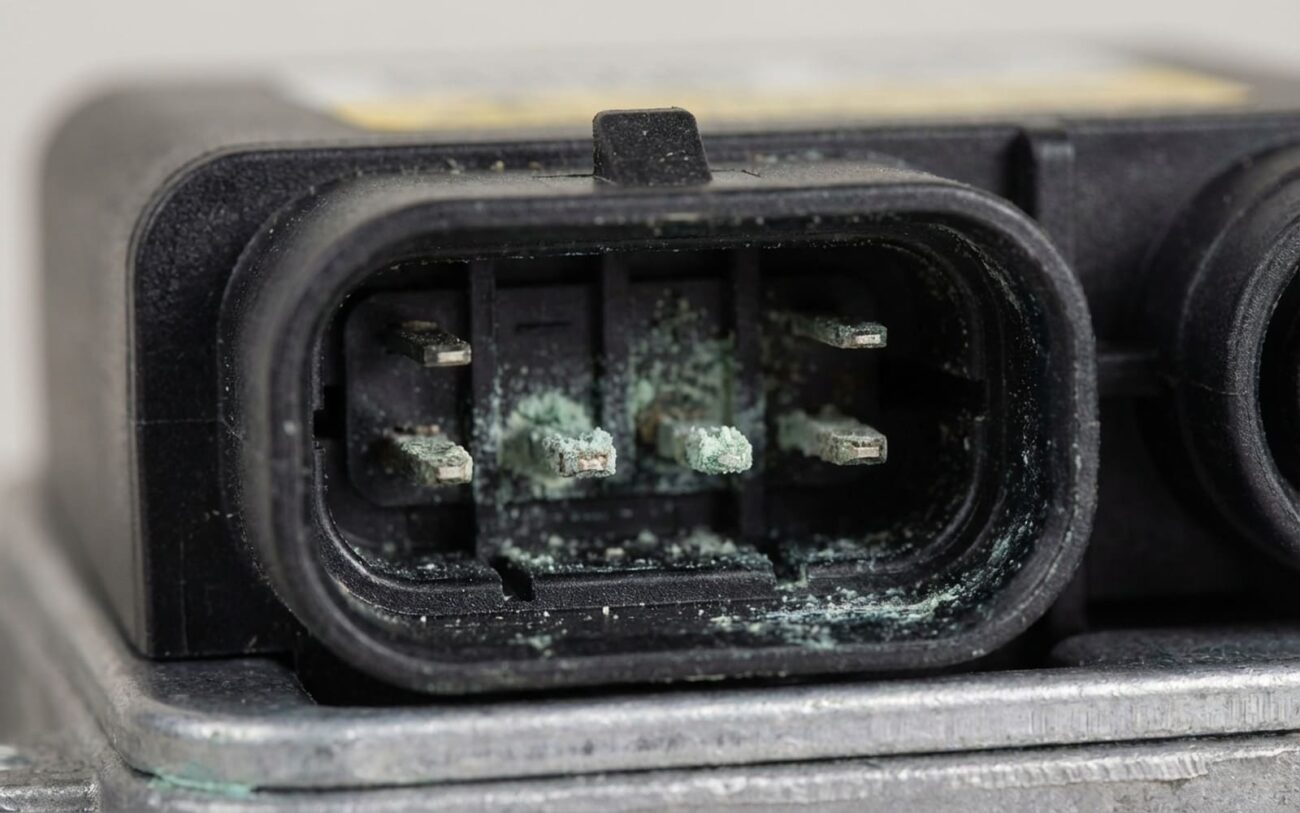
Ballasts die from heat, age, and moisture. The electrolytic capacitors dry out. I’ve pulled units from Audi A4s with capacitors that bulged like overfilled sausages. Thermal cycling cracks solder joints. And if water gets in—say, from a cracked lens seal or missing gasket—it corrodes the board. I see this constantly on E60 5 Series cars. The headlight seal fails, moisture creeps in, and six months later the ballast shorts. It’s not a design flaw. It’s a maintenance failure.
Bulbs fail chemically. Tungsten sputters off the electrodes and clouds the quartz. That changes the gas conductivity, so ignition voltage creeps up. Eventually, the ballast can’t keep up. And if the hermetic seal fails? Oxygen hits the hot arc, and poof—burned out in seconds. I’ve had customers swear the ballast was bad, but the bulb had a tiny crack you could only see under magnification.
How I Fix It (Right the First Time)
Ballast replacement: if it’s externally mounted (like on most BMWs), it’s a 15-minute job. Torx T25 or T30, disconnect the battery, unplug, unbolt, swap. But if it’s sealed inside the headlight—Lexus LS460, some Mercedes—you’re looking at a professional rebuild. You can’t just crack the lens open. You have to heat it evenly, separate the housing, replace the ballast, then reseal with proper moisture barriers. Do it wrong, and condensation returns in a week.
Bulb replacement: always wear nitrile gloves. Skin oils on the quartz create hot spots. I’ve seen bulbs explode after 20 minutes of runtime because someone handled them bare-handed. And replace in pairs. Even if one looks fine, it’s the same age, same wear. Mismatched color temperature is worse than having one out—it creates uneven lighting, shadows, glare. Match the type exactly: D2S, D3S, D4S. I’ve had D4S bulbs installed in D2S housings because the connector “fit.” They wouldn’t ignite reliably. Don’t wing it.
Testing After the Repair
Don’t just turn it on once. I do 10 cold starts. Each should light in under 2 seconds, no flicker. Then let it run 15 minutes. Check for stability. If it flickers after warming up, something’s still off.
Also check charging voltage with the engine running. You want 13.5–14.5 volts. Low voltage stresses ballasts. Spikes kill them. I had a customer replace a ballast twice before we found his alternator was putting out 16.2 volts. That’s a death sentence for HID electronics.
And don’t forget aim. If you bumped the headlight during access, the beam could be pointing at the sky or the curb. Use a wall and measure the cutoff. Even a small misalignment reduces visibility and blinds oncoming traffic.
Cost vs. Value: When to Walk Away
Let’s be real: HID repairs add up. A ballast and pair of bulbs can run $600–$1,000 at a shop. If that’s more than 30% of your car’s value, ask yourself if it’s worth it.
Some go the halogen retrofit route. But it’s not plug-and-play. You need projectors, adapters, maybe coding. And on cars with adaptive headlights, you’ll likely get error codes. I’ve seen it done cleanly on older E39s, but most attempts look sloppy and fail inspection. Plus, you lose performance—halogens don’t throw light like HIDs.
My rule: if the car is otherwise solid and you plan to keep it, fix it right. If it’s on its last legs, maybe live with one headlight until you sell or retire it. But don’t half-fix it. That’s how you end up with a car that’s unsafe and harder to sell.
How I Keep These Systems Alive Longer
I check the charging system on every service. Voltage spikes or drops are silent killers. I’ve seen weak batteries cause ballast failures because the system had to work harder during cranking.
I also tell customers: watch the startup. If one light is slower, or the color’s off, replace the bulb now. Don’t wait for it to die. And inspect the lenses. Any fogging? Fix the seal. Letting moisture in is just delaying the inevitable.
Bottom line: HID systems are reliable when maintained. But they don’t forgive neglect. Catch it early, test properly, fix completely. That’s how you avoid repeat trips and wasted money.
