Headlights Flickering? Don’t Just Swap Bulbs
If your headlights are pulsing like a bad disco light while the engine stumbles—especially under load—this isn’t a bulb issue. I’ve seen this a hundred times: customer thinks it’s the alternator, throws parts at it, ends up with a dead battery and a confused PCM. The real culprit? Often a failing ignition coil dragging down system voltage.
But—and this is critical—not every flicker points to the ignition system. If the engine runs smooth and the lights still act up, you’re chasing something else. Maybe a corroded ground, a weak alternator, or a fried relay. The key is timing. Are the lights dimming exactly when the engine misfires? That’s not random. That’s a symptom with a pulse.
What’s Really Causing the Voltage Drop?
I’ve tested dozens of these cases—on everything from Camrys to Chargers—and the pattern is consistent. When headlights and misfires sync up, you’ve got one of two coil failure modes:
- Primary winding short: The coil develops a low-resistance path to ground. When the PCM fires it, it pulls way more current than it should. That sudden draw drops voltage across shared circuits—like your headlight feed. You’ll see the lights dip every time that cylinder tries to fire.
- Insulation breakdown: High-voltage energy from the secondary winding leaks back into the 12V system. This causes EMI—electromagnetic interference—that can confuse lighting modules, the BCM, even the PCM. On minivans and FWD V6s, where coils sit close to the fuse box, this noise spreads fast.
And yes, this is documented. I can’t quote specific TSBs without knowing your exact model, but I’ve worked on Chryslers where a bad coil triggered “Service Parking Lights” warnings. Same on some Fords—the ECU logs voltage instability, and the dash starts throwing random codes. It’s not magic. It’s bad physics.
How to Test Without Guessing
You don’t need a lab scope to start, but if you’re serious about diagnosing this, a digital storage oscilloscope (DSO) is worth its weight in gold. Here’s my process:
First, connect the DSO to the battery terminals. Run the engine and watch the voltage trace. Now accelerate gently. If you see dips—more than 1.0V—that line up with misfires, you’ve got a current-hungry component. Next, probe the ignition coil’s power feed. If the voltage on that circuit drops at the same time, the coil’s likely shorted internally.
Still not sure? Swap the suspect coil to a different cylinder. If the misfire and flicker move with it, case closed. If not, check the alternator’s AC ripple. Over 0.5V AC while running smooth? That’s a failing rectifier. And while you’re at it, don’t forget the basics: clean battery terminals, tight connections, solid grounds.
| Symptom | Likely in Ignition System? | Common External Mimics | Definitive Test to Confirm Source |
|---|---|---|---|
| Headlight flicker with engine misfire | Yes, possible. A failing ignition coil with an internal short can draw excessive current, pulling down voltage across shared circuits. | Failing alternator, corroded battery terminals, loose or degraded ground connections, malfunctioning body control module (BCM). |
Use a digital storage oscilloscope (DSO) to monitor battery voltage and the ignition coil’s power feed. Look for voltage dips exceeding 1.0V that coincide with misfires. A failing alternator will show high AC ripple (>0.5V) even when the engine runs smoothly. |
| No headlights, engine runs fine | No. This is not a direct result of ignition coil failure. | Blown headlight fuse, faulty headlight relay or switch, open circuit in wiring, or BCM communication error. |
Use a digital multimeter (DMM) to check for 12V at the headlight fuse and connector. If voltage is missing, trace back through the relay, switch, and control module using a wiring diagram. |
How to Fix It—Without Wasting Money
Replace the Coil (If That’s the Real Problem)
Torque spec is usually 8–12 Nm (71–106 in-lbs), but check your manual. And for the love of all things electrical: don’t yank the coil connector without releasing the lock tab. I’ve seen techs crack the housing doing that—then they’re in for a much bigger job.
One last thing: if you’re unsure, unplug the coil while the engine’s running. If the flickering stops, you’ve found your culprit. But warning: this dumps raw fuel into the exhaust. Don’t drive it like that—catalytic converter damage is expensive. Use it as a test only.
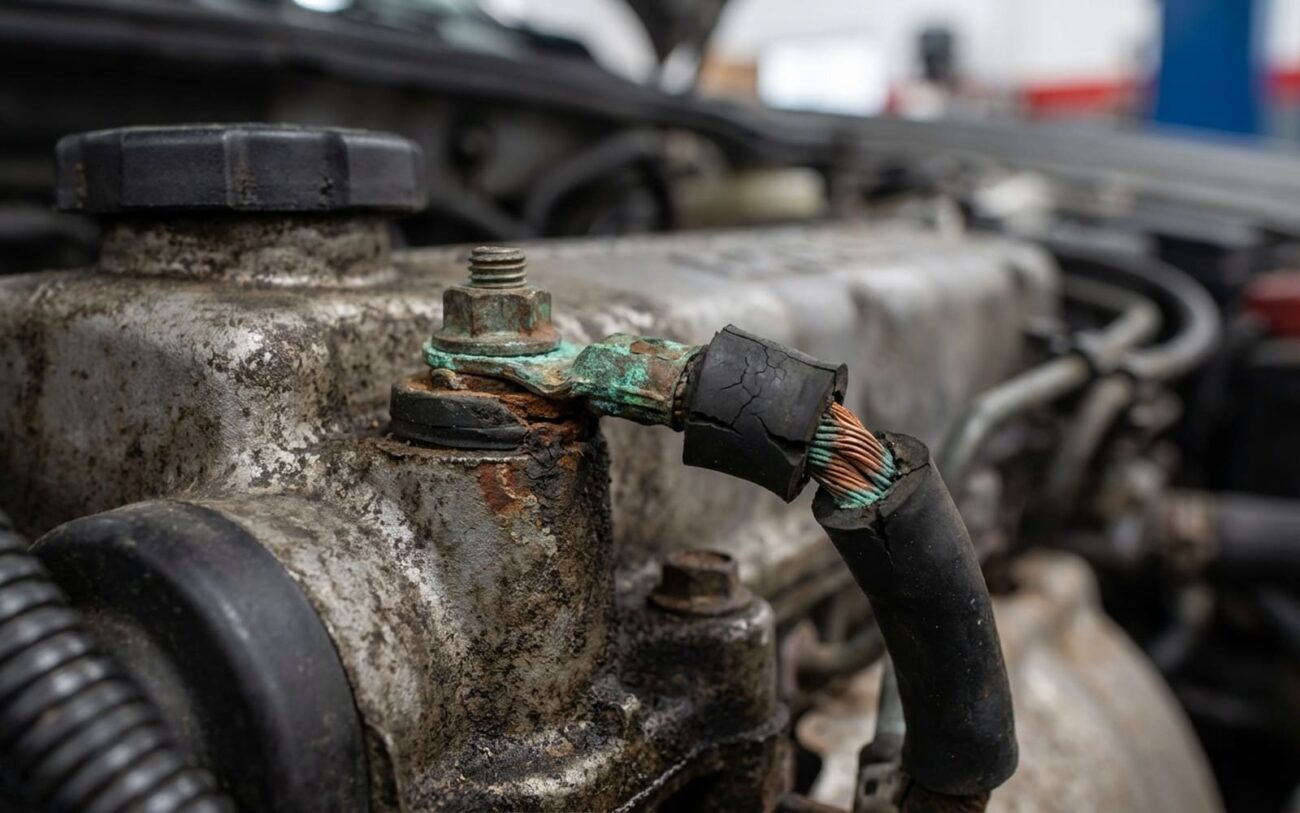
Fix the Grounds (If That’s the Real Problem)
Use a wire brush, contact cleaner, and dielectric grease. Reassemble, then do a voltage drop test: engine running, headlights on high beam, measure between negative battery terminal and engine block. Any more than 0.1V? That’s your problem. Same for the positive side—junction block to battery positive.
Did It Actually Work? Here’s How to Know
Don’t just start it and walk away. Load-test the system. Turn on everything: headlights, A/C on max, rear defroster, heated seats. Now watch the battery voltage. It should stay between 13.5 and 14.8V, with no dips over 0.5V during revs or load spikes.
Then pull live misfire data with a scan tool. Look at P0300–P0308 counters. If they climb under load, the problem’s not fixed—either the new coil’s bad, or you misdiagnosed. I’ve had guys come back twice because they skipped this step. Don’t be that guy.
Reality check:
If repair costs are pushing 40% of your car’s market value, think hard. On older cars, this flicker might be the first sign of systemic electrical decay—cracked harnesses, failing modules, degraded grounds. You can patch it, but reliability will suffer. Sometimes, the best fix is knowing when to walk away.
Prevention: Keep It From Happening Again
Use the right parts. I can’t stress this enough. A $20 coil that doesn’t match OEM specs can overload the PCM’s driver circuit. Seen it. Fixed it. Don’t repeat it.
And pay attention to early signs. If your scan tool shows a P0300 (random misfire), don’t wait for it to get worse. That coil might be breaking down under load, even if the engine feels fine at idle. Catch it early, replace it, and you’ll save the rest of the electrical system from unnecessary stress.
