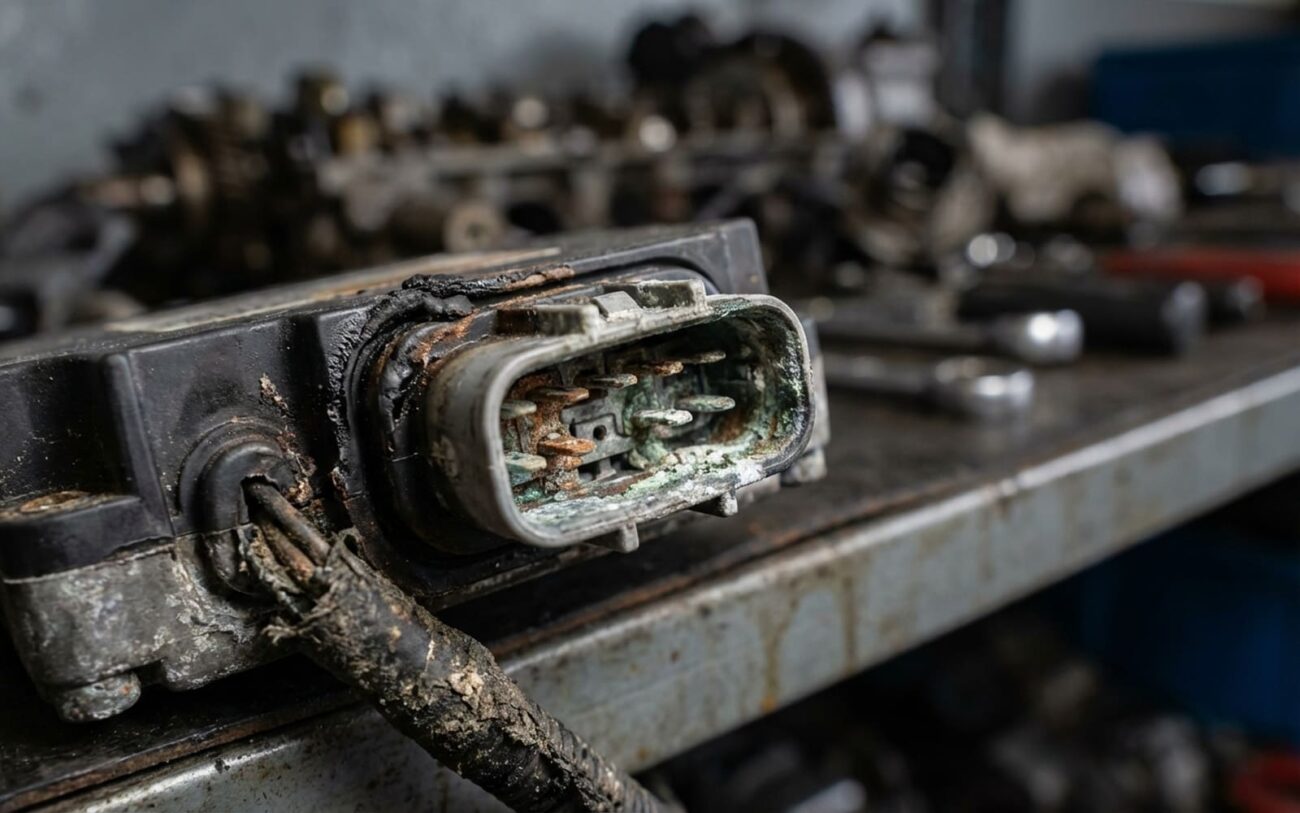
Xenon headlights aren’t magic, but they might as well be to most drivers. I’ve been wrenching on these systems since they started showing up on Acuras and BMWs in the early 2000s, and let me tell you—when they fail, people panic. They hear that rapid clicking, see one light out, and assume the whole assembly’s shot. But 9 times out of 10? It’s not the bulb. It’s not even the ballast. It’s the ignition module—the little black box no one knows exists until it dies.
What the Ignition Module Actually Does
Forget halogen bulbs. Those are simple: 12 volts, filament glows. HID systems? They’re more like miniature lightning storms. You’ve got two electrodes inside a quartz tube filled with xenon gas and metal salts. To light it up, you don’t just apply power—you have to jump a spark across that gap, like a spark plug. That takes 20,000 to 30,000 volts. Your car’s electrical system can’t do that on its own.
The ballast handles the steady-state power—converts 12V DC to about 80V AC once the arc is going. But the ignition module? That’s the one that throws the high-voltage punch to start the arc. It’s bolted to or built into the ballast on most setups, and when it fails, the bulb never gets that initial kick. No spark. No light. Just clicking.
And here’s what most shops miss: that clicking isn’t random. It’s the system trying—over and over—to fire the bulb. I’ve seen drivers run like this for weeks, not realizing they’re slowly killing the rest of the system.
Symptoms That Point to the ICM
If your headlight doesn’t come on and you hear that rhythmic click—once per second—start thinking ICM. That’s not the ballast giving up. That’s the ignition module trying to fire and failing. I’ve diagnosed hundreds of these, and that sound is the single best clue.
Other signs:
-
One headlight slow to start, especially in cold or damp weather
-
Pink or purple glow that fades out after a few seconds (weak arc)
-
Flickering during warm-up, then stabilizes or shuts off
These aren’t always full failures. Sometimes the ICM works when cold but cuts out after heating up—classic thermal stress. On a 2012 Mercedes C-Class I worked on last month, the driver’s side would fire fine in the morning but die after 15 minutes of driving. Pulled the ICM, cracked solder joint on the HV transformer. Case closed.
How to Diagnose Without Getting Zapped
Here’s the truth: you don’t need a $500 oscilloscope or high-voltage probe to figure this out. I’ve got two methods—one for DIYers, one for pros.
For most people, the swap test is the way to go. It’s safe, fast, and 95% accurate.
| Symptom | Likely ICM Issue | Looks Similar But Isn’t | Best Test |
|---|---|---|---|
| No light, rapid clicking | Failed HV circuit in ICM | Dead bulb, bad ballast, low voltage |
Swap Test: Swap the ICM from the working side. If the problem follows the part, it’s bad. If not, check bulb or ballast. |
| Flickering or intermittent | Cracked solder joints, failing caps | Loose connector, bad ground, wiring chafe |
Wiggle Test: With lights on, gently move the harness and ICM. If it flickers, look for loose pins or corrosion. |
| Pink glow, then shuts off | Weak ignition pulse | Aging bulb, wrong bulb type, failing ballast |
Voltage Check (Pro Only): Use a 25kV probe. Healthy pulse should hit 18–25kV. Dangerous—don’t try this at home. |
Swap test is foolproof if you’re careful. Disconnect the battery first—always. Then unplug both connectors (power and output), swap the ICM, reconnect, and test. Takes 10 minutes. I’ve had customers do it in a parking lot with a $12 Torx set.
Why These Things Die
Heat, moisture, and time. That’s it.
The ICM sits behind the headlight—right where road splash hits, and where heat builds up from the bulb and engine bay. Every time you turn the lights on, the circuit heats up. Turn them off, it cools. Over a few years, that thermal cycling cracks solder joints, especially on the high-voltage transformer. I’ve seen boards where the HV coil pins are literally lifted off the PCB.
Moisture’s just as bad. If the headlight’s vent clogs or the back cap doesn’t seal, condensation gets in. Corrosion follows. I pulled one off a 2014 Audi last winter—board looked like it had been dipped in saltwater.
And let’s not forget voltage spikes. A failing alternator or bad ground can send surges through the system. The ICM’s not designed to take that abuse. Same goes for cheap aftermarket bulbs. I’ve seen guys slap in 55W “upgrades” on a 35W system—no surprise when the ballast and ICM fry six months later.
Some models are worse than others. Chrysler 300s from 2011–2014? Known issue. Mercedes W204? Same thing. There are TSBs for this—don’t let a dealer tell you it’s “just wear and tear.”
Fix It Right: Replace or Repair?
Replace the ICM – The Smart Move
PCB Repair – Only If You’re Desperate
After the Fix: Test Like a Pro
Turn the lights on. You should hear a single “thunk,” then the bulb fires in 1–2 seconds. No clicking. No flickering. No pink glow.
Start the engine. Turn on the blower, rear defroster, everything. If the light wavers, check the 12V supply to the ballast with a multimeter. Should be steady within 0.5V. Fluctuations mean a wiring or grounding issue—don’t ignore that.
If it fails after replacement, double-check the bulb. A failing ICM can damage the electrodes. I’ve seen bulbs that test “good” but won’t strike because the gap’s too wide now.
Prevent It From Happening Again
-
Check the headlight back caps and seals every oil change. A pinhole lets in moisture that kills electronics.
-
Use the correct bulb type (D2S, D1S, etc.). Aftermarket “upgrades” overstress the system.
-
Listen when you turn on the lights. A clean ignition is silent after the first click. If it starts chattering, don’t wait—fix it now.
What You’ll Pay (And What to Avoid)
ICM Replacement (DIY)
OEM or quality aftermarket. I’ve had good luck with Bosch and Standard Motor Products.
PCB Repair
Only worth it if you’re stranded or on a tight budget. Not a long-term fix.
Full Assembly Replacement
Bulb + ballast + ICM. Don’t let a shop talk you into this unless all three are confirmed bad.
