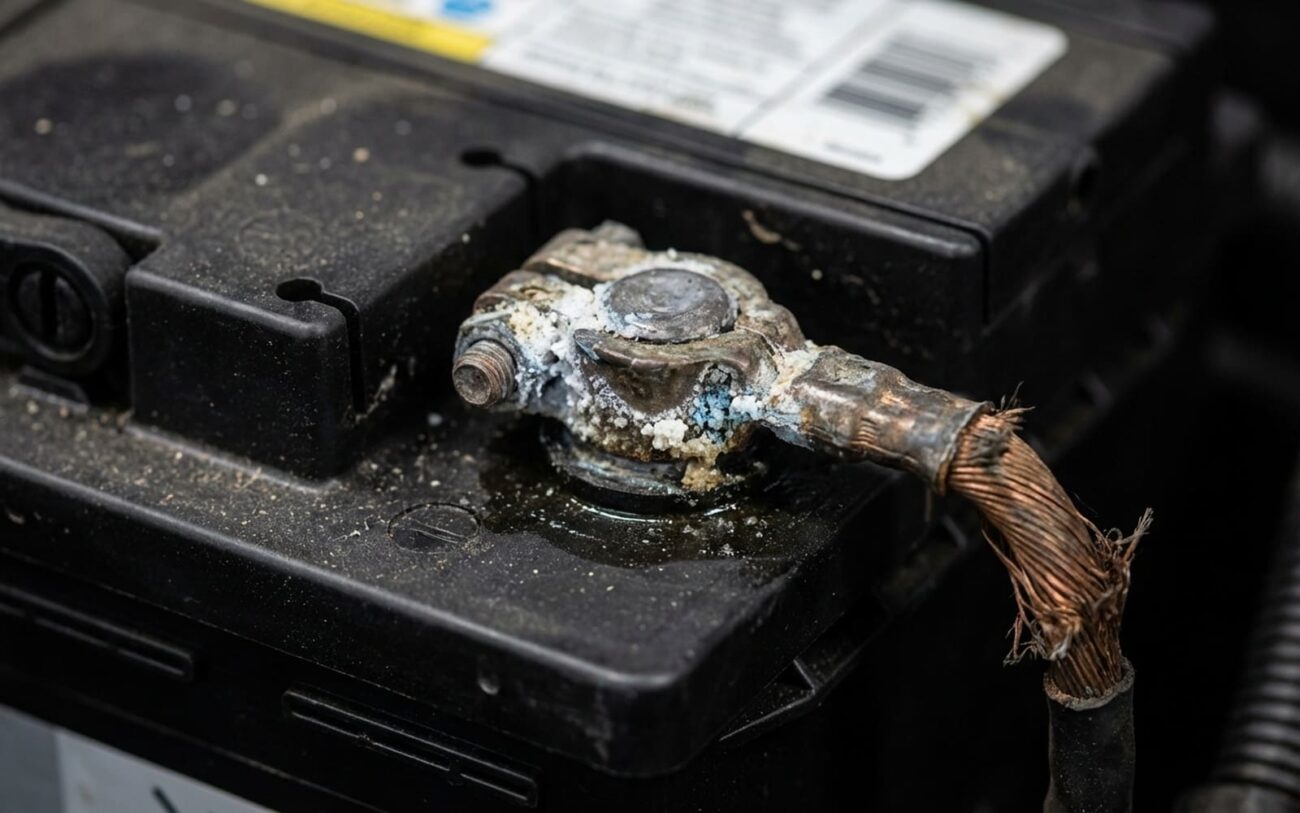
Alright, let’s talk about those modern start/stop systems. When they act up, it’s usually not a mystery – the car is trying to tell you something important. As a tech who’s been turning wrenches for over 25 years, I can tell you that when your engine doesn’t shut off at a light, or worse, it shuts off and then won’t restart, that’s the system putting itself into protection mode. It’s not being finicky; it’s preventing a full-blown no-start situation.
What Your Car is Trying to Tell You
The start/stop system is tied directly into the vehicle’s energy management. It needs every component in the charging and storage chain – and I mean every component – to be working perfectly, within some pretty tight tolerances. If something’s off, it disables itself. You’ll usually see messages like “Battery Protection Mode,” “Start/Stop Inactive,” or “Battery Charging” pop up on your dash. These aren’t vague warnings; they’re specific alerts from the control modules telling you the battery’s state of charge (SOC) is too low, or it can’t guarantee enough juice for a reliable restart. In my shop, I see these messages daily, and they almost always point to a power supply issue.
SOC: 68%
And let me be clear: ignoring these warnings isn’t just an inconvenience. A weak battery that’s constantly being asked to perform start/stop cycles, but isn’t getting fully recharged, is going to suffer from accelerated sulfation. That’s when sulfur crystals build up on the battery plates, permanently reducing its capacity and cranking power. Eventually, you’ll be stranded.
Don’t Just Replace the Battery: Diagnosing the Real Issue
Now, here’s where my 25 years of experience really comes into play: just because the start/stop system points to the battery doesn’t mean the battery is always the culprit. I’ve seen countless vehicles come into my shop with a brand-new battery that was installed unnecessarily. The real problem was often something else entirely – a faulty Intelligent Battery Sensor (IBS), a parasitic draw slowly killing the battery, or even a software calibration error. That’s why you can’t just guess; you need to test.
| What You See (Symptom) | What It Usually Means | Common Misdiagnoses / Other Factors | My Go-To Test |
|---|---|---|---|
| Start/stop inactive, “Battery Protection Mode” message | Battery’s state of charge (SOC) is too low, or its overall health (SOH) is degraded. Sometimes, the alternator isn’t putting out enough power, especially at idle. | A failing IBS, a hidden parasitic draw, incorrect software calibration, or simply too many electrical accessories running. |
First, I hook up a scan tool and check live SOC data – it needs to be consistently above 80%. Then, a proper load test, following SAE J537 standards, is crucial. That tells you the battery’s true health. |
| Engine shuts off, but then fails to auto-restart | The battery can’t deliver enough cranking voltage due to high internal resistance or its SOC being too low. | A failing starter motor, a fuel delivery problem, a bad crankshaft position sensor, or even just a corroded ground strap. |
I’ll measure voltage drop directly at the starter during cranking – you want to see above 9.6V. If it’s dipping lower, the battery or its connections are usually the problem. Sometimes, an oscilloscope on the starter current waveform can tell you a lot about internal starter health too. |
| Start/stop inactive immediately after starting the car | The battery’s SOC is below the system’s enable threshold (usually 75–80%), as reported by the Intelligent Battery Sensor (IBS). | A hood open sensor stuck, HVAC in defrost mode (high load), engine temperature not in range, or damaged wiring to the IBS. |
Hook up the scan tool and check for any “inhibit conditions” – these are the reasons the ECU is disabling the system. Compare the actual battery post voltage to the SOC reported by the IBS; a big discrepancy often means a bad IBS or wiring. (And yes, sometimes a quick check of the hood switch is all it takes!) |
The Usual Suspects: What Really Fails
So, what actually gives up the ghost? Most modern start/stop systems rely on AGM (Absorbent Glass Mat) batteries. They’re designed to handle the deeper discharge and rapid recharges that start/stop cycling demands, unlike your old flooded lead-acid battery. But “better” doesn’t mean “indestructible.” The number one killer of AGM batteries in these systems is sulfation. This happens when the battery isn’t consistently brought to a full charge, allowing sulfur crystals to build up on the plates. That increases internal resistance, which means the battery can’t deliver or accept charge efficiently. Think of it like clogged arteries for your battery.
The IBS Can Lie
I’ve seen plenty of cases where the Intelligent Battery Sensor (IBS) itself is the problem. It can drift out of calibration, telling the car the battery is bad when it’s actually fine. A simple software recalibration or, if necessary, replacing the IBS, can often fix the issue without ever touching the battery. It’s a common trap for less experienced techs.
Then there’s the alternator. In a start/stop vehicle, it’s under more stress than ever, constantly needing to bring that battery back up to snuff after every engine restart. Internal wear and tear – things like worn brushes, slip rings, or a faulty voltage regulator – can reduce its output. But the real sneaky killer is a failing diode trio or rectifier bridge. This introduces AC ripple into the DC system. If I hook up my multimeter to the battery terminals and see more than 0.5V AC, that’s a huge red flag. This “dirty” power isn’t just inefficient; it can wreak havoc on sensitive control modules and corrupt communication on the vehicle’s data buses, leading to all sorts of weird, unrelated electrical gremlins.
Getting It Fixed: Your Options
A Critical Safety Note
Modern charging systems are deeply integrated with the vehicle’s Engine Control Unit (ECU). Just swapping out a battery without proper registration can lead to all sorts of headaches, including premature failure of the new battery or even other components. Don’t skip this step!
Replacing the AGM Battery DIY Feasible (with caution)
Alternator Replacement Professional Recommended
Battery Maintenance & Charging
Proof’s in the Pudding: Post-Repair Validation
Don’t just assume the job’s done because the engine starts. True validation means confirming the start/stop system is operating exactly as it should, under real-world conditions. After any repair, especially a battery or alternator swap, you need to drive the vehicle for at least 15–20 minutes on the highway. This gives the alternator a chance to fully charge the battery and bring the SOC above the system’s enable threshold. The ECU needs to see stable conditions for a while before it trusts the system again.
My Post-Repair Checklist:
-
Verify the battery’s SOC is consistently above 80% and its State of Health (SOH) is stable, using a good scan tool.
-
Measure the voltage directly at the battery posts under a full electrical load (headlights, fan on high, rear defrost). I look for 13.8V–15.0V, depending on the vehicle.
-
Switch your multimeter to AC and verify that the ripple voltage is less than 0.5V AC. Anything higher means your alternator is putting out “dirty” power.
-
Monitor the alternator’s duty cycle via the scan tool to ensure the ECU’s commands for charge output match what the alternator is actually producing.
What’s It Going to Cost?
Let’s talk money. Nobody likes unexpected car repairs, but knowing the potential costs can help you make an informed decision. These are typical ranges I see in my shop, but remember, prices can vary a lot based on your vehicle’s make and model, and where you live.
AGM Battery Replacement
This includes a good quality AGM battery, the labor to install it, and the absolutely critical IBS registration and adaptation process. Don’t skimp on the registration.
Alternator Replacement
The cost here really depends on how hard it is to get to the alternator in your specific vehicle. Some are easy, some are a nightmare. This covers a new or remanufactured unit and usually includes a new serpentine belt, which you should always replace at the same time.
IBS or Software Fix
This is often the cheapest fix if the diagnosis points to it. It covers the diagnostic time plus either a new sensor or just a software recalibration. Always hope for this one!
Keep It Running Right: Prevention is Key
Look, the best repair is the one you don’t have to make. If your daily driving consists mostly of short trips – say, under 10 miles – your alternator probably isn’t getting enough time to fully recharge that AGM battery. This leads to chronic undercharging and, eventually, sulfation. My advice? Get yourself an AGM-compatible battery maintainer and hook it up once a month, especially during colder weather. It’s a small investment that can extend your battery’s life by years and keep that start/stop system happy.
