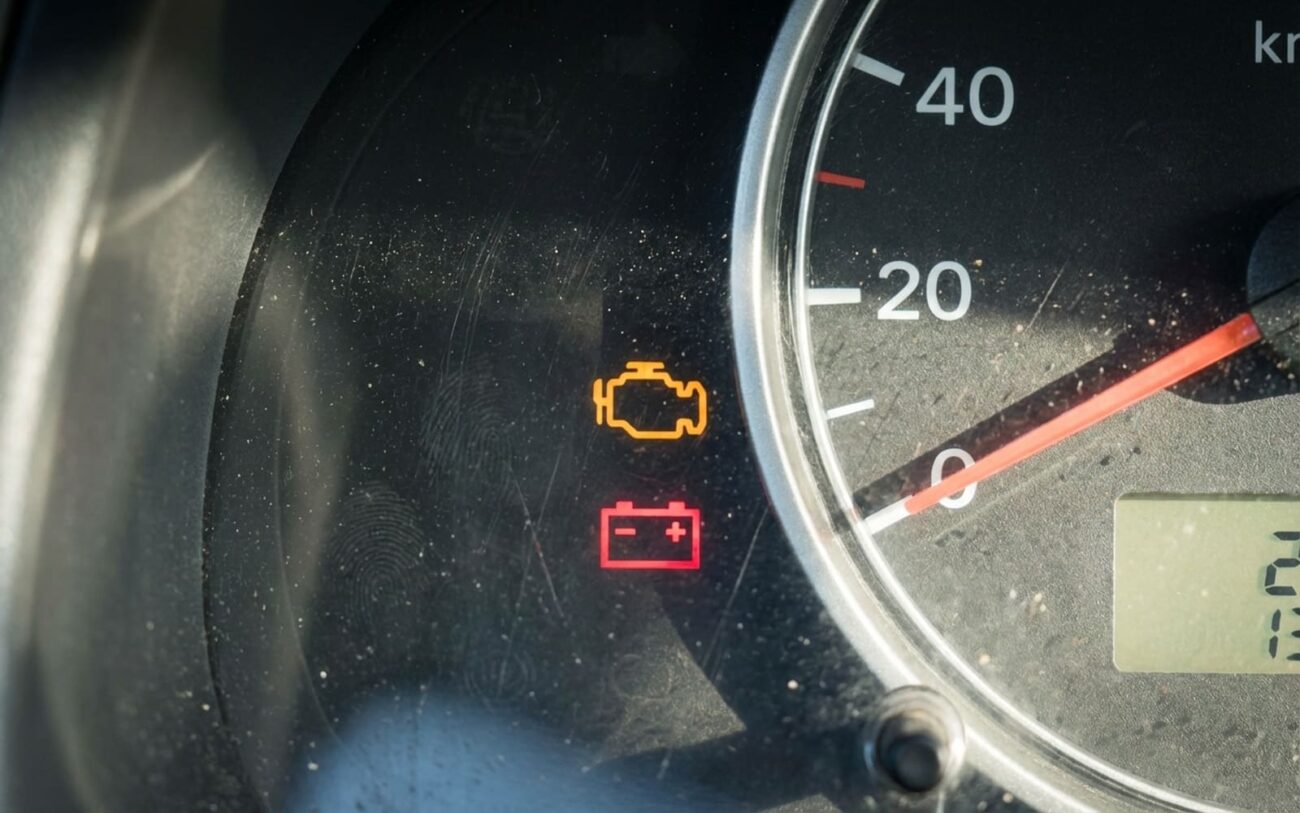
You know, when a car’s Engine Control Unit (ECU) starts acting up because of low voltage, it rarely just gives you a simple “no-start.” If only it were that easy. Instead, it throws a bunch of confusing, intermittent electrical gremlins that’ll make you think half the car is failing. After 25 years under the hood, I’ve seen this misdiagnosed more times than I can count. The key is knowing what to look for and, more importantly, how to test it right.
The Sneaky Symptoms of a Starving ECU
My first red flag for low voltage affecting the ECU? Communication issues. You plug in your OBD2 scanner, and it either can’t talk to the ECU at all, or worse, it pulls up those generic U-codes like U0100 (Lost Communication with ECM) or U0121 (Lost Communication with TCM). Now, these codes can definitely mean a wiring problem or even a bad scanner, but if they show up right after a known weak battery incident or a jump start, my spider-sense immediately points to the ECU’s power supply.
Another classic sign I see is the check engine light glaring at you, but when you scan it, there are no actual Diagnostic Trouble Codes (DTCs) stored. That’s just plain wrong under normal conditions. Or, sometimes, you get a whole Christmas tree of implausible codes—P0120 for the throttle position sensor, P0110 for the coolant temp, P0100 for the MAF—all at once. This often happens even when I know the sensors themselves are perfectly fine. What’s happening is the ECU’s internal 5-volt reference, which all those sensors rely on, gets skewed by the low input voltage. So, every reading looks faulty, and the ECU starts setting codes across unrelated systems.
Then there’s the “dead car” scenario: no crank, no fuel pump hum, no relay clicks. You turn the key, and… nothing. Not a peep. People often jump to conclusions, blaming a failed starter or a bad relay. But I’ve seen this misdiagnosed as a bad ignition switch more times than I can count when the real culprit was the ECU not waking up because it wasn’t getting enough juice. A corroded ground strap starving the ECU of power is a common offender here.
And don’t forget adaptive memory corruption. That rough idle after a jump start that smooths out, then comes back the next day? Classic. The ECU loses its learned fuel trims, idle settings, or even transmission shift points when the voltage drops below its threshold. A temporary relearn might help for a bit, but if the charging system isn’t stable, it’ll just keep resetting. I see this especially often with Ford and GM transmissions that rely heavily on adaptive learning.
Why Low Voltage Messes With Your ECU (Internal Impact)
It’s important to understand why low voltage causes these headaches. The ECU’s brain, its microprocessor, needs a rock-solid 5-volt supply to function correctly. This 5V is generated internally from the vehicle’s 12V system by a voltage regulator. When that input voltage dips too low—say, below 9 volts—that internal regulator simply can’t keep its 5V promise. That’s what we call a “brown-out.” The processor loses synchronization, it might freeze, reboot, or just start executing incorrect instructions. That’s why you get no communication or all that erratic behavior.
The Analog-to-Digital Converter (ADC) is another weak spot. This component is responsible for translating the analog signals from your sensors (like throttle position or engine temperature) into digital values the ECU can understand. The ADC relies on a precise voltage reference, usually that same 5V. If the system voltage sags, that reference drifts, and suddenly, a 2V throttle signal might be read as 3.5V. The ECU thinks you’re stomping on the gas and dumps fuel accordingly, triggering a P0120 code, even though the throttle body is fine. It’s not a sensor problem; it’s a reference voltage problem.
A Critical Distinction:
A corroded ground strap or a failing alternator isn’t an ECU problem itself. It’s the cause of an ECU problem. You only have internal ECU damage when the external power system is healthy, but the ECU still acts up. In severe cases, low voltage can corrupt the ECU’s RAM, wiping out adaptive values, or even “brick” the flash memory during a reprogramming attempt.
My Diagnostic Approach: Isolating the True Source
Before you even think about blaming the ECU, you’ve got to rule out everything else. Low-voltage ECU symptoms overlap with dozens of other issues—bad grounds, CAN bus faults, sensor failures. Jumping straight to ECU replacement is expensive and, frankly, often wrong. Here’s how I approach it to separate ECU-related voltage issues from common mimics.
If you have no communication with the ECU: My first thought is always to back-probe the ECU connector. I’m looking for a constant 12V on the power pins and a solid ground. If the voltage drops below 9.0V during communication attempts, that’s a huge clue. But don’t stop there. I also use an oscilloscope to check the CAN High/Low waveforms. If those look wonky, you might have an open or shorted CAN bus wire, a failed gateway module, or even just a damaged OBD2 port. For example, on many VW and Audi models, I’ve seen harness corrosion near the front bumper or headlights disrupt the entire CAN network, mimicking a dead ECU.
If you’re seeing multiple implausible sensor DTCs: This screams internal 5V reference trouble to me. I’ll measure the ECU’s 5V reference pin directly at the connector. It must read between 4.95–5.05V under load. If it’s unstable or out of spec, that internal regulator is struggling due to low input voltage. Of course, you still need to rule out external mimics like a shared sensor ground fault, water in the harness, or a short to power in a sensor circuit.
If the ECU resets during cranking: This is a classic voltage drop issue. I’ll use a graphing multimeter to monitor voltage at both the battery and the ECU’s main power input simultaneously during cranking. If the battery voltage at the ECU drops below 6.5V during engine turnover, that ECU is going to reboot. This could be a poor ECU ground, a failing ignition switch, or a high-resistance power feed. If fuses keep blowing, by the way, you’re dealing with a hard short, not ECU damage—check the wiring for abrasions or pinches before you go any further.
Fixing the Problem: Resolution Pathways
Professional Diagnostics Required
Look, reprogramming or replacing an ECU isn’t a DIY job for most folks. It involves VIN-matching and security synchronization, which require OEM-level tools. And you absolutely need a stable power supply to prevent permanently “bricking” the module. Don’t try this at home unless you know exactly what you’re doing.
External Power/Ground Repair
ECU Reprogramming Shop Only
ECU Replacement Professional Only
Temporary Workaround (Use with Caution)
In an emergency, a high-quality portable jump pack connected directly to the battery might stabilize voltage enough to allow you to communicate with the ECU or even get it started. But be warned: cheap units can send voltage spikes that will fry sensitive electronics faster than you can say “oops.” This is a bridge to diagnosis, not a repair, and I only recommend it if you know your equipment.
Don’t Just Assume It’s Fixed: Post-Repair Validation
Just because the car starts doesn’t mean it’s fixed. You’ve got to validate every layer. First, re-test the charging system. With the engine off, the voltage at the ECU connector should be within 0.1V of the battery voltage. With the engine running, it absolutely must be between 13.8–14.8V. Most importantly, during cranking, use that graphing multimeter again to confirm the ECU’s supply voltage stays above 9.6V. If it dips below that, you haven’t solved the problem; you need to revisit those power and ground circuits.
Next, validate the ECU’s actual function. It needs to communicate every single time you try. Use a capable OBD2 scanner to read live data: throttle position, coolant temp, fuel trims—all of it should be logical and responsive. Clear any codes, then complete two full drive cycles that satisfy your manufacturer’s OBD2 monitor requirements. If no unexplained DTCs return after all that, then, and only then, can you be confident the ECU is stable and happy.
The Bottom Line: Cost, Risk & What’s Worth It
The economic reality hits hard on older cars, I’m not going to lie. Here’s a general idea of what you might expect for these types of repairs:
| Repair Type | DIY Cost | Shop Cost | Success Rate (if diagnosed correctly) |
|---|---|---|---|
| Battery/Charging System | $150–$400 | $300–$600 | 95% |
| ECU Reprogramming | $500–$1000 (if you have the tools) | $150–$400 | 98% |
| ECU Replacement | $800–$1500 (part only, plus programming) | $1000–$2000 | 99% |
As a rule of thumb, if the ECU repair cost exceeds 50% of the vehicle’s market value, especially if the car is over 10 years old, you really need to weigh the risk carefully. You’re not just replacing an engine; you’re investing in a complex computer. If the rest of the car is solid—no rust, good engine, good transmission—it may still be worth it. But be honest with yourself about the overall condition.
Keeping It From Happening Again: Prevention & Monitoring
-
Test your battery annually. Don’t just rely on a simple voltage check; use a proper conductance tester. And always check for corrosion on the terminals. Clean them as needed—high resistance is a silent killer.
-
Every 30,000 miles, perform a voltage drop test on the main engine ground straps and, if you can access it, the ECU’s dedicated ground. This is cheap insurance.
-
Monitor “Control Module Voltage” via OBD2. Most scanners can show this in live data. It should stabilize between 13.8–14.8V while driving. If it’s consistently lingering at 12.5V or lower while the engine is running, your alternator is failing, or you have a serious charging system issue brewing.
