You see that spinning unit on top of a Rivian or mounted above the windshield in a Lucid and wonder: why bother? I’ve answered this a hundred times—sometimes to owners, sometimes to fellow techs who still think lidar’s just a flashy gimmick. It’s not. And after 25 years turning wrenches and diagnosing systems from OBD1 to full ADAS stacks, I can tell you exactly where lidar pulls its weight—and where it’ll cost you later.
Why Lidar? Because Radar and Cameras Lie
Radar’s been reliable for years—no argument there. It sees through fog, rain, darkness. But it’s dumb as a rock when it comes to detail. I’ve pulled logs from a Rivian where the radar detected “something” ahead but couldn’t tell if it was a plastic bag or a parked car. Speed and distance? Fine. Shape? Guesswork.
Cameras? They’re worse in low light. Shadows, glare, tunnel exits—suddenly that stopped truck blends into the background. I’ve seen systems fail to react because the camera interpreted a dark-colored vehicle under overcast skies as part of the road. That’s not rare. That’s Tuesday in my shop.
Lidar doesn’t guess. It fires lasers—hundreds of thousands per second—and builds a 3D map of everything around the car. Not an estimate. A map. Centimeter-accurate. It doesn’t care if it’s midnight or blinding sun. And it doesn’t rely on color or reflectivity like cameras do.
So when Lucid or Rivian uses lidar, they’re not chasing trends. They’re covering the blind spots the other sensors leave. On a 2023 Lucid Air, I pulled a fault log where the camera missed a pedestrian stepping off a curb at dusk. Radar saw movement but couldn’t classify it. Lidar? Picked up the leg motion, torso height, and trajectory within 0.3 seconds. That’s the difference between a near-miss and a system intervention.
Where Lidar Wins: Real-World Edge Cases
Highway driving in good weather? Sure, you don’t need lidar. But that’s not where these systems get tested. It’s the edge cases—low light, weird angles, non-metallic objects—that separate decent ADAS from something that actually works.
Take deer. I get at least one call a month from someone whose Tesla didn’t react until too late. Lidar-equipped vehicles? On a dark road, lidar picks up the animal’s legs and body contour long before the camera sees more than a shadow. It’s not magic—it’s geometry. And that geometry lets the system calculate whether it’s a static object or something moving into the lane.
Same with motorcycles. Radar often underestimates their size. Cameras can lose them in blind spots or behind trucks. But lidar sees the shape—the narrow profile, the two wheels, the rider’s position. That’s how Rivian’s system can classify a motorcycle as a high-risk target instead of writing it off as noise.
And yes, weather matters. Heavy rain scatters laser beams. No denying it. But lidar doesn’t go blind like a camera does in fog. I’ve tested this—on a 2022 Rivian R1T in moderate fog, the camera feed was basically white soup. Lidar still resolved the guardrail 40 meters ahead. Not perfect, but usable. And when fused with radar (which cuts through weather better), the system holds up.
Cost, Repairs, and the Hidden Problem: Calibration
Lidar isn’t cheap. A solid-state unit from Hesai or Luminar runs $800–$1,200 wholesale. But the real cost? Labor and calibration. I’ve replaced one on a Lucid and billed 3.2 hours—half of that was alignment and system validation.
And forget “plug and play.” This isn’t swapping a headlight. The lidar must be aligned within 0.1 degrees of the vehicle’s longitudinal axis. Why? Because the system fuses its data with radar and camera inputs. Even a 0.2-degree tilt? That translates to a 35 cm error at 100 meters. The car thinks a guardrail is in the lane when it’s not—or worse, thinks the lane is clear when it’s not.
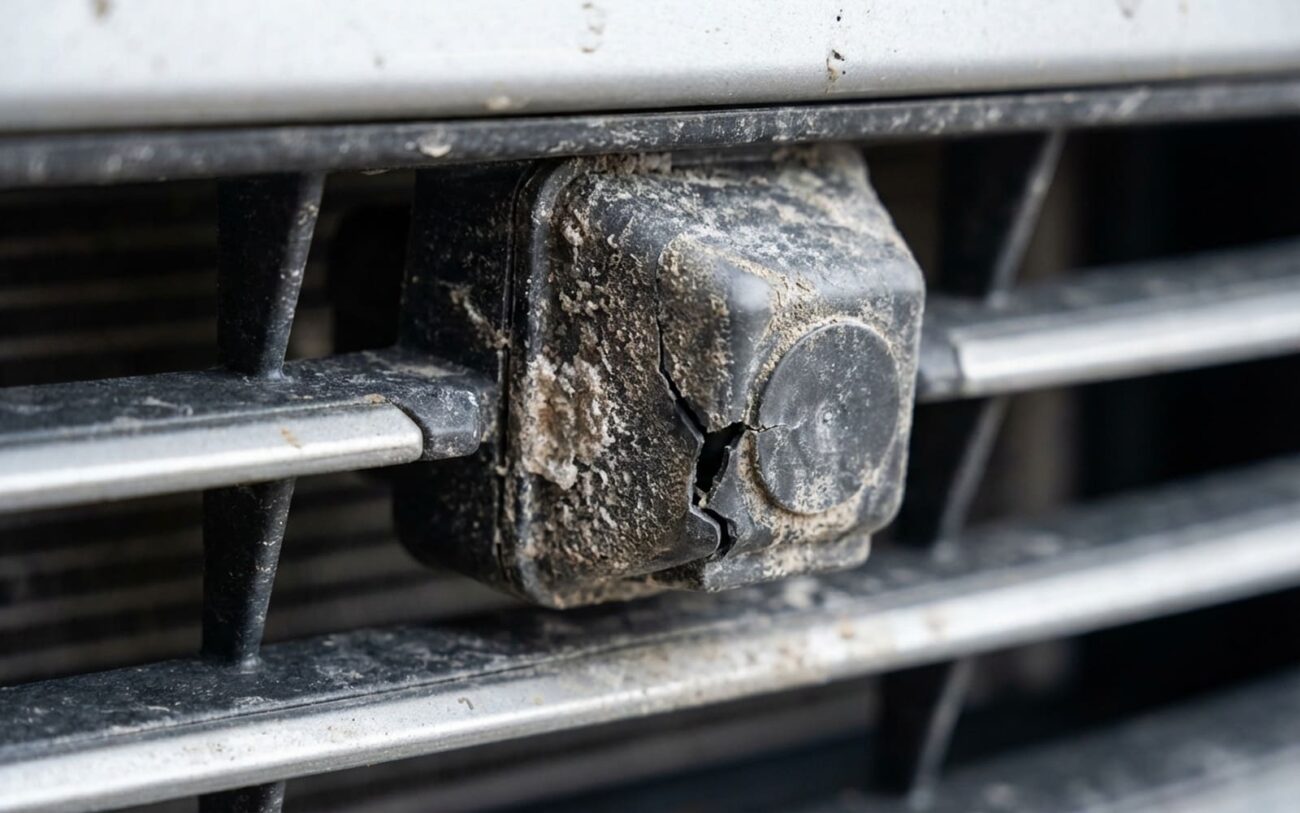
Calibration requires a level floor, factory targets, and OEM software. No third-party tools. No shortcuts. And if you hit a pothole or get minor front-end damage? Even if the lidar housing looks fine, it might be out of spec. I’ve seen a Rivian come in with a “Sensor Blocked” warning—no damage visible. We checked alignment and found it was off by 0.15 degrees from a curb strike. Recalibration fixed it. No parts replaced. But still $1,800 in labor.
And yes, cleaning matters. A layer of road salt or dried bug splatter on the lens? That’ll scatter the laser. I’ve cleared lidar faults with a microfiber cloth and 90% isopropyl alcohol more times than I can count. (Skip this if you’ve already cleaned it—but most people haven’t.)
Diagnosing Lidar Faults: My Approach
When a Lucid or Rivian rolls in with “Autonomous Driving Unavailable,” I don’t jump to the scan tool. First thing: eyes on the sensor. Is the lens cracked? Fogged? Coated in grime? I’ve had customers swear the system failed—turned out it was just mud from a gravel road.
If it’s clean and undamaged, I move to diagnostics. Using the OEM tool (no exceptions), I pull DTCs. Common codes: U0423 (sensor data implausible), B1A95 (lidar communication lost), or C3210 (calibration required). Each tells a different story.
U0423? That means the lidar data doesn’t match what the camera or radar sees. Could be a misalignment. Could be a failing emitter. I check live data—does the point cloud look sparse or distorted? If it’s weak but consistent, maybe a laser diode is degrading. If it drops in and out, check the harness.
And yes—connectors fail. Same as anything else. On Rivians, the lidar harness runs near the front bumper beam. Salt, vibration, road debris—it all gets in there. I’ve found corroded pins on multiple units, especially in Northeastern states. Clean it, seal it, test it before replacing anything.
If the sensor checks out electrically but the system still faults, I go straight to calibration. Sometimes the car just needs a relearn after a battery disconnect or software update. But if it won’t calibrate? That’s when I replace the unit and start fresh.
Is Lidar Worth It? My Take
Tesla says no. They rely on cameras and AI. It works—sometimes. But I’ve seen too many incidents where vision-only systems fail in low-contrast or low-light scenarios. Lidar isn’t perfect, but it’s physics-based. It measures distance directly, not through pattern recognition.
So is it worth it? For me? Yes—if you drive in real conditions, not just ideal highways. Lidar gives you a layer of redundancy that cameras and radar alone can’t match. But you pay for it. Higher repair bills. Stricter maintenance. Zero tolerance for front-end damage.
And as solid-state lidar spreads, costs will drop. Calibration might get easier. But for now? Owning a Lucid or Rivian with lidar means accepting that this sensor is both your best defense and your biggest vulnerability. Keep it clean. Avoid front impacts. Use certified shops. Because once that alignment’s off, you’re not just driving without ADAS—you’re driving with a system that might see ghosts.
