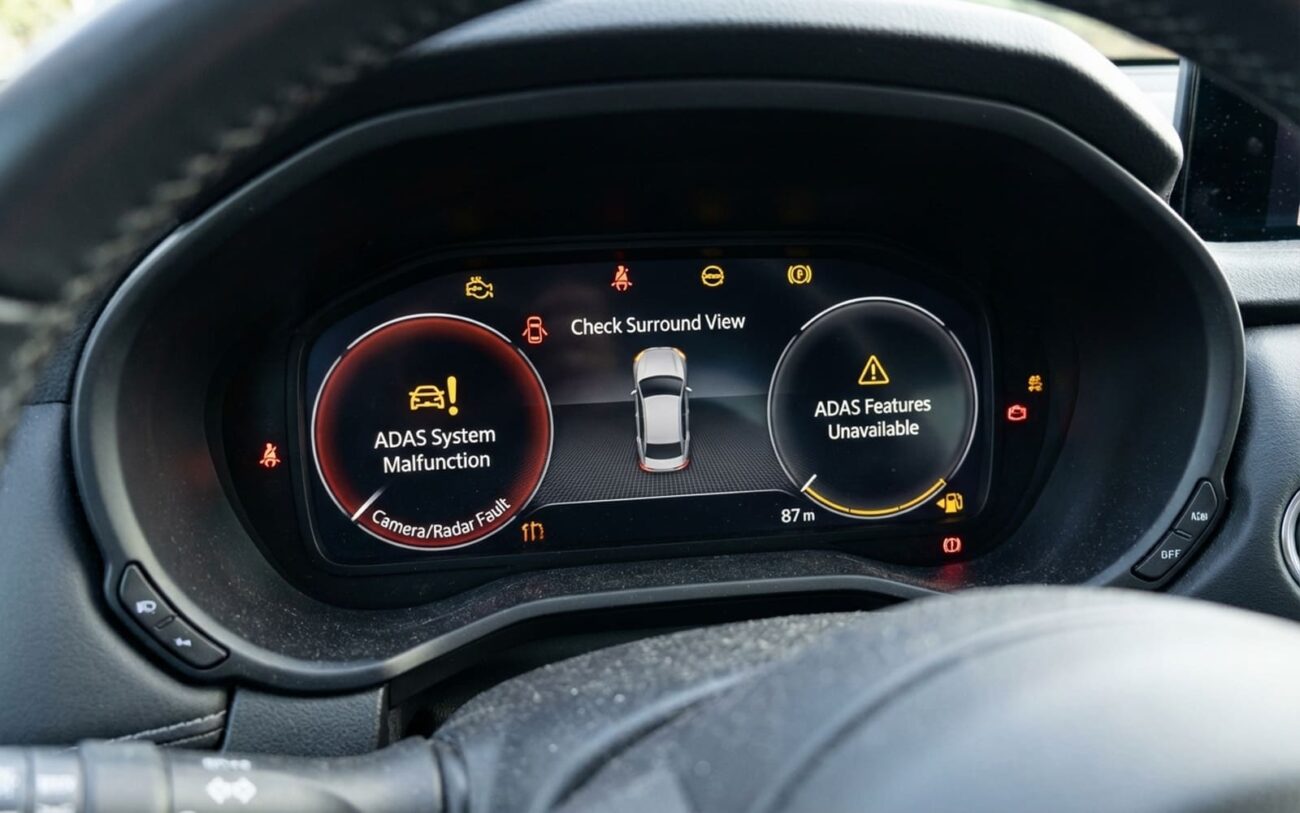
You hit a curb. Maybe it was a fender-bender at 5 mph. Next thing you know, your dash is lit up like a Christmas tree—adaptive cruise gone, lane keep assist offline, blind-spot warning dead. That little car-with-an-exclamation-mark icon is glaring at you. This isn’t a glitch. I’ve seen this exact scenario hundreds of times over the last 25 years, and let me tell you: your car has gone into lockdown for a reason. It doesn’t trust itself anymore. And if you’re not careful, you could end up driving a vehicle with disabled airbags and no emergency braking—thinking it’s fine because the engine runs smooth.
When the Whole System Shuts Down, It’s Not Random
Modern cars don’t just “fail” one system at a time. They’re built on a network—specifically, the CAN bus (Controller Area Network)—that links critical modules: the Restraints Control Module (RCM), Gateway, ADAS domain controller, radar, camera, ABS, and more. When communication breaks down between these, the car defaults to fail-safe mode. That means all ADAS features get disabled—even if only one module is acting up.
I’ve had customers come in saying, “It drives fine, so what’s the big deal?” The big deal is this: your car may drive, but it won’t brake for you anymore. It won’t warn you of a collision. It won’t correct a lane departure. And in some cases—especially on newer Fords, GMs, and Toyotas—it’ll even limit engine power or lock out certain gears until the fault is resolved.
When we pull codes, we’re not seeing isolated “C” codes (like C0047 for a radar misalignment). We’re seeing “U” codes—communication errors. U0100 (Lost Comm with ECM), U0415 (Invalid Data from ABS), U0121 (Lost Comm with RCM). These aren’t sensor problems. These are network failures. And they tell us the car’s brain can’t talk to its limbs.
Symptom Clusters Tell the Real Story
You can’t just guess here. Misdiagnosis is expensive. Replace a front radar when the real issue is a dead Gateway? That’s $800 down the drain. I break it down by symptom clusters—because each points to a different root cause.
| Symptom Cluster | Likely Central/Network Source | Common External Mimics | Definitive Test to Confirm Source |
|---|---|---|---|
| All ADAS systems dead, multiple U-code DTCs. | Failure in the Central Gateway Module or main CAN Bus network. | Blown ADAS fuse or damaged wiring harness section. |
Use a professional scan tool to monitor module communication. Check for missing “heartbeat” signals from the Gateway. Perform a hard reset (battery disconnect + module power cycle). If communication doesn’t restore, test CAN-H and CAN-L lines for voltage drop and continuity. |
| All ADAS systems dead, with G-force or collision event DTCs. | Restraints Control Module (RCM) has triggered a post-crash lockdown. | Faulty side-impact sensor or damaged clock spring sending erroneous crash data. |
Scan the RCM directly for crash event logs. If a non-deploy event is recorded, attempt the OEM-specific “crash data clear” procedure using secure access on a factory-level tool. If the reset fails, the RCM likely needs replacement and calibration. |
| All ADAS systems dead, base functions normal, no U-codes—only internal module faults. | Loss of power or ground to the ADAS domain controller or fusion processor. | Loose connector or internal power regulation failure in the control module. |
Refer to the wiring diagram for the ADAS controller. Test main power supply with ignition on—should read full battery voltage. Check all ground circuits for continuity (less than 0.5 Ohms resistance). |
The Real Culprits: What Actually Breaks
Let’s cut through the noise. The problem isn’t usually a dirty camera lens or a failed radar. It’s one of three things:
1. The Inertial Measurement Unit (IMU) in the RCM. This tiny MEMS sensor detects sudden deceleration or lateral G-forces. Hit a curb hard? That’s enough to trigger a “crash event” log—even if the airbags didn’t deploy. Once logged, the RCM blocks ADAS communication as a safety measure. I’ve seen this on a 2018 Honda Accord after a 3-mph bump. No visible damage. But the system was locked out.
2. The Central Gateway Module. Think of it as the router for your car’s digital nervous system. On a 2016–2019 Ram 1500, for example, a front-end impact—even minor—can send vibrations through the frame that crack solder joints inside the Gateway. The module looks fine, but it’s dead. And yes, Chrysler issued a TSB (08-004-19) for this exact issue.
3. CAN Bus wiring damage. This twisted-pair network runs along rocker panels, under seats, near suspension points. An impact can crush, cut, or short the wires. Corrosion at connectors—especially after a repair involving water exposure—can also kill signal integrity. I pulled a harness on a 2020 Toyota RAV4 last month and found a pinched CAN line behind the front bumper. The shop had replaced the radar twice. Never checked the wiring.
How We Fix It: Three Paths, No Shortcuts
Professional Territory Only
There’s no workaround here. These repairs are complex, require specialized tools, and must follow OEM procedures. Guesswork will leave you stranded—or worse, driving a car with disabled airbags.
Software Reset Professional Tool Required
Module Replacement Professional-Only
CAN Bus Wiring Repair Diagnostic-Intensive
Did It Actually Work? Here’s How I Know
Clearing codes isn’t validation. I’ve had customers come back a week later because the lights came back on. Here’s how I verify each fix:
After a software reset: All ADAS warning lights must be off after ignition cycle. Full scan shows zero active or pending DTCs across RCM, Gateway, camera, radar. Every system must be accessible in the instrument cluster or infotainment. Then I do a 15-minute test drive—no lights should return.
After module replacement: In addition to code clearance, the scan tool must show “Calibration Complete – OK” for the RCM or camera. For radar systems, I run a target acquisition test using manufacturer-specific fixtures. On a Subaru, that’s the EyeSight alignment board. On a GM, it’s simulated vehicle targets in the scan tool.
After wiring repair: Monitor network traffic for at least 30 minutes using the scan tool’s network diagnostic function. Watch for communication error counters. If they increment, the bus is still unstable. A solid repair shows no increase in error logs—even during bumps and turns.
What This Is Going to Cost You
Let’s be real. These repairs aren’t cheap. And if you’re driving a 7-year-old car, the numbers might not make sense.
Software Reset
DIY Cost: $0 (but requires $2000+ scan tool). Success Rate: ~40% (only if no hardware damage). Secondary Risk: Wasted diagnostic time; underlying fault remains active.
RCM Replacement & Calibration
DIY Cost: Not Feasible. Success Rate: >95%. Secondary Risk: Incorrect calibration can disable airbags and ADAS permanently.
Gateway/Domain Controller Replacement
DIY Cost: Not Feasible. Success Rate: >95%. Secondary Risk: Failed programming may prevent vehicle startup, requiring dealer tow.
CAN Bus Harness Repair
DIY Cost: Not Feasible. Success Rate: >90%. Secondary Risk: Poor repair can cause intermittent dropouts, risking sudden system loss while driving.
Here’s a reality check: if the repair estimate exceeds 40% of your car’s current market value—especially on an older, out-of-warranty vehicle—it’s worth evaluating whether the investment makes sense. A non-functional ADAS system not only reduces safety but also lowers resale value. Some insurers may even classify the car as high-risk if critical safety systems remain disabled.
How to Avoid This Mess Next Time
Prevention Tips
-
After any collision, no matter how minor, get a full diagnostic scan—including RCM, Gateway, and ADAS modules. Generic OBD2 scans miss U-codes and crash logs. I’ve seen this overlooked on a 2021 Camry after a 5-mph hit. Cost the owner $1,200 in avoidable repairs.
-
Address intermittent ADAS warnings immediately. A single malfunctioning function—like forward collision warning flickering on and off—is often an early sign of a failing Gateway or developing CAN bus issue. On 2017–2019 Fusions, that’s usually the Gateway starting to fail.
-
Make sure your technician uses a factory-level scan tool. Most independent shops now have access to systems like Tech2, GDS2, or As-Built. If they’re only using a $200 OBD2 reader, walk out. That’s how major issues get missed.
