That “Brake Failure” at 70 MPH? It’s Probably Not What You Think.
I’ve heard it a hundred times, usually from a frustrated customer leaning over the counter: “My Honda’s automatic braking system failed! I was doing 70 on the highway, and the car in front slammed on its brakes, but my car did nothing. No warning, no braking, nothing!”
And you know what? They’re usually right about what happened. But they’re almost always wrong about why it happened. See, your Honda Sensing system, specifically the Collision Mitigation Braking System (CMBS) and its Automatic Emergency Braking (AEB) function, isn’t designed to activate at high speeds in most scenarios. We’re talking above 50 or 60 mph. It’s not a glitch, it’s not broken, and it’s definitely not a failure. It’s a system limitation, by design. Understanding that difference is absolutely critical, not just for your peace of mind, but for your safety. These systems are driver aids, period. They’re not your co-pilot, and they’re certainly not a substitute for paying attention to the road.
Is It a Limit, or Is It Actually Broken? Here’s How I Tell.
So, how do you know if your AEB isn’t kicking in because it’s simply outside its operating range, or because there’s a genuine fault? After 25 years in this business, I can tell you the key is consistency and context. A real mechanical or electrical fault will usually throw a diagnostic trouble code (DTC) and often show up at lower speeds too. You might see intermittent warnings, hesitation in city traffic, or error messages that stick around on your dash. A design limitation, on the other hand, is predictable: it only shows up under specific conditions, usually high relative speed, clear visibility, and no system alerts whatsoever.
To break it down, here’s what I typically see in the shop:
| Symptom I Hear | What It Usually Means (Design Limit) | What It Could Be (Real Fault) | How I Confirm It |
|---|---|---|---|
| “No AEB activation above 50-60 mph, clear day, no warnings.” | The system’s sensors and computer simply can’t process the data and react fast enough at high closure rates. It calculates that braking would be ineffective or destabilizing, so it doesn’t engage. | A misaligned radar unit, a dirty or damaged camera lens, or a faulty vehicle speed sensor input. |
I’ll connect my factory scan tool (like Honda HDS) and monitor the radar and camera data in real time. If it’s a design limit, the data looks perfectly clean, but you won’t see a brake command. If it’s a fault, I’ll see erratic sensor input or stored DTCs. |
| “Front Camera Unable to See” message, but only at highway speeds. | The camera software has trouble classifying fast-moving objects due to motion blur or the rapid change in their apparent size (high angular velocity). It’s like trying to read a billboard from a speeding train. | Improper camera recalibration after a windshield replacement, optical distortion in the windshield itself, or even a low-voltage supply to the camera module. |
Again, the scan tool is key. I’ll review the camera’s live image quality and its object detection log. A design limit will show a high-quality video feed but no stable targets being identified. A fault will show a degraded image, a calibration error, or a power supply issue. |
Why Your Car Can’t “See” or React at Highway Speeds
It’s not a shortcut by Honda; it’s just physics, plain and simple. Let me explain what’s going on under the hood, or rather, behind the grille and windshield.
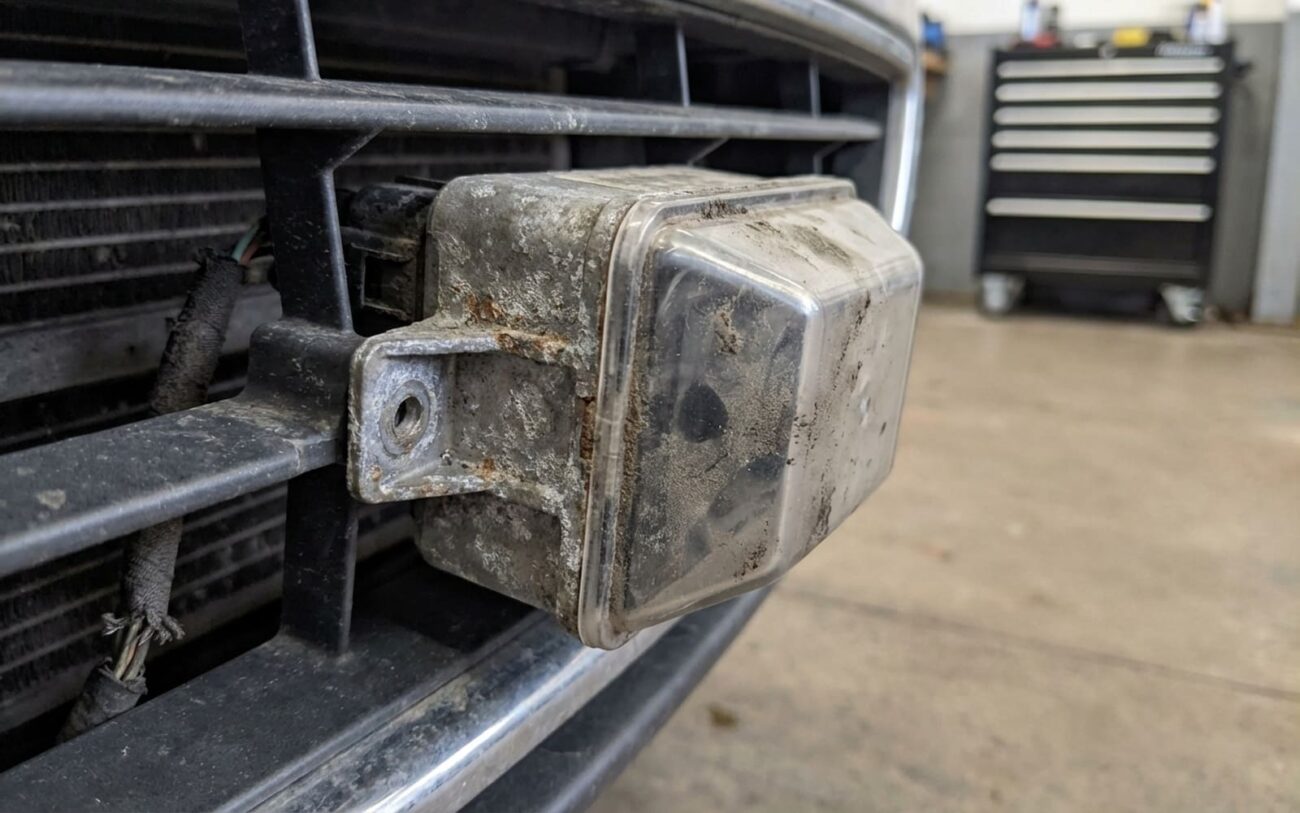
First, you’ve got the radar. It’s usually tucked away behind the front grille emblem. Most Honda systems use a millimeter-wave radar that’s really good for mid-range detection, but it has a finite field of view and, more importantly, a finite processing speed. At 70 mph, the time you have between detecting a closing vehicle and needing to apply the brakes drops to fractions of a second. The radar might see the target, but the system’s computer quickly calculates there’s just not enough distance or time to make any meaningful deceleration. So, it simply doesn’t engage. It’s designed to avoid a situation where it might brake too late, causing more problems than it solves.
Then there’s the camera, typically mounted up near your rearview mirror. This camera relies on a clear, stable image to identify other vehicles, pedestrians, and lane markings. But when you’re flying down the highway at 70 mph, everything outside is moving incredibly fast relative to the camera. This causes motion blur. Even with a perfectly clean windshield, the software struggles. It sees a streak or a fuzzy shape, not a clearly defined car. If it can’t “see” the threat clearly, it can’t react. Again, this isn’t a failure; it’s the system operating within its inherent design limits.
And don’t forget the ADAS control unit, the brain of the operation. It’s constantly fusing data from both the radar and the camera. But this fusion process takes time – usually somewhere between 100 and 200 milliseconds, depending on the conditions. Now, think about this: at 70 mph, your car is covering almost 100 feet every second. So, in just 0.2 seconds, you’ve traveled 20 feet. By the time the computer has processed all the data, made a decision, and sent a brake command, the system might determine that even full braking won’t prevent an impact. At that point, it’s a deliberate safety choice to not initiate braking, preventing a last-second, partial brake application that could destabilize the vehicle or confuse the driver.
I see this misdiagnosed all the time. If your radar unit is physically cracked, the camera lens is fogged up, or you’ve got persistent DTCs stored in the module, then yes, that’s a repairable issue. But those kinds of problems usually show up at all speeds. That high-speed-only “failure” with no codes? In my experience, that’s almost always just the system doing exactly what it was designed to do.
What You Can (and Can’t) Do About It
Your next step depends entirely on what the diagnosis reveals. There are two very different paths here.
If we confirm it’s a Design Limit, the verdict is clear: NO REPAIR – SYSTEM CHARACTERISTIC. Look, no software update, no aftermarket module, no “tune” is going to make your Honda Sensing system reliably activate AEB above 60 mph. Some folks ask about retrofitting Euro NCAP-spec sensors or higher-tier systems. Believe me, it’s just not feasible on most production models. The only real solution here is awareness. Grab your owner’s manual – yes, the physical book – and read the CMBS limitations section. It will spell out the exact speed thresholds and edge cases. This isn’t a flaw; it’s a specification. Your job as the driver is to understand it and adjust your driving habits accordingly.
This Is Professional Territory Only
Now, if the diagnosis points to a System Fault, that’s a completely different story. A misaligned radar, an uncalibrated camera, or faulty wiring – these are all fixable problems. But let me be crystal clear: this is not a DIY fix. Proper repair requires specialized tools like the Honda Diagnostic System (HDS) or a J2534-compliant tool with Honda-specific calibration software. The radar, for example, has to be aligned using factory fixtures and targets, often with a very specific torque spec on the mounting bolts (typically around 22 N·m, or about 16 lb-ft). The camera recalibration, especially after a windshield replacement, demands a static pattern setup in the shop, followed by a dynamic road test. Skip either step, and the system will remain unreliable, or worse, give you false confidence. That’s why a “simple” windshield replacement can easily turn into a $1,000 to $1,500 repair – the calibration is that precise and critical.
How I Verify a Repair Actually Worked
After any repair involving these ADAS systems – say, a camera recalibration or a radar realignment – a reputable shop should do a lot more than just clear codes. First, we run the system’s internal diagnostics to make sure all modules report a “ready” status with no pending faults. Then comes the critical part: functional validation. What I do, and what any good shop should do, is perform a controlled low-speed AEB test. Using soft targets or calibrated obstacles, we’ll drive the vehicle at 20–30 mph and trigger the system to confirm that automatic braking engages as it should. This proves that the sensors, software, and brake interface are all working within the system’s intended envelope. We won’t – and shouldn’t – test at highway speeds. That’s unsafe and completely unnecessary. If it works correctly at low speeds with clean data, the repair was successful.
Keeping Your System Reliable for the Long Haul
My Best Advice to Prevent Issues
-
Prevention starts with basic sensor care. Always keep your windshield clean, especially the area directly in front of the camera. Avoid tint strips, stickers, or heavy grime that could obstruct its view.
-
When cleaning the front grille, use non-abrasive cleaners. Some polishing compounds can actually degrade the radar cover’s signal transparency, causing subtle but real issues.
-
If you ever have to replace the Honda emblem on the grille, insist on an OEM part. I’ve seen aftermarket badges with metal flakes or slightly different designs that partially block the radar beam, leading to intermittent faults that are a nightmare to diagnose.
-
Your dashboard is your best early warning system. If you see a persistent “Collision Mitigation System” warning – especially at low speeds or when conditions are clear – get it checked out immediately. That’s not a design limit; that’s a problem that needs attention.
-
After any front-end body work or, critically, a windshield replacement, insist on a full dynamic calibration. A static calibration in the shop is a good start, but real-world conditions demand a road-based verification. That dynamic step is the single most common reason these systems underperform after service. Treat it as non-negotiable.
Costs, Risks, and Real-World Tradeoffs
Look, fixing a true fault costs money – there’s no way around that. But skipping it costs safety, and potentially a lot more money down the line. Here’s a realistic breakdown of common repairs and what’s really at stake.
| Repair Type | DIY Feasibility | Typical Shop Cost (My Area) | Success Rate (If Done Right) | Risk of Incomplete Repair |
|---|---|---|---|---|
| Radar Realignment and Calibration | Absolutely not feasible. Requires factory tools, specific targets, and precise measurements. | $150 – $300 | 98% (assuming no underlying hardware damage) | Adaptive Cruise Control and AEB will likely remain disabled. You’ll probably have persistent DTCs and a warning light on your dash. |
| Windshield Replacement with Camera Calibration | Not feasible. The calibration is mandatory and complex, needing specialized equipment and procedures. | $1,000 – $1,500 (often includes the glass itself) | 95% (with OEM-quality glass and proper calibration) | Using cheap aftermarket windshields with optical distortion can cause permanent false alerts, missed detections, or even completely disable the system. Skipping calibration means the camera’s view is off, making the system useless. |
The bottom line from my experience is this: if there’s a fault, get it fixed by someone who knows what they’re doing. If it’s a design limit, accept it and drive smart. Spending money to “upgrade” the system beyond its factory capability is almost always a waste of your hard-earned cash. And always remember – no amount of technology, no matter how advanced, replaces an attentive driver, especially when you’re cruising down the highway.
