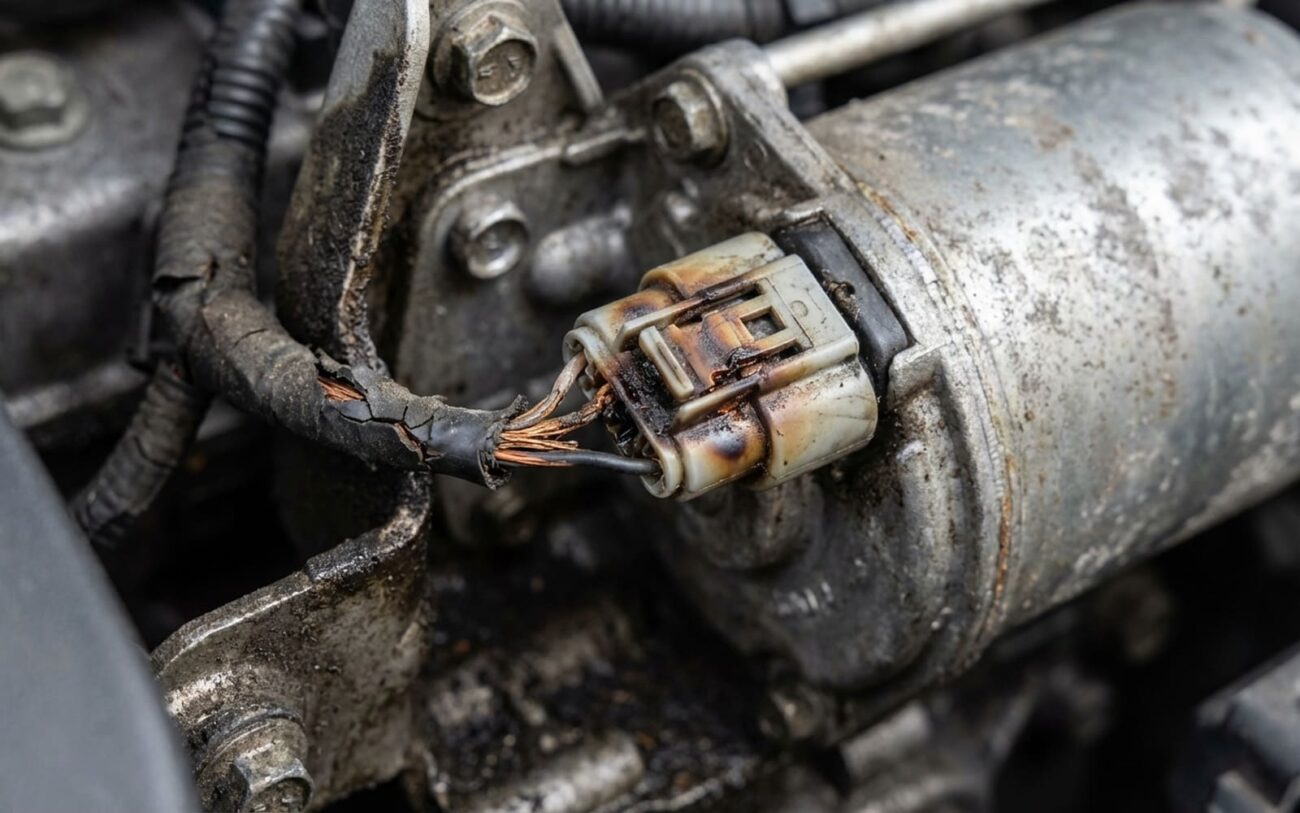
Alright, let’s talk about a problem I’ve seen countless times in the shop, especially with those E150 and E170 generation Toyota Corollas. You’re cruising down the highway, maybe 30 minutes in, and suddenly, the steering goes heavy. I mean, really heavy. It feels like you’re driving a truck from the 70s. You pull over, let it sit for 15-20 minutes, restart the car, and poof – power steering is back, light as a feather. Until the next long drive, that is. Sound familiar? What you’re experiencing isn’t a fluke; it’s the Electric Power Steering (EPS) control module, or ECU, going into thermal protection mode. It’s a common issue, and frankly, it’s a pain.
Status: 88°C
Unlike the old hydraulic systems where you’d hear a pump whining, here, the assist just cuts out. The steering still works because it’s a mechanical connection, but it’s like suddenly having no power steering at all. And let me tell you, that’s a handful, especially at low speeds or when parking. What makes this problem particularly sneaky is that the EPS warning light might flash for a second when it happens, but then it usually clears itself once things cool down. So, when you try to pull a code with a generic scanner, you’re often left with nothing. No stored Diagnostic Trouble Code (DTC) to point you in the right direction.
And speaking of codes, when they do show up – usually after you’ve had this happen a bunch of times – they’re often misleading. You might see something like C1555 or C1556, which typically point to a torque sensor or motor resolver issue. But in my experience, these are often false positives. The heat is messing with the ECU’s ability to process signals correctly, making it think there’s a sensor problem when there isn’t. Don’t fall for it.
How I Pinpoint the Real Problem
To figure out what’s really going on, you can’t just throw parts at it. You need to rule out other things first, because an intermittent assist loss can mimic a bad sensor, a wiring problem, or even mechanical binding in the steering column. A cheap OBD2 scanner isn’t going to cut it here. You need a proper scan tool that can talk directly to the EPS module, ideally with OEM-level protocols through the CAN bus. Think Toyota Techstream or a really high-end aftermarket equivalent.
Here’s my approach to diagnosing these:
-
Monitor Live Data: This is your biggest clue. Get into the EPS module’s live data and look for “ECU Internal Temp” and “Motor Temp.” Drive the car until the assist cuts out. If the assist drops when the “ECU Internal Temp” hits around 85°C (or higher), and the “Motor Temp” is still reasonable, you’ve pretty much confirmed an internal ECU thermal shutdown.
-
Check for Misleading DTCs: If you’re seeing C1555 or C1556 codes (torque sensor or resolver), don’t immediately replace the sensor. Test the sensor outputs when the system is cold. If they read correctly, then become erratic only when the ECU is hot and acting up, it’s the ECU misinterpreting good signals, not a bad sensor.
-
Address Consistently Heavy Steering: If the steering is always heavy, not just intermittently, the ECU might be in a permanent protection mode, or you could have a mechanical issue. First, rule out mechanical binding in the column or rack. Then, check the EPS motor itself. Measure the phase-to-phase resistance of the motor windings. You should see something in the range of 0.1–0.3 ohms. If those readings are good, but you still have no assist, the problem is almost certainly in the ECU’s motor driver circuit.
For these tests, you’ll need a good quality digital multimeter, that advanced scan tool with EPS module access, and an infrared thermometer can be handy for cross-referencing surface temperatures with what the ECU is reporting. Trust me, guessing here is just going to cost you money. I’ve seen too many people replace perfectly good sensors or motors when the ECU was the real culprit.
Why These ECUs Fail: The Root Cause
The Problem
“It’s a recipe for failure: mounting sensitive electronics in high-heat zones where internal motor current pushes them over the edge.”
Once you’ve definitively ruled out everything external, the problem almost always points back to the EPS ECU itself. This is especially true for those late 2000s to early 2010s models. The core issue is heat-related degradation. Here’s what I typically find:
-
Solder Joint Fatigue: Think about it: the ECU gets hot, then cools down, then hot again. This constant expansion and contraction puts incredible stress on the solder joints, especially where the power transistors and capacitors connect to the circuit board. Over time, these develop micro-cracks, leading to intermittent connections.
-
Capacitor Degradation: Electrolytic capacitors are pretty sensitive to heat. When they’re constantly exposed to high temperatures, they start to lose their capacitance and their Equivalent Series Resistance (ESR) increases. This destabilizes the control circuitry, and the ECU can’t function properly.
-
Power MOSFET Failure: These are the high-current switches that drive the EPS motor. If the thermal paste under them dries out (which it does over time) or the cooling is just barely adequate (which it often is), these MOSFETs overheat. When they get too hot, they can fail or, more commonly, trigger the thermal protection mode you’re experiencing.
Even Toyota Knew:
Toyota actually acknowledged this pattern in certain Corolla models. I’ve seen service bulletins referencing increased steering effort due to “insufficient capacitor performance in the EPS ECU under high temperature conditions.” That’s a pretty clear admission of the issue, if you ask me.
Now, it’s important not to confuse this with other problems. A weak battery or a failing alternator can cause EPS faults too, but that’s a power supply issue, not an internal ECU defect. You’d typically see other electrical symptoms there. And mechanical problems, like worn tie rod ends or binding universal joints in the steering column, will give you different symptoms altogether – usually clunking, play, or uneven steering effort – not a clean, temperature-dependent loss of assist.
Your Options for Fixing It
A Word on ECU Work
Repairing or replacing an EPS ECU isn’t a job for the faint of heart or the poorly equipped. You’re dealing with sensitive electronics and, for replacements, specialized programming. Trying this without the right tools and knowledge can easily “brick” the unit or, worse, lead to dangerous steering failures down the road. This is specialist territory.
Component-Level Repair Specialist Only
Full ECU Replacement Programming Required
Airflow Optimization Temporary Only
After the Fix: Validation is Key
Once you’ve done any repair, you can’t just call it a day after a quick test drive. Thorough testing is non-negotiable. Here’s what I look for to confirm the repair actually worked:
-
No EPS warning light on startup or at any point during operation.
-
Full power assist is available immediately and consistently at all speeds.
-
No DTCs returned after multiple drive cycles, especially after a good, long highway run (I usually aim for at least 45 minutes).
-
The ECU temperature PIDs (that “ECU Internal Temp” we talked about) stay within their normal operating range – definitely below 85°C – even under sustained load.
Costs, Risks, and Making the Call
When it comes to fixing this, you’ve got to weigh the costs and risks against the value of your vehicle. Here’s a general breakdown of what I see in the field:
| Repair Type | DIY Parts Cost (Approx.) | Shop Cost (Total Approx.) | Success Rate I See | Key Risks |
|---|---|---|---|---|
| New ECU Replacement | $500–$800 | $900–$1,400 | >98% | Improper programming or a voltage drop during installation can brick the new unit. |
| Used ECU Replacement | $200–$400 | $600–$1,000 | 70–85% | This is a gamble. Used units often have the same latent thermal issues and could fail again quickly. |
| Component-Level Repair | N/A (Specialist parts) | $300–$600 | 80–90% | While effective for the specific components repaired, other aged components in the ECU might fail later. |
My rule of thumb for these kinds of repairs is this: if the repair cost starts to exceed 40% of your car’s current market value, it’s time to seriously consider your options. But don’t forget, while you can drive with manual steering, it’s a significant safety risk. A planned repair, even if it’s expensive, is always better than a sudden, unexpected failure when you’re doing 70 on the highway.
Keeping Your EPS Healthy (Prevention)
Proactive Steps
Heat is the absolute enemy of these ECUs. So, anything you can do to keep under-hood temperatures down helps. Make sure your engine cooling system is in top shape – coolant flushes, good thermostat, clean radiator. If you have an advanced scanner, regularly monitor that “EPS ECU Temperature” PID. If you start noticing the assist cutting out at lower and lower temperature thresholds over time, that’s a clear sign that the internal degradation is progressing, and a full failure is coming. And finally, always ensure your battery health and alternator output are solid (aim for 13.8–14.4V). Stable power is crucial for stable EPS operation.
