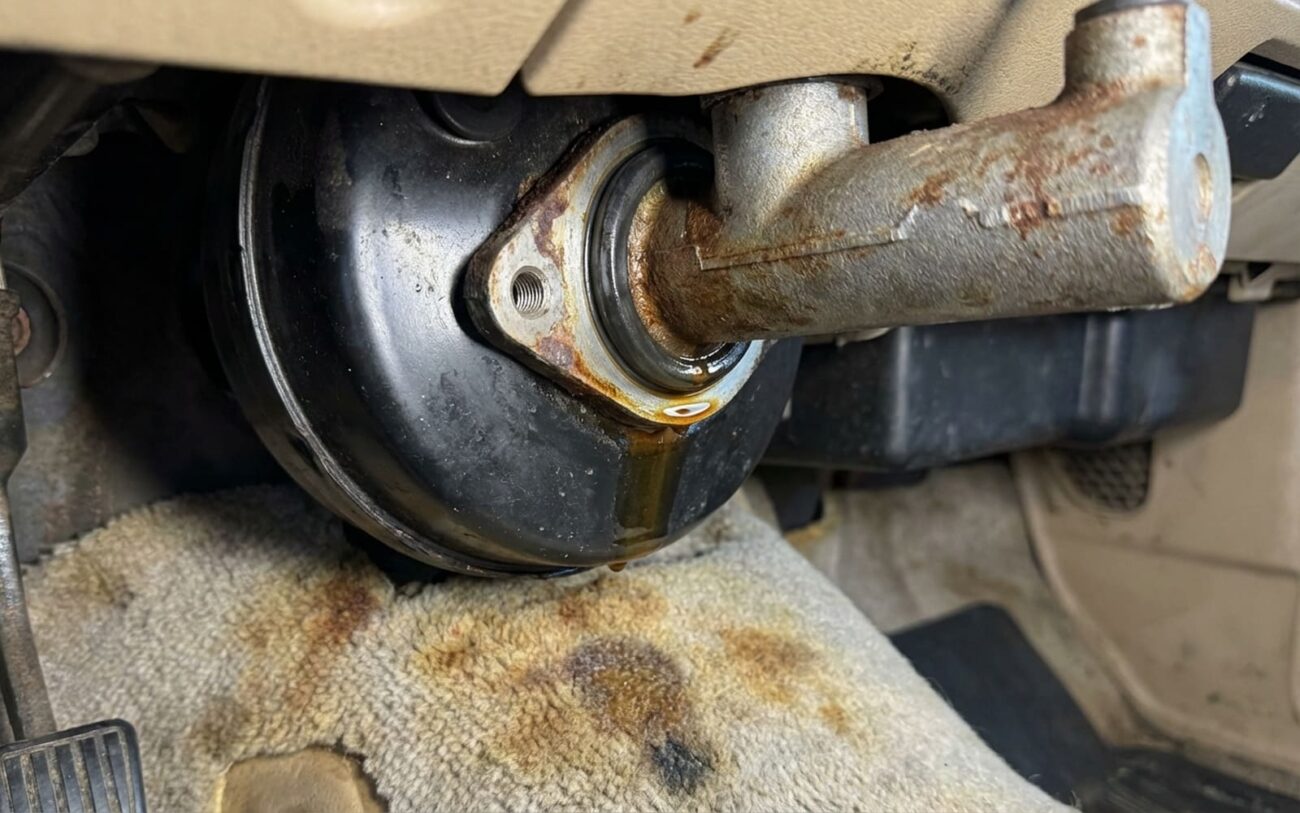
Alright, let’s talk about that puddle on your driver’s side floor. If it’s slick, a little oily, and you catch a faint, almost fishy smell, especially near the brake pedal, I’m going to tell you right now: that’s almost certainly brake fluid. And this isn’t some spilled coffee or AC condensation. This is a serious problem, and in my 25+ years turning wrenches, I’ve seen it play out hundreds of times.
The Signs: What You’re Seeing (and Feeling)
The most obvious symptom, of course, is that fluid on the floor mat. It’ll be on the driver’s side, usually pooling right where your foot rests near the brake pedal. That faint, fishy scent is a dead giveaway for brake fluid. But it’s not just a mess; it’s a symptom of a much deeper issue.
What I typically see is a failing master cylinder. This unit sits right up against the firewall, bolted to the power brake booster. Inside that master cylinder, there are pistons with seals that generate and hold hydraulic pressure. When the rear seal on the primary piston starts to go bad, brake fluid gets past it. It doesn’t leak out to the wheels; it leaks backward into the brake booster cavity. From there, it eventually finds its way through gaskets or the pushrod seal, right into the cabin.
Status: SINKING
Beyond the visible leak, you’ll feel it in the pedal. It’ll feel soft, maybe a little spongy, and often, it’ll slowly sink to the floor when you hold steady pressure at a stoplight. You’ll also notice the fluid level in the reservoir under the hood dropping, but here’s the kicker: you won’t see any external leaks at the wheels, calipers, or brake lines. That’s because the leak is internal, right into the booster.
Confirming the Culprit: My Diagnostic Approach
Okay, so you’ve got fluid on the floor and a soft pedal. That’s a strong indicator, but before you order parts, you’ve got to be sure. I’ve seen guys get fooled. A manual transmission car, for instance, has a clutch master cylinder often mounted right next to the brake master, and it can leak in the same spot. A heater core leak? That’s coolant, usually smells sweet, and feels slimy. Windshield washer fluid is typically brightly colored and evaporates quicker. Don’t guess.
The Pro Tip
“The quickest way to confirm the fluid type is with a brake fluid test strip. They react to DOT-rated fluid’s pH and moisture content. It takes seconds.”
Once you’ve confirmed it’s brake fluid, you need to look under the hood. Inspect the rear of the master cylinder where it bolts to the booster. Look for a wet, glossy film on the firewall or around the pushrod opening. Sometimes you’ll even see it inside the booster vacuum port. But here’s the definitive test, the one I always go for:
Disconnect the vacuum hose from the brake booster. If you find brake fluid inside that hose or at the check valve, you’ve got your answer. That’s conclusive evidence of an internal master cylinder leak, no question about it.
| Symptom | Likely Culprit | Common Mimics | Definitive Test |
|---|---|---|---|
| Fluid on floor near brake pedal | Master cylinder primary seal failure, allowing fluid into booster cavity | Clutch master cylinder leak, heater core leak (coolant), washer fluid spill |
Test fluid with brake fluid indicator strip. Inspect rear of master cylinder. |
| Low fluid level, spongy pedal | Internal leak past master cylinder seals into vacuum booster | Leaking caliper seal, wheel cylinder, or proportioning valve |
Remove booster vacuum hose. Check for fluid presence in hose or check valve. |
The Root Cause: Why That Seal Gives Up
So, why does this specific failure happen? It almost always comes down to what’s going on inside the master cylinder bore itself. Brake fluid, especially DOT 3 and DOT 4, is hygroscopic. That means it loves to absorb moisture from the air. Over time, that moisture-laden fluid starts to cause internal corrosion.
This corrosion leads to pitting and scoring on the precision-machined surface where the primary piston seal has to do its job. Think of it like a perfectly smooth pipe suddenly getting rough patches. Once that smooth surface is compromised, the rubber seal can’t maintain a tight hydraulic seal anymore. Fluid bypasses it, heading backward into the booster instead of forward to the brake lines.
Beyond Moisture:
Old, degraded fluid can also carry sludge or fine metal shavings. These act like sandpaper on that bore surface, accelerating wear. It’s crucial to understand this is an internal hydraulic seal failure, not just a cracked reservoir or a loose fitting. When fluid is making it into the cabin, that seal is gone, and you can’t patch it up.
The Fix: My Approach to Master Cylinder Replacement
Safety Warning: No Shortcuts Here
An internal seal failure means the master cylinder is done. Period. It needs to be replaced or professionally rebuilt. There is absolutely no safe temporary fix. And for the love of all that is holy, never, ever use “stop leak” products in your brake system. They can clog up your ABS module and lead to total brake failure. Trust me on this one.
The Standard Play: Assembly Replacement
Critical Step: Bench Bleeding. Before you even think about bolting that new master cylinder onto the booster, you must bench bleed it. This involves filling it with fluid and using a special kit (or careful technique) to push all the air out of its internal chambers. Skipping this step guarantees you’ll have a spongy pedal and a nightmare trying to bleed the rest of the system later. I’ve seen too many DIYers make this mistake.
Precision Installation: Torque Matters
Sleeve & Rebuild Specialty Only
Don’t Skip This: Making Sure the Repair is Solid
You’ve done the work, but you’re not done until you’ve thoroughly checked everything. This is your safety net. Here’s my checklist:
Validation Checklist
-
Static Pedal Test: With the engine off, pump the brake pedal a few times until it gets firm. Then, apply firm, steady pressure for at least one minute. If the pedal slowly sinks, you still have air in the system or, worse, another leak. Don’t move on until it holds rock solid.
-
Visual Inspection: Get under there with a flashlight. Check every single connection point, every bleeder screw, and especially the booster vacuum port for any sign of moisture or weeping fluid. Even a tiny bead means trouble.
-
Road Test: Take it for a drive. The pedal should feel firm and consistent. Make several stops, both gentle and firm, ensuring the car brakes straight and doesn’t pull to one side. Listen for any unusual noises.
-
ABS Check (if applicable): If your vehicle has ABS, find a safe, low-traction surface (like a gravel road or wet pavement) and perform a controlled, hard stop to activate the ABS. This confirms the module is working correctly and there’s no air trapped in its valves.
The Bottom Line: Costs, Tough Choices, and Prevention
Look, brake safety isn’t where you cut corners. Ever. But it’s fair to weigh the repair cost against the vehicle’s overall value. Here’s what you can generally expect:
| Repair Type | DIY Cost (Parts) | Shop Cost (Total) | Success Rate |
|---|---|---|---|
| Master Cylinder Replacement | $100 – $400 | $350 – $800 | 95% |
| Sleeve & Rebuild | N/A | $500 – $1000+ | 98% |
As a technician, I’ll tell you straight: if the brakes aren’t safe, the car isn’t drivable. Period. Even if the repair costs 40% of the car’s market value, safety has to come first. But this can also be a reality check for high-mileage vehicles that might have other big issues lurking around the corner. Sometimes, it’s time to move on.
Preventing a Repeat Performance
The best defense against this kind of failure is simple: disciplined brake fluid flushes. Every 2 to 3 years, get that old fluid out and put fresh stuff in. New fluid has a much lower moisture content, which drastically reduces the risk of corrosion in your master cylinder, calipers, and even the expensive ABS module. Also, make it a habit to check your brake fluid level monthly. A gradual drop can signal an internal issue long before it becomes a crisis on your floorboard.
