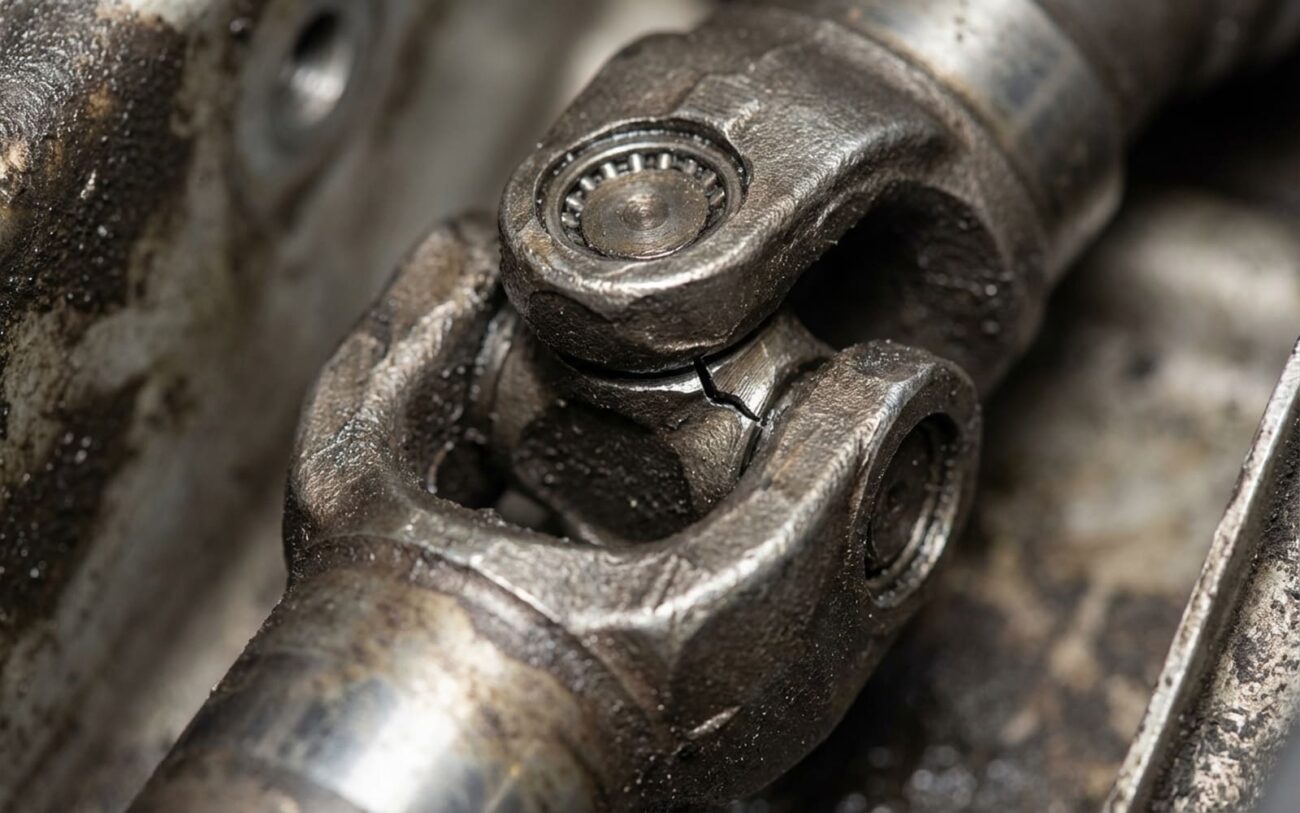
Steering Wheel Wobble: Diagnosing Vertical Play in the Column
You hop in your car, grab the steering wheel to pull yourself in, and feel it shift up and down with a distinct clunk. Or maybe you’ve noticed a vague vertical movement while driving over bumps, like the wheel isn’t quite solid. Sound familiar?
Believe me, I’ve seen this countless times over the past 25 years. That vertical slop isn’t just annoying; it’s a clear sign of internal wear in your steering column. Unlike side-to-side play, which often points to tie rods or a steering rack, this up-and-down movement along the shaft’s axis almost always means trouble inside the column itself. We’re talking worn bushings, a failing tilt mechanism, or even damaged bearings.
Now, the good news is your steering shaft isn’t going to suddenly disconnect. But what you’re feeling is real structural degradation. And here’s where I see a lot of guys go wrong: they jump to replacing intermediate shafts or rack couplings. But in my experience, especially on models like the Ford Focus Mk2 or Opel Astra H, the real culprit is usually right there, inside the column itself. If left unchecked, this can lead to erratic steering response or even electrical faults in your SRS system.
Pinpointing the Problem: Is It Inside or Out?
Before you start tearing into anything, we need to figure out if the play is truly inside the steering column or if it’s an external component mimicking the issue. This is where a lot of shops waste time and money. My go-to method is a simple two-person test:
-
Get a Helper: Have someone sit in the driver’s seat and firmly push and pull the steering wheel rim straight up and down. Tell them to really exaggerate the movement, but don’t yank it sideways.
-
Inspect Under the Dash: You’ll be under the dash with a good flashlight – or even better, a borescope if you have one. Your goal is to watch the steering column where it passes through the firewall and connects to the intermediate shaft.
-
Watch for Independent Movement: This is the key. Look closely at the outer steering column jacket (the big tube) and the inner steering shaft (the smaller shaft that actually turns). If the outer jacket moves up and down independently of the inner shaft as your helper wiggles the wheel, then you’ve confirmed it: the problem is internal to the column. That’s usually worn upper or lower bushings, failed tilt pivot pins, or a fractured column jacket.
If the entire column assembly, including the outer jacket, moves relative to the firewall, then you might have a loose mounting bracket under the dash. That’s an easier fix, so always check that first.
-
Check the Intermediate Shaft: If the play isn’t in the column itself, watch the intermediate shaft. This is the shaft that connects the steering column to the steering rack. Look for excessive play in its universal joints (U-joints) or where it connects to the steering rack. Sometimes, a worn U-joint can feel like column play, but it’ll be external to the column housing.
-
Listen for Noise: If you’re hearing clicking, grinding, or ratcheting during the vertical movement, that’s another big clue.
-
If the noise is clearly coming from inside the column during tilt adjustments or vertical movement, it’s likely sheared tilt lock teeth, broken plastic bushing retainers, or a brinelled upper bearing race.
-
To rule out the clock spring (the electrical contact for your airbag and horn), disconnect the battery, remove the steering wheel shrouds, and try to isolate the clock spring. If the noise persists when you move the column up and down or operate the tilt, then the column structure itself is the problem.
-
A dry slip yoke in the intermediate shaft can also make noise, but that’s usually more of a clunk during turning or suspension travel, not typically vertical play.
-
The Guts of the Problem: Why Columns Give Up
Once you’ve confirmed the issue is inside the column, it helps to know what you’re actually dealing with. From what I’ve seen in the shop, three main failure modes account for almost all vertical play, especially in high-mileage vehicles or those that see a lot of “abuse” (even if unintentional):
-
Worn Plastic Bushings: This is probably the most common culprit. The column shaft rides inside plastic bushings, usually at the upper and lower ends. They’re designed to keep the shaft centered and reduce friction. But every time someone uses the steering wheel as a handle to hoist themselves into or out of the car, they’re putting vertical stress on these bushings. They just weren’t designed for that kind of load, and over time, they wear out, creating that telltale slop. In fact, Ford even issued a Technical Service Bulletin (TSB) for the Focus Mk2 regarding a steering column knock, specifically pointing to wear between the upper shroud and column jacket – which is exactly what happens with these bushings.
-
Fractured Tilt Mechanism Components: Many columns have a tilt function. Inside that mechanism, you’ll find stamped steel brackets, pivot pins, and plastic locking cams. These parts can crack or shear, especially if the tilt lever is frequently used roughly or if the column is slammed into position. This often produces a distinct clicking or grinding noise when you try to adjust the wheel, and the column won’t hold its position firmly.
-
Bearing Failure: Less common than bushing wear, but still a factor. The steering shaft also rides on bearings, typically an upper bearing near the wheel. Corrosion from moisture in the cabin or impact damage (like hitting a pothole really hard) can cause brinelling – essentially indentations – in the bearing races. This leads to axial play even if the plastic bushings are still in decent shape.
Fixing It: DIY or Call a Pro?
Critical Safety Alert
Working on a steering column means dealing with the airbag system and the column’s collapse zone. Reassembly mistakes can compromise these critical safety features in a crash. Always, and I mean always, refer to a factory service manual for airbag procedures, torque specs, and lock plate assembly. Don’t guess.
Okay, so you’ve diagnosed the problem. Now what? Your repair path depends on what exactly is broken. Here’s how I approach it:
Bushing Replacement DIY-FEASIBLE (with caution)
Tilt Mechanism or Bearing Repair Professional Only
Cracked Column Jacket Non-Repairable
Temporary “Tape” Fixes Absolutely Not Recommended
Finishing the Job: Verifying the Fix and Keeping It Fixed
Don’t just assume the job’s done when the wheel stops moving. Verification is absolutely essential – especially after you’ve been messing with airbag systems. Once everything’s buttoned up, apply at least 25 pounds of force to the steering wheel rim, pushing and pulling it up and down. You should feel zero detectable movement. The tilt mechanism also needs to lock firmly without any slip or noise. If there’s any doubt, you haven’t fixed it right.
How to Prevent This From Happening Again
-
Break the Habit: This is probably the biggest one. Stop using the steering wheel as a handle to get in and out of the car! It puts immense stress on those internal bushings and pivot points. Use the door frame, the roof pillar, or the seat itself. Your column will thank you.
-
Routine Checks: Every few months, just give the wheel a firm tug up and down. It takes two seconds, and you can catch minor movement before it becomes a major problem.
-
Watch for Rust: If you live in a region where they salt the roads, or if your car sees a lot of moisture, inspect the footwell area once a year. Look for surface rust on the lower column end and intermediate shaft. Corrosion can accelerate wear on bearings and U-joints.
-
Don’t Ignore Other Steering Issues: If your car pulls after a repair or alignment, get it sorted. Unresolved steering issues can put abnormal stress on the column over time. (And if it still pulls, check out my thoughts on what to do next.)
The Bottom Line: Cost vs. Value
So, is it worth fixing? That’s always the million-dollar question. Here’s a general breakdown of what you can expect, but remember, prices vary wildly by region and specific vehicle:
| Repair Type | DIY Cost (Parts) | Shop Cost (Total) | Success Rate | Secondary Risk |
|---|---|---|---|---|
| Bushing Kit Repair | $30 – $80 | $250 – $500 | 95% | Recurring play, binding, or clock spring damage if not done right |
| Full Column Replacement | $400 – $800 | $800 – $1,500 | 100% | SRS light, switch faults, or wheel miscentering if not calibrated/installed correctly |
