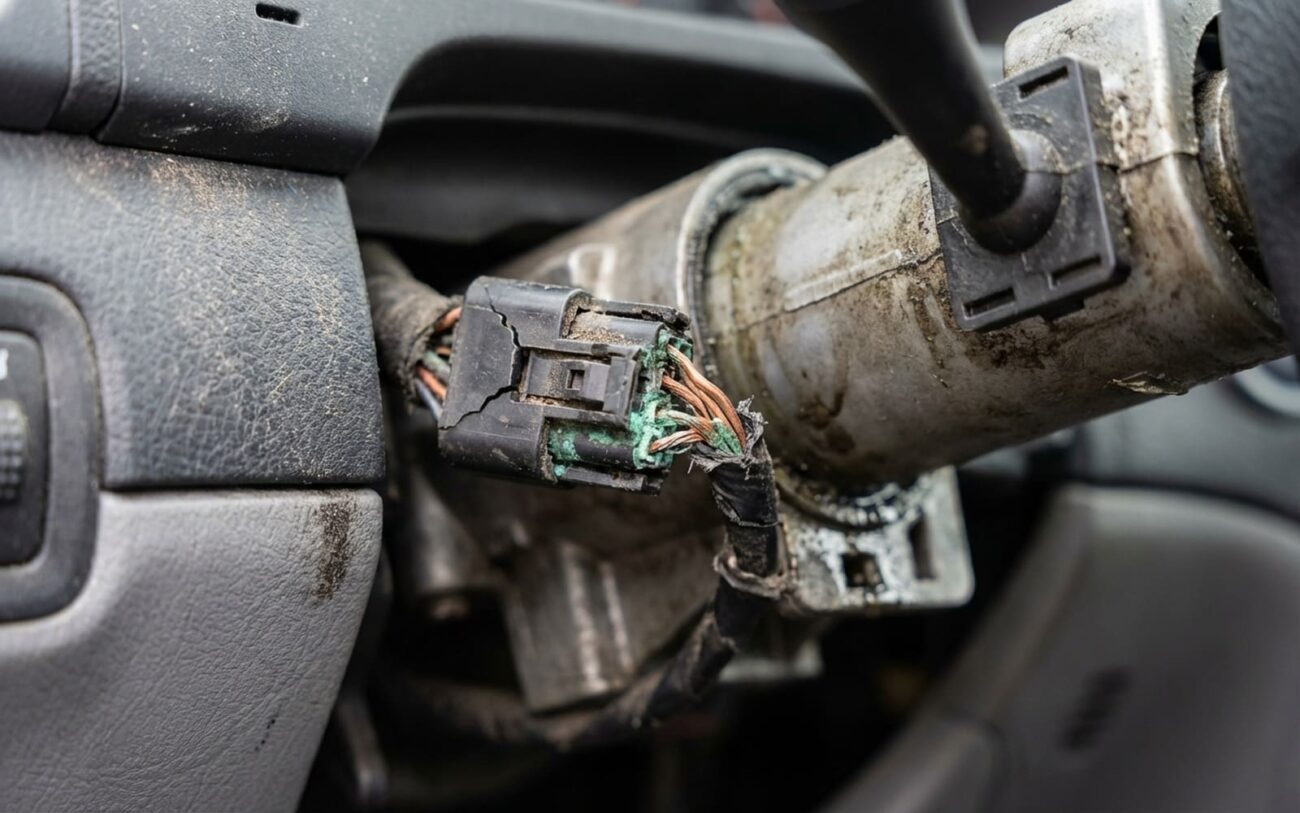
When Your Steering Wheel Won’t Stay Put: Adjuster Problems Explained
After 25 years in this business, I’ve seen just about everything that can go wrong with a steering column. One of the more unsettling issues, and frankly, a dangerous one, is when your steering column adjuster starts to fail. Whether you’ve got a simple manual tilt or a fancy electric tilt-and-telescopic setup, the main symptom is always the same: the steering wheel just won’t stay where you put it. You adjust it for comfort, drive a few miles, and suddenly it’s sagging down or sliding right into your chest. That’s not just annoying; it’s a serious safety hazard.
I can’t stress this enough: if that column shifts while you’re driving, especially in a turn, it compromises your control of the vehicle. It’s not something you can just “deal with” until you get around to it. Get it looked at immediately.
ADJUSTER STATUS
Status: FAIL
Symptoms & My Diagnostic Approach
So, you’ve got a steering wheel that’s doing its own thing. What exactly are you seeing or hearing? The symptoms usually give me a good starting point, but I always follow up with specific tests to avoid throwing parts at a problem.
What You’ll Notice First
- The Drifter: This is the big one. You set your wheel, lock it down, and it still slowly (or suddenly) sags, tilts, or slides in/out while you’re driving. That’s a clear mechanical failure in the adjuster.
- Manual System Quirks: If you’ve got a manual tilt, you might flip the release lever and feel absolutely no resistance, like it’s just flopping around. Or, worse, the lever won’t budge at all, locking the wheel in an uncomfortable position. If you lock it, and can still wiggle the wheel slightly up/down or in/out, that’s internal wear or a broken locking pawl.
- Electric System Headaches: These have their own set of issues. You press the adjustment switch, hear a click from the relay under the dash, but nothing happens. Sometimes, the motor runs continuously, even after the column hits its travel limit – that’s usually a failed position sensor or, more commonly, a stripped gear.
- Clunks and Play: If you push or pull on the wheel, even when it’s supposedly locked, and you feel a clunk or excessive play, that points to worn internal pivot bearings or telescoping rails.
Pro Tip:
Don’t jump to conclusions. A clunk under the dash could be a worn intermediate shaft U-joint, not the adjuster. No movement in an electric system might just be a blown fuse or a wiring issue, not a dead motor. Always check the simple stuff first.
My Diagnostic Process: Isolating the Problem
Before I even think about replacing a steering column — which can be a huge expense — I need to pinpoint exactly where the fault lies. Is it the adjuster mechanism itself, or something else in the steering system? Here’s how I break it down:
| Symptom | Likely Adjuster Fault | Common External Causes | What I Test |
|---|---|---|---|
| Steering column drifts or won’t lock | Sheared locking teeth, broken pawl, stripped actuator gear (electric) | Loose column-to-dash mounting bolts, cracked mounting bracket |
I’ll remove the shrouds and manually operate the lock. Then I check for any movement between the column bracket and the chassis. If the bracket moves, it’s external. If the internal mechanism is sloppy, it’s the adjuster. |
| Clunk or play when pushing/pulling wheel | Worn internal pivot bearings or telescoping rails | Worn intermediate shaft U-joint, loose rack mounts |
With the column locked tight, I’ll rock the wheel firmly. I’ll get under the dash and observe the intermediate shaft U-joints and even check the rack mounts. If there’s no motion in those external components, then the play is definitely in the column’s adjuster mechanism. |
| Electric motor runs but no movement | Stripped plastic drive gear, failed jack screw, detached cable | Binding steering shaft bearing, obstruction in column path |
First, I check for power at the switch and motor connector with a digital multimeter. Many “failed motors” are just open circuits or blown fuses. If the motor is getting power and running, I’ll disconnect the motor or its drive cable from the column. If the motor then runs freely when commanded, the problem is mechanical within the adjuster – likely a stripped gear or a binding shaft. |
What Actually Breaks Inside the Adjuster
When I’ve ruled out all the external stuff and confirmed it’s an internal adjuster issue, it usually comes down to a few common culprits. Manufacturers often use cost-effective parts, and some just don’t hold up over time.
- Plastic Drive Gears (Electric Systems): This is a big one, especially on certain BMW and Ford models. Those plastic gears are designed to work, but they’re a ticking clock in a high-torque environment. If the motor is constantly forced against its travel limits, or if the column binds, those teeth will strip. Once a few teeth go, the gear slips under load, and eventually, it’s completely useless.
- Worn or Sheared Locking Pawls/Cams: Both manual and electric systems rely on some kind of locking mechanism to hold the column in place. These metal components can shear off or wear down, especially if the lever is slammed shut repeatedly, or if the mechanism isn’t fully engaged before you start driving.
- Corrosion and Binding: This is a silent killer, particularly in places with a lot of road salt or high humidity. Moisture gets into the telescoping rails or pivot points, causing rust and binding. This makes the column stiff, hard to adjust, and eventually, it won’t lock properly.
Repairing It: What’s Possible (and What’s Not)
Safety First: Airbag Systems
Any work on the steering column means you’re right next to the airbag system. This isn’t a suggestion, it’s a rule: ALWAYS disconnect the battery and wait at least 15 minutes before you start. This gives the airbag module’s backup power supply time to deplete, preventing accidental deployment. You do NOT want that airbag going off in your face.
Replacing an Electric Adjuster Motor DIY-FEASIBLE
Manual Adjuster Lever Issues Professional Only
Internal Component Failure NON-REPAIRABLE
Validating the Repair: Don’t Skip This Step
Once the work is done, you can’t just button it up and send it out. I’ve got a specific checklist I go through to make sure everything is solid. This is about safety and making sure the problem is truly fixed.
My Post-Repair Checklist
-
With the column locked, I apply about 25 lbs of force to the wheel in all directions (up, down, in, out, twisting). There should be absolutely zero movement. If there’s any play, I know I’ve still got an issue.
-
For electric systems, I cycle the adjustments through their full range of motion multiple times. It needs to move smoothly, without binding, and I’m watching for any new error codes popping up on the scanner.
-
I verify the SRS (airbag) system is operational. No airbag lights on the dash, and I’ll scan for any stored codes. This is non-negotiable.
-
I’ll quickly check the steering wheel alignment. Sometimes, if the column was removed or the intermediate shaft disturbed, the wheel might not be perfectly straight. Misaligned wheels can cause confusion with actual alignment issues, so I like to rule that out.
Cost, Risk, and When to Walk Away
Let’s talk brass tacks. Fixing a steering column adjuster can range from a relatively simple job to a major expense. Here’s what I typically see in terms of cost:
| Repair Type | DIY Cost (Parts) | Shop Cost (Total) | Success Rate |
|---|---|---|---|
| Replace electric motor | $100 – $300 | $400 – $700 | High |
| Replace entire assembly | $500 – $1,500 | $1,200 – $2,500 | Very High |
Prevention and Early Detection
For manual systems, the best thing you can do is keep the lever area clean of debris and avoid slamming it shut. Be gentle. For electric systems, try not to “bounce” the motor off the travel stops. Holding the switch down until it clicks repeatedly just stresses those plastic gears. Listen for any new clicking, grinding, or sluggish movement when you adjust the wheel. Catching it early can turn a $2,000 column swap into a much more manageable $300 motor replacement. Trust me on that one.
