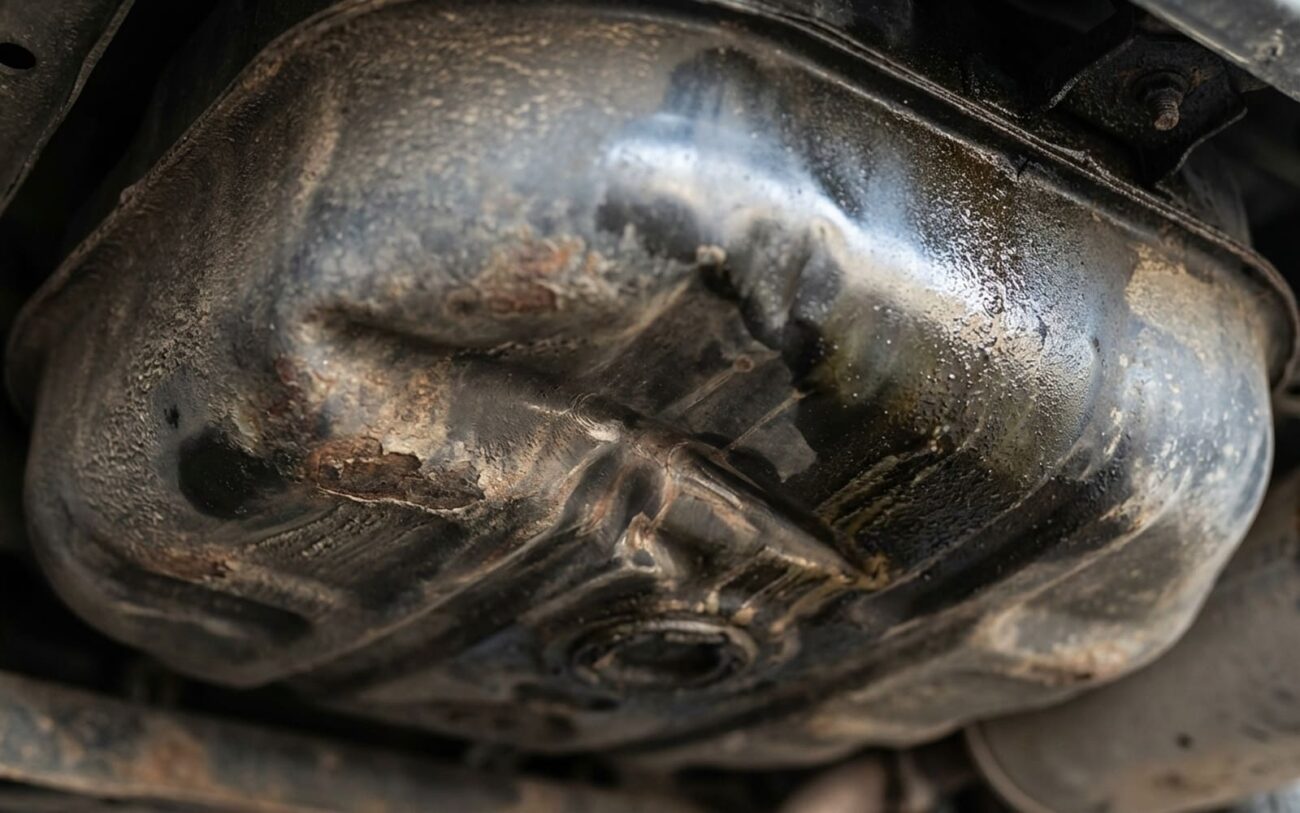
You see a lot of strange things in 25 years under a hood, but a collapsed fuel tank? That one always gets people talking. It’s not just a dent; it’s a structural failure, and it tells you something critical went wrong with the vehicle’s breathing system. Let me walk you through what I’ve learned about these.
What a Collapsed Tank Looks & Feels Like
First off, a healthy fuel tank is rigid. It’s designed to handle a little pressure and vacuum from the EVAP system. But when that system fails, the tank can’t breathe. The engine’s fuel pump keeps pulling fuel out, and if no air can get in to replace it, you get a vacuum. Atmospheric pressure outside the tank starts to crush it. Most modern tanks are high-density polyethylene (HDPE), and they just aren’t built to resist sustained vacuum.
What you’ll see are deep inward dents, usually on the top or sides where the plastic is thinner. It’s not just a scuff; it’s a major deformation. I’ve seen them look like they’ve been kicked in by a giant. And once it starts, it only gets worse.
But before you even see the physical damage, you’ll feel it. The most common complaint I hear is at the gas station: the pump nozzle keeps clicking off every few seconds, even when the tank is nearly empty. That’s because the vacuum inside is fighting the incoming fuel, building pressure in the filler neck and tricking the pump’s automatic shutoff. You might also notice the fuel gauge reading wrong, or not topping out. That’s the sender float arm hitting a warped tank wall or a deformed fuel surface.
And here’s the kicker: this isn’t just a tank issue. It’s a fuel delivery emergency. That vacuum can starve the fuel pump. A pump running dry overheats fast and will fail, often without warning. I’ve pulled pumps that looked fine from the outside but had damaged impellers from cavitation. So, yes, if your tank is collapsing, you’re looking at more than just a body panel repair; you’re risking a breakdown.
The Real Culprit: Why the Tank Can’t Breathe
A collapsed tank is almost never the primary failure. It’s a victim. The real problem is usually a blocked vent path in the EVAP (Evaporative Emission Control) system. This system is complex, with valves and hoses managing fuel vapor and maintaining pressure balance. The tank isn’t sealed; it’s designed to breathe through this system.
When fuel is consumed, air needs to enter to replace it. This airflow is controlled by vent valves, the charcoal canister, and internal tank components like the ORVR (Onboard Refueling Vapor Recovery) valve. The ORVR valve is especially important; it lets air in during refueling and vents vapor during normal operation, but seals during a rollover. If it sticks shut, the tank becomes a sealed container. Every gallon of fuel burned creates a gallon of vacuum. HDPE tanks simply can’t handle that.
On vehicles like the Ford Focus Mk2, the ORVR valve is often integrated right into the fuel pump module. When it fails, it’s a common cause for these collapsed tanks. What makes it tricky is that a seized ORVR valve often won’t throw a Check Engine light. The system doesn’t always monitor that specific flow path directly. That’s why you often don’t get a warning until the tank is visibly collapsing.
Now, a failed purge valve under the hood or a clogged charcoal canister can cause similar symptoms, but those usually trigger a Check Engine light with codes like P0446 or P0455. So if you’ve got a collapsed tank and no codes, my money is usually on a mechanical blockage in the vent path, often that ORVR valve.
How I Diagnose a Collapsed Fuel Tank
Before you start pulling parts, you need to confirm what’s actually going on. Misdiagnosing this can lead to replacing expensive components you don’t need. Here’s my process:
| What You See/Feel | What It Usually Means | Common Mimics (Look Here Too) | My Go-To Test |
|---|---|---|---|
| Tank is Visibly Collapsed | Sustained vacuum in the tank. The tank itself is a secondary failure. | Failed EVAP vent solenoid, clogged charcoal canister, pinched vent hose, seized ORVR valve. |
Perform a smoke test with the fuel cap off. Smoke should flow freely from the filler neck. Then seal the system, command the vent solenoid open with a scan tool, and watch for smoke at the vent. |
| Refueling Difficulty (Pump Clicks Off) | Air can’t escape the tank fast enough as fuel enters. | Blocked filler neck vent, failed in-tank check valve, kinked vapor return line, faulty EVAP purge valve. |
Disconnect the main vent line at the tank (or canister, depending on access) and try refueling. If fuel flows normally, the blockage is upstream in the vent path. |
| Reduced Capacity / Inaccurate Gauge | Tank deformation altering fuel volume or restricting the float arm. | Faulty fuel level sender, wiring issue, or instrument cluster problem. |
Visually inspect the tank shape. If it’s clearly deformed, that’s your answer. If it looks fine, test the sender resistance with a multimeter across its range of motion. |
Pro Tip: Always check for codes, even if the light isn’t on. A pending code can give you a head start. And if you have a scan tool, monitor the Fuel Tank Pressure (FTP) sensor live data. A steady, increasing vacuum when the engine is off and the purge valve is closed is a dead giveaway.
How I Fix It: From Valve Swap to Tank Replacement
You can’t “inflate” a crushed tank back to normal. Once it’s deformed, the plastic’s structural integrity is compromised. But the repair path really depends on how bad the damage is and what caused it.
Path for a Failed ORVR Valve (Tank Not Severely Damaged) DIY-FEASIBLE with caution
Safety is paramount here: Relieve fuel pressure first (pull the fuel pump fuse and crank the engine), disconnect the battery, and siphon as much fuel as possible. You’ll need fuel line disconnect tools and a socket set. Always use a new seal for the pump module, and inspect the locking ring for damage. I always label every hose and electrical connector before disconnecting them—it saves a lot of headaches during reassembly, especially in a cramped space.
Path for a Mildly Deformed Tank PROFESSIONAL-ONLY ASSESSMENT REQUIRED
Path for a Severely Deformed or Cracked Tank NON-REPAIRABLE → REPLACE
Making Sure the Job is Done Right
A proper repair isn’t finished when the tank is bolted back on. It’s done when the system is verified. I’ve seen too many shops replace a pump module and send the car out, only for the problem to return weeks later. You need to validate the fix.
Here’s what I do:
- Full EVAP Smoke Test: With the fuel cap on and the system sealed, I’ll command the vent solenoid open using my scan tool. Smoke should flow freely from the vent valve near the tank. If it doesn’t, there’s still a blockage—maybe in the canister, a kinked line, or a faulty vent valve.
- Monitor Fuel Tank Pressure (FTP) Sensor: With the scan tool, I’ll watch the FTP sensor’s live data. During normal operation, the system should cycle between slight vacuum and pressure during purge events. After the purge valve closes, the pressure should stabilize. If it keeps dropping into a sustained vacuum, the tank still can’t breathe.
- Full Refuel Test: This is non-negotiable. Take the car to the gas station and fill it up. The nozzle should allow uninterrupted flow until the tank is full. Any premature shutoffs mean the vapor path isn’t fully clear, and you’re not done yet.
These steps—smoke test, scan data, and refuel verification—are what separate a real fix from a guess. They’re critical for preventing a comeback.
What This is Going to Cost You
Costs always vary, but here’s a realistic breakdown based on what I see in my shop. These are U.S. market rates, and they can differ by region or specific shop.
| Repair Type | DIY Cost (Parts Only) | Shop Cost (Est.) | Success Rate (If Done Right) | Key Risks if Failed |
|---|---|---|---|---|
| Replace Fuel Pump Module (for ORVR valve) | $200–$400 | $500–$800 | High | Repeat tank collapse if the vent path is still blocked; fuel leak if the seal isn’t properly installed or torqued. |
| Replace Fuel Tank & Module | $600–$1,000+ | $1,200–$2,000+ | Very High | Major fuel leak or fire risk if lines are improperly connected; significant labor cost if the job needs to be redone. |
Here’s the reality check: if the total repair cost starts approaching 40% of your car’s market value, you need to weigh your options carefully. On an older Ford Focus with high mileage and other aging components, spending $1,800 on a fuel tank might not be the best financial move. But if the car is otherwise solid and you plan to keep it for years, a proper repair restores safe, reliable operation. I’ve seen these fixes last another 100,000+ miles when everything is done correctly.
Stopping It From Happening Again
There’s no scheduled maintenance for the ORVR valve or the EVAP vent system. It’s one of those “wait for failure” components. But that doesn’t mean you’re completely helpless. Early detection is your best defense.
Pay attention when you refuel. If the pump clicks off repeatedly when the tank isn’t full, don’t ignore it. That’s your first major warning sign. Also, listen when you remove the gas cap. A soft hiss is normal as pressure equalizes. But a loud rush of air—especially suction—means vacuum built up inside. That’s a red flag that the vent system isn’t doing its job.
If you have a scan tool, monitor the fuel tank pressure sensor live data. If you see vacuum steadily increasing over time after the engine shuts off, the system isn’t venting. Address it then, before the plastic gives way and you’re looking at a much bigger bill.
Think of it like any other critical system without a dashboard light, like low differential fluid. Ignoring the early signs leads to expensive damage. Catching a vacuum lock early can save you hundreds, or even prevent a roadside breakdown. Stay alert, stay safe, and don’t let emissions controls become an afterthought.
