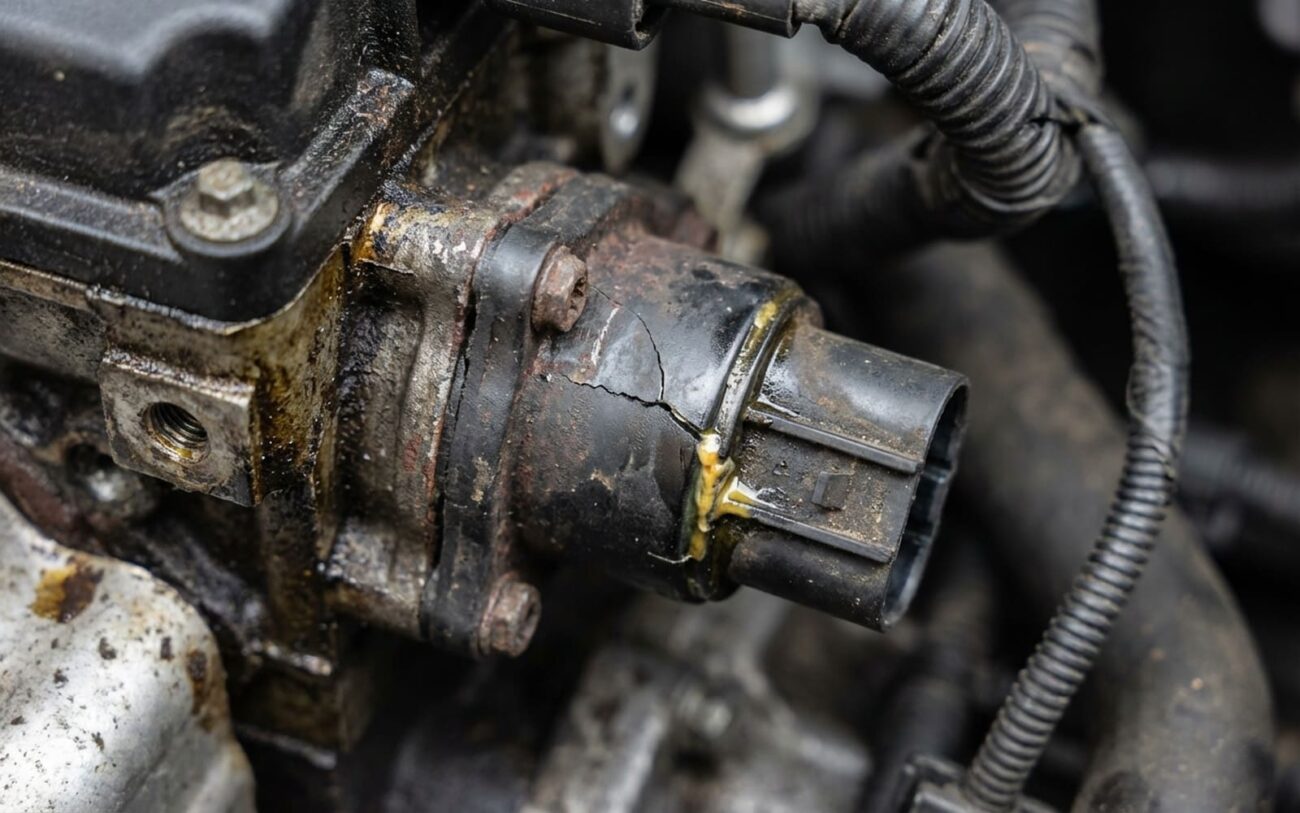
Alright, let’s talk about a common headache on the Zafira B, especially if you’re running the Z20LEH or Z18XER engine: the electronic thermostat. Opel and Vauxhall call it a map-controlled thermostat, and in my 25+ years turning wrenches, I’ve seen these things fail more often than I care to count. It’s not just a hunch; if your engine temperature feels off, this part is usually the first suspect.
Recognizing the Symptoms & What They Really Mean
The most direct clue you’ve got a problem with the thermostat itself is a check engine light, usually accompanied by diagnostic trouble codes P0597, P0598, or P0599. These codes specifically point to an issue with the thermostat’s heater control circuit. Now, it’s possible the fault is in the wiring harness or even the ECU, but if your connector and harness check out electrically (and we’ll get to that), the thermostat unit is almost certainly the culprit.
How it fails dictates what you’ll experience. I see two main scenarios:
- Stuck Open (Most Common): This is when the thermostat fails in an open position, meaning coolant flows freely from a cold start. Your engine struggles to reach its normal operating temperature of around 90–95°C. You’ll notice the cabin heater only delivers lukewarm air, even after a long drive. Fuel economy usually takes a hit, too. A scan tool will confirm the coolant temperature sensor (often mounted right nearby) reads persistently low—typically stuck below 80°C. Many drivers ignore this, but running chronically cold is bad news for your engine: oil doesn’t reach optimal viscosity, leading to poor lubrication, increased wear, and sludge buildup over time. Don’t let it go.
- Stuck Closed (Less Common, More Urgent): This is the one that’ll make your heart pound. Coolant can’t circulate to the radiator, so the engine temperature gauge climbs rapidly—I’ve seen it hit 105°C within minutes. The cooling fans will kick on at full blast, but they won’t help much. If you keep driving, you’re risking severe damage: warping the cylinder head, blowing the head gasket, or even cracking the engine block. I’ve seen this turn a simple thermostat job into a full engine rebuild. So, whether it’s stuck open or closed, this isn’t a “drive it until it dies” situation. It needs attention, and it needs it now.
Real-World Diagnosis: Don’t Just Guess
Look, before you replace anything, you’ve got to confirm the part is actually faulty. I’ve seen too many DIYers—and even some younger techs—jump straight to replacement based on a code or a symptom alone. That’s a costly mistake. A P0597 code could be a broken wire, a corroded connector, or even a rare ECU driver circuit failure. Overheating might be a clogged radiator, a collapsed lower hose, or a failing water pump. Under-warming? Could mean someone forgot to put a thermostat in during a previous repair, or installed a conventional one backwards. You have to eliminate these possibilities systematically. Here’s how I approach it in the shop:
If you have P0597-P0599 DTCs:
These codes indicate an issue with the thermostat’s internal heater element or its circuit. First, disconnect the thermostat’s electrical connector. Then, grab your multimeter and measure the resistance across the two terminals on the thermostat itself. A healthy heater element usually reads between 8–15 ohms. If you get an infinite reading (open circuit) or zero ohms (short circuit), the internal heater is definitely shot, and the thermostat is bad. If the resistance is good, then the thermostat’s heater is likely fine, and you need to check the vehicle’s wiring. With the key on, check for a 12V supply and a proper ground at the harness connector. If those are missing, you’re chasing a wiring or ECU issue, not the thermostat itself.
If the engine is running chronically cold (stuck open symptoms):
This means the thermostat isn’t closing properly, letting coolant flow too early. After a cold start, keep an eye on your temperature gauge (or better yet, a scan tool for live data). Use an infrared thermometer on the thermostat housing. A properly functioning thermostat should keep the upper radiator hose cool to the touch until the engine coolant temperature reaches around 90°C. If that upper hose starts warming up within 2–3 minutes of a cold start, coolant is circulating too early. That’s a clear sign your thermostat is stuck open. Other mimics to consider: is there even a thermostat installed? I’ve seen them removed by previous owners. Or, less common, an aftermarket radiator cap that isn’t holding pressure correctly can prevent proper warm-up.
If the engine is rapidly overheating (stuck closed symptoms):
This is the urgent one. With the engine hot (and please, use extreme caution—wear gloves and eye protection), carefully feel both the upper and lower radiator hoses. If the upper hose is cold and the system pressure feels low, it’s a strong indicator the thermostat isn’t opening and blocking flow right at the engine. Now, if the upper hose is hot and rigid (meaning there’s pressure) but the lower hose is still cold, the blockage is likely further downstream—in the radiator core, a collapsed lower hose, or you’ve got a failed water pump impeller. Don’t forget to check your coolant level and for any air pockets; an air lock can cause localized overheating even with a good thermostat.
Why These Thermostats Fail (It’s Not Always Simple)
So, why do these Zafira B thermostats give us so much grief? Well, it’s not your grandpa’s simple wax-pellet unit. This is an electronically modulated thermostat. It’s got a traditional wax actuator for mechanical control, but also a Positive Temperature Coefficient (PTC) heating element. The ECU uses that heater to fine-tune the opening timing, mainly for emissions control and fuel efficiency. The whole thing is sealed up in a plastic housing—non-serviceable, non-repairable. You can’t just clean it or adjust it.
The root cause of failure is almost always internal degradation from constant thermal cycling. That PTC heater is subjected to continuous on/off cycles and extreme temperatures under the bonnet. Over time, the insulation on the heating coil breaks down, leading to an open circuit or an internal short. Once that heater fails, the ECU loses its ability to modulate the thermostat’s opening, and it reverts to passive wax operation. Even then, the wax pellet itself can degrade, losing its precise expansion characteristics, or the internal spring mechanism can fatigue and stick.
This isn’t just my observation; there are known service bulletins from Opel addressing premature failure of this map-controlled thermostat (for example, part number 55 323 467) on the Z20LEH and Z18XER engines, specifically citing the PTC heater as a weak point. But it’s crucial to understand what is and isn’t a thermostat issue. A coolant leak from the housing is usually a failed O-ring or sealing surface, not the thermostat’s internal mechanism. A faulty coolant temperature sensor will give you incorrect readings and poor warm-up, but that’s a separate component. Electrical faults in the wiring harness or ECU are external to the unit. When I say the thermostat has failed, I mean that sealed actuator assembly has lost its ability to regulate coolant flow as the ECU commands.
The Fix: Replacement & The One Critical Step
Once you’ve definitively confirmed the thermostat is faulty, your only real option is full replacement. This unit cannot be disassembled or repaired. Any attempt to open it will destroy the internal seals and calibration. The fix is straightforward: replace the entire assembly.
For someone with basic mechanical skills, this is a DIY-FEASIBLE repair. You’ll need an OEM or a high-quality aftermarket electronic thermostat (and I mean high-quality; avoid the ultra-cheap units—they often fail within months). You’ll also need a new rubber sealing ring and the correct coolant—typically Dex-Cool or a GM/Opel-approved equivalent. Tools required include a deep-well socket (usually 27mm or 30mm for the housing nut), a torque wrench, and hose clamp pliers.
The single most critical step isn’t removing the old unit; it’s properly bleeding the cooling system afterward. The Zafira B is notorious for trapping air, especially around the thermostat and heater core. If you don’t bleed it correctly, those air pockets will cause localized overheating, give you false temperature readings, and can even lead to head gasket damage over time. Always follow the factory bleed procedure. This usually involves opening a bleed screw on the thermostat housing or coolant pipe while slowly filling the system. For a truly complete air removal, I often recommend a vacuum fill tool.
When reinstalling, torque the housing nut to specification—typically 15–20 Nm plus a 90-degree angle turn. Overtightening is a common mistake; it cracks the plastic housing and guarantees a coolant leak. Don’t skip the torque wrench here.
I’ve heard of temporary workarounds, like placing cardboard in front of the radiator to block airflow and force higher engine temps when the thermostat is stuck open. Let me be clear: this is a TEMPORARY / LAST-RESORT tactic at best. It eliminates your cooling safety margin and risks sudden, catastrophic overheating if the thermostat decides to seize closed or if you get stuck in traffic. I absolutely do not recommend it—it’s not a repair; it’s a gamble with your engine’s life.
Post-Repair Validation: Don’t Assume It’s Fixed
Don’t just button it up and assume the job’s done. You need to verify that the new thermostat is working correctly and that the system is sealed and completely air-free.
- Clear Codes: First, clear all stored DTCs using a diagnostic scan tool.
- Monitor Warm-up: Then, monitor live data while performing a cold-start drive cycle. The coolant temperature should rise steadily, reaching 85–90°C within 5–10 minutes of driving. During this initial warm-up, the upper radiator hose should remain cool to the touch—a good sign the thermostat is holding coolant in the engine. Once the temperature hits that threshold, you should feel the hose suddenly get hot as the thermostat opens.
- Check for Leaks: After a full heat cycle, let the engine cool completely. Then, inspect the thermostat housing, all hose connections, and any bleed points for any signs of seepage. I always recommend two full heat cycles—cold to hot and back again—with no signs of leakage or abnormal temperature behavior.
- Final Drive: Finally, drive the vehicle for 24–48 hours under normal conditions. If no check engine light returns and no P0597-series codes reappear, then, and only then, can you consider the repair successful.
Cost, Risk, & Why You Should Just Fix It
Let’s talk real-world economics here. A Zafira B in decent condition is still worth anywhere from €2,000 to €4,000. So, what’s the cost of this repair?
- DIY with OEM-quality part: You’re looking at roughly €80 – €150 for the part and coolant. If you do the bleeding correctly, your success rate is easily 98%. The biggest risk? Mess up the bleeding, and you’re looking at localized overheating and a potential head gasket failure down the line.
- DIY with cheaper aftermarket part: Parts might be €50 – €100. But the success rate drops to maybe 85% in my experience, purely due to inconsistent part quality. You risk premature repeat failure, meaning you’re doing the job again within a year.
- Shop repair: Expect to pay €250 – €400, depending on labor rates. They should use a quality part and bleed it properly, so the success rate is high.
Even at the high end, a professional repair is only 10–20% of the car’s value—well below the typical threshold where repair becomes questionable. Letting this go isn’t cheaper: the poor fuel economy from chronic under-warming adds up, and the risk of catastrophic overheating could easily lead to a €1,500+ head gasket job, or even a scrapped engine. Replacing the thermostat isn’t just the right technical move; it’s the only financially sound decision for a car like the Zafira B.
Prevention & Monitoring: Stay Ahead of the Game
You can’t stop the thermostat from eventually wearing out—it’s a consumable component with a finite lifespan. But you can certainly extend its life and avoid secondary damage with proper maintenance.
Always, always use the manufacturer-specified coolant. For these engines, that means Dex-Cool or an approved equivalent meeting GM 6277M or Opel specifications. Using the wrong stuff can lead to sludge, corrosion, or deposits that interfere with the thermostat’s valve movement and degrade that PTC heater. And whenever you perform any cooling system work—a radiator flush, hose replacement, or water pump job—take the time to bleed the system properly. Air pockets cause thermal cycling stress and hot spots that accelerate wear on the wax pellet and heater element.
My best advice? Early detection is your best prevention.
-
Pay attention to your car’s warm-up behavior. If the cabin heater takes longer to produce heat on cold mornings, or your trip computer shows declining fuel economy, don’t ignore it. Investigate.
-
Use a basic OBD2 scanner to check for pending codes. A P0597 might be stored long before the check engine light even illuminates, giving you a heads-up.
Catching a failing thermostat early means you can plan the repair, avoid breakdowns, and prevent collateral damage to the engine. In my experience, staying ahead of this issue saves more than just money—it saves a whole lot of hassle and headaches down the road.
