You know that tapping sound from the back of the car every time you hit a bump? That hollow snap or buzz that drives you nuts but disappears when you press down on the cargo shelf? Yeah — it’s almost always the shelf. But before you start tearing things apart, let me tell you what I’ve found after fixing this exact issue on hundreds of vehicles, from a beat-up Corolla to a high-mileage A6 wagon.
What Is the Cargo Shelf, Really?
It’s not just a cover. In hatchbacks, wagons, and SUVs, the cargo shelf (also called a parcel shelf or tonneau) sits behind the rear seat. It’s usually made of fiberboard with a paper honeycomb core, molded plastic, or sometimes a composite. On Audis and BMWs, it’s often layered with foam and fabric — looks nice, but still fails the same way.
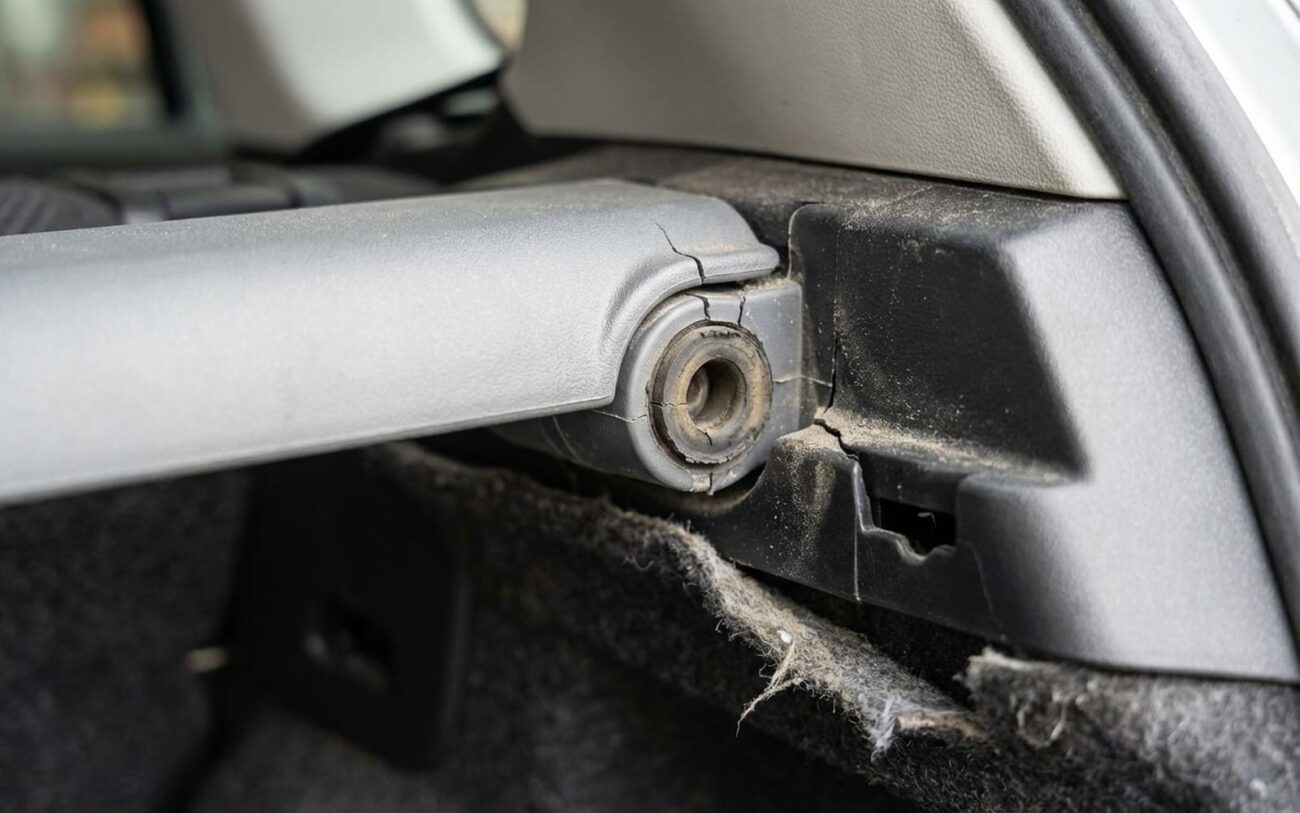
It’s not bolted. It rests on plastic pins or clips built into the side trim. There’s no fasteners — just friction and shape. Over time, those pins wear, the shelf flexes, and that snug fit becomes a loose rattle trap.
I’ve seen shelves last 15 years with no issues, and others crack at 40,000 miles. Why? Heat cycling, moisture, and how often it’s removed. If you haul gear regularly, you’re accelerating the wear.
Don’t Guess — Test It
Before touching the shelf, rule out the usual suspects. I’ve replaced trim clips, secured spare tires, and even fixed loose heat shields because someone assumed it was the shelf.
Start simple: remove everything from the cargo area. Fold the rear seats down. Drive it. If the noise is still there, remove the shelf and test again. If it’s gone — bingo. Shelf’s the culprit.
Still not sure? Use a long screwdriver like a stethoscope. Rest the tip on the mounting points, side trim, and hatch latch while someone drives slowly over bumps. Your ear on the handle will tell you exactly where the vibration starts. (Yes, this works — and no, you don’t need a $300 diagnostic tool.)
Why It Fails — And How to Tell Which Failure You’ve Got
Three main failure modes: worn tabs, cracked shelf, or resonance. They sound similar but need different fixes.
Worn or Loose Mounting Tabs
Most common. The plastic pins that hold the shelf wear down from years of expansion and contraction. I’ve measured up to 1.5 mm of material loss — more than enough to create play.
Check the contact points. If they’re shiny, rounded, or have visible gaps, that’s your issue. On Toyotas and Hondas, the tabs are molded into the shelf — so wear is permanent unless you rebuild them.
Cracked or Delaminated Shelf
Fiberboard shelves swell when wet. Spills, snow on boots, even high humidity — it all adds up. Once the core separates, the shelf flexes and buzzes.
Plastic shelves crack at stress points — usually near the mounting bases. A hairline fracture might not be visible at first, but tap the shelf and listen for a hollow “crack” sound. That’s bad news.
Resonance (No Damage, Just Bad Design)
Some shelves are just too big and too thin. At 60–65 mph, they vibrate like a speaker cone. No cracks, no wear — just physics.
If pressing down on the shelf kills the drone, it’s resonating. This is common on BMWs and Lexuses with large, flat panels. The fix isn’t repair — it’s damping.
How I Fix It — Based on What I See
Worn Tabs? Rebuild Them
Clean the tabs with isopropyl alcohol. For minor wear, I use 3M adhesive-backed felt tape — one layer, no more. It fills the gap without making installation a fight.
For deeper wear, I reach for JB Weld Plastic Bonder. Mix it, build up the worn area slightly oversized, let it cure 24 hours, then sand it smooth. I use calipers to match the original dimension. Done right, this lasts longer than the shelf itself.
Cracked Shelf? Weld or Reinforce
Plastic shelves: use a hot-air gun and compatible welding rod. Melt the edges, fuse them, then reinforce the back with a plastic mesh patch. Clamp it until cool.
Fiberboard? Epoxy resin and fiberglass cloth. Clean the crack, saturate both sides, lay the cloth over it, and clamp. Let it cure fully — don’t rush this.
If the crack’s near a mounting point or the shelf is warped, just replace it. Used OEM shelves from low-mileage salvage cars are cheap and reliable.
Resonance? Damp It
No cracks, no wear — just a drone at highway speed? Apply butyl rubber damping pad to the underside. I use Dynamat or Hushmat — full sheet, not strips. Center it, press firmly, and let it bond.
This shifts the resonant frequency. I’ve silenced BMW X3s and A4s this way. Don’t overdo it — too much weight can cause sagging over time.
Temporary Fix? Foam Tape — But Know the Limits
In a pinch, wrap the pins with high-density foam tape. It’ll quiet the rattle for a few weeks. But foam compresses, especially in summer heat. Felt wears. Neither lasts.
And never — I mean never — use anything that prevents the shelf from seating fully. In a sudden stop, a loose shelf becomes a projectile.
Did It Work? Here’s How to Know
Reinstall the shelf. It should click into place with firm resistance. No slop. No wobble. If you can move it side-to-side or up-and-down, go back and adjust.
Then road test. Hit the same roads that caused the noise. If you still hear buzzing, don’t assume the fix failed — you might have a second issue. Check the trim behind the wheel well, the cargo hooks, even the rear seat latches.
For resonance fixes, drive at the exact speed where the drone happened. If it’s gone, you’ve won. If not, add more damping — or accept that the shelf’s just too flimsy for its job.
Look, this isn’t a safety recall. But a quiet cabin matters. And doing it right the first time means you won’t be pulling the shelf out again in six months.
