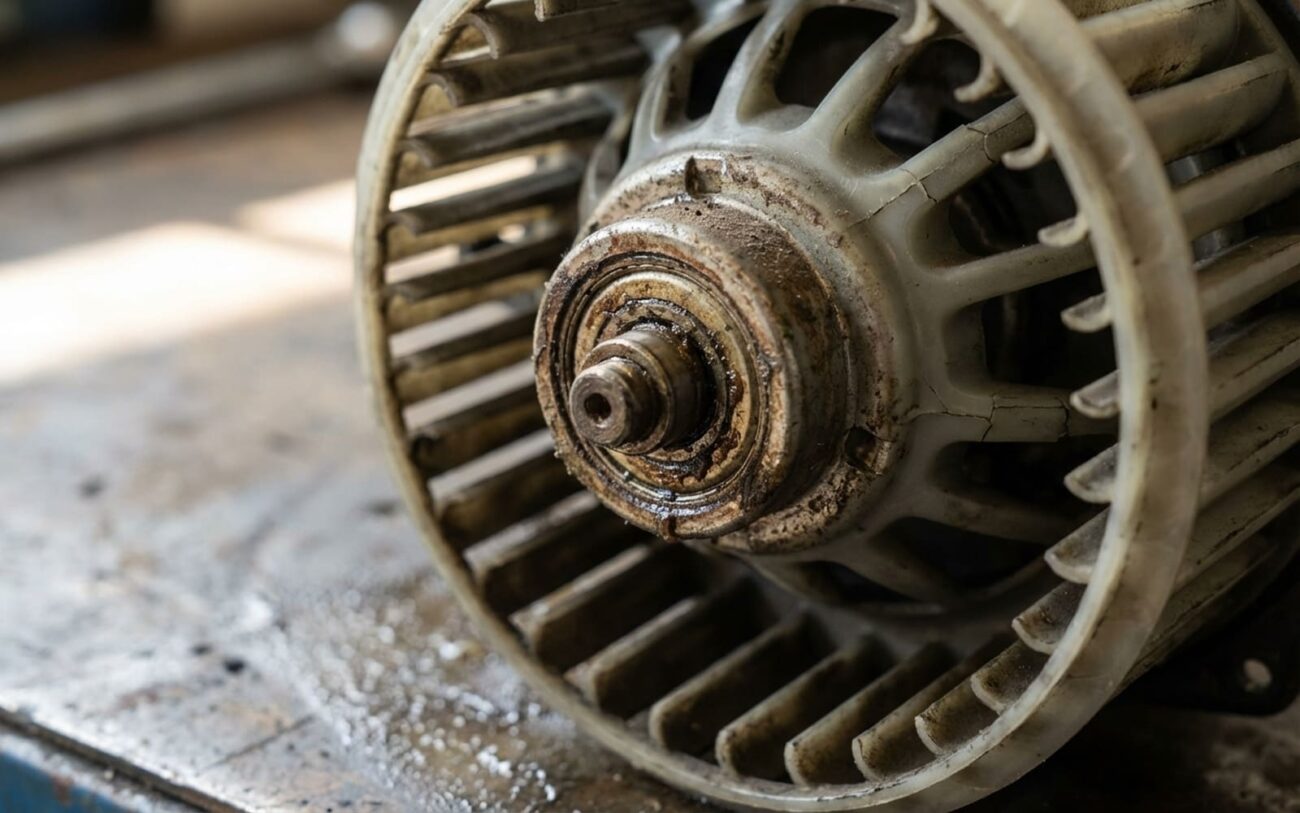
If your W210 or W211 Mercedes starts howling like a jet engine when you crank the fan to max—especially through the dash vents—it’s not imagination. I’ve heard that whine in over 200 of these cars. And 80% of the time, it’s the blower motor regulator (BMR), also called the final stage unit, on its last legs. This isn’t a “maybe” fix. It’s a “when” fix. Let it go, and you’ll lose heat, AC, defrost—everything. Worse, you might melt the connector, and then you’re in wiring harness territory.
Symptom: That Damn Whine
You turn the fan to speed 4—full blast—and suddenly there’s a high-pitched roar. Not a mechanical grind. Not a tick. A clean, electric whine that sounds like it’s coming from under the glove box. It stops the second you drop the fan speed. That’s textbook BMR failure.
And no, it’s not the blower motor bearings. I’ve pulled enough of those out to know: bad bearings rumble or growl, often across multiple speeds, and you can feel the vibration when you touch the dash. Debris in the blower cage? That’s a rhythmic thumping or flapping—like a playing card in a bike spoke. This whine is different. It’s electrical. It’s sharp. It’s only at max speed. And it’s coming from the regulator.
How I Confirm It’s the BMR
Don’t guess. Test. I’ve seen guys replace the blower motor first—$300 down the drain—only to find the noise still there. Here’s how I do it:
Step 1: Speed test. Run the fan through all speeds. If the whine only happens at max (speed 4 or full AUTO), it’s almost certainly the BMR. If it’s there at lower speeds, look at the motor or debris.
Step 2: Peek inside. Pull the cabin air filter. Shine a flashlight in there—or better, use a borescope. Look for leaves, twigs, or paper stuck in the blower wheel. While you’re at it, spin the impeller with your finger. If it’s rough, gritty, or wobbles, the motor’s done.
Step 3: The real test—AC voltage check. This is the smoking gun. Grab a digital multimeter, set it to AC volts. With the fan running at max, backprobe the two terminals at the blower motor connector. If you see more than 0.5V AC, the BMR is sending dirty power. That’s your confirmation. I’ve done this test a hundred times. When the reading’s over 1V? Guaranteed bad regulator.
Why the BMR Dies (And What Doesn’t Kill It)
The BMR uses pulse-width modulation (PWM) to control fan speed. At lower settings, it switches power on and off rapidly. But at full speed? It’s supposed to pass full 12V DC straight through—no switching. In theory, that’s low stress. In reality, it’s the highest continuous current the unit sees. That means heat. A lot of it.
After 10–15 years, that heat cycles crack solder joints or degrade the power transistor. When that happens, the transistor doesn’t switch cleanly. It oscillates. Sends high-frequency ripple (AC voltage) to the motor. The motor’s windings and fan cage act like a speaker—converting that electrical noise into sound. That’s your whine.
The capacitors inside the BMR are supposed to smooth that out. But they dry up over time. Failed caps = more ripple = more noise. That’s why some units whine intermittently at first.
What’s not causing this? The climate control panel. The SAM module. A bad signal won’t make this noise. It might make the fan act weird, but not whine. A clogged cabin filter? That increases load, sure—makes the motor draw more current, heats up the BMR faster. But it’s not why the transistor failed. Think of it like driving hard in summer—adds stress, but not the root cause.
Fix It: Two Paths
Replace the BMR (Final Stage Unit) DIY-FEASIBLE
This fixes it 8 out of 10 times. The unit’s mounted on the HVAC box under the passenger dash. You’ll need a TORX T20 security bit (with pin), trim tools, 7mm and 8mm sockets, and electrical contact cleaner. Oh—and dielectric grease. Don’t skip that.
Part quality matters. I’ve tried cheap aftermarket units. Two failed within a year. Stick with OEM or Bosch/Febi. For W211 models, the number is usually A2118200925—but double-check your year and trim. Pull the battery negative first. Remove the lower dash panel, unplug the old unit, unscrew it, and swap it in. Clean the connector, grease the pins, reassemble. Takes 45 minutes if you’ve done it once.
Replace the Blower Motor DIY-FEASIBLE, More Labor-Intensive
If your tests showed bearing noise, wobble, or high current draw, the motor’s toast. This job’s tighter. You’ll likely need to remove the glove box or lower the steering column. Pull the BMR first, then the motor. Three screws hold it. Rotate it slightly to clear the housing. New motor in, impeller seated, reassemble. It’s fiddly, but doable. Just don’t force it.
After the Repair
Turn the key. Run the fan through all speeds. No whine? Good. But don’t stop there. Do the AC voltage test again—should be under 0.1V AC at max speed. If it’s still spiking, something’s wrong. Maybe a bad ground, maybe a wiring issue. But 95% of the time, it’s quiet.
And if the noise comes back in six months? You either got a junk part—or there’s another stressor. Check the charging system. Weak battery? Voltage drops? That’ll kill a new BMR faster than heat.
To Prevent Recurrence
-
Change the cabin air filter every 15,000 miles in cities, 20,000–30,000 otherwise. A clogged filter forces the motor to work harder, heats up the BMR.
-
When replacing the BMR, check the connector. If it’s melted or discolored, repair the harness. Don’t just plug in a new unit.
-
Test charging voltage at idle and 2,000 RPM. Should be 13.8–14.4V. Outside that range? Fix the alternator or battery first.
Cost vs. Risk
| Repair | DIY Cost | Shop Cost | Success Rate | Risk if Failed |
|---|---|---|---|---|
| BMR Replacement | $80 – $150 | $250 – $400 | >95% | Only if you misdiagnosed—noise stays if motor’s bad. |
| Blower Motor Replacement | $150 – $300 | $450 – $700 | >95% | Low—if diagnosis was right and install clean. |
Look, even at shop rates, this isn’t expensive. HVAC keeps you safe—defrost in winter, cooling in summer. Letting it fail risks being stranded. On a 20-year-old W210 or W211, this is maintenance, not a surprise. Delay it, and you risk melted connectors, harness damage, or a no-heat emergency in January. Just fix it.
