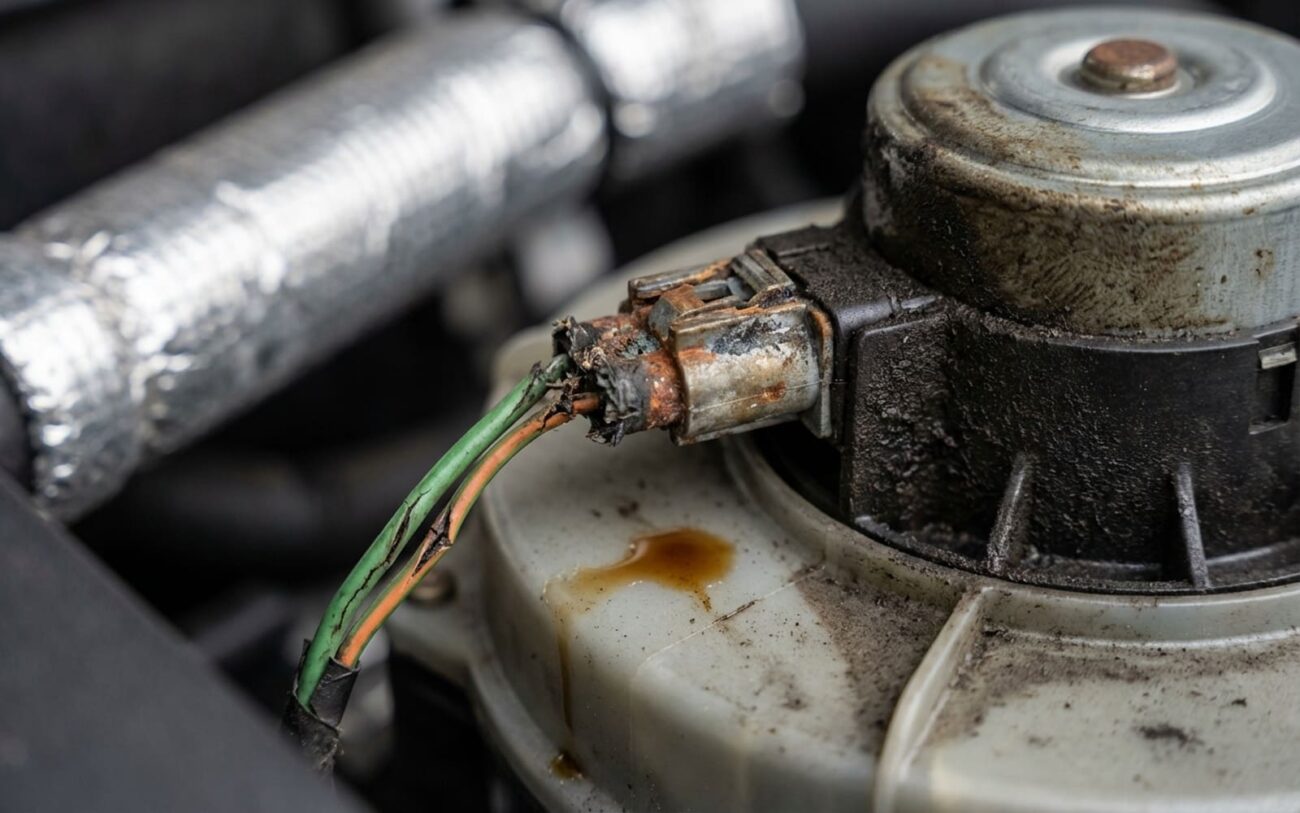
You walk away from your EV, lock it, and ten minutes later—still hear the fan running. Not a soft tick or relay click. A full-on blower, like someone left the climate control on high. That’s not “thermal management.” That’s a system refusing to shut down. And if you ignore it, you’re one dead 12V battery away from a car that won’t wake up at all.
This Isn’t Normal—And It’s Not Just Annoying
Let’s get something straight: a brief post-shutdown fan cycle? Normal. If your EV was preconditioning the battery or cabin, the HVAC might run 60–90 seconds after you walk away. That’s by design. But 10 minutes? 30? An hour? That’s parasitic draw, and it’s killing your 12V battery.
And in an EV, a dead 12V isn’t just a jump-start. No 12V power means the vehicle can’t initiate the high-voltage handshake. The main battery could be at 98%, but the car won’t power up. Period. I’ve seen tow trucks bring in “dead” EVs that just needed a $15 jump—but only after owners sat helpless for hours.
The blower motor runs off the 12V system. So does the BCM, the gateway module, the touchscreen, the door locks—everything that needs to “wake” the car. If the HVAC control module fails to cut power, it’s not just wasting energy. It’s holding the entire vehicle hostage.
Stop Replacing Parts. Start Diagnosing.
I’ve pulled into shops and seen techs yank out blower motors or swap HVAC modules blind. Waste of time. Waste of money. The real fix starts with asking: Is the module failing? Or is it being told to stay on?
You need three tools:
- A real scan tool—OEM-level or high-end aftermarket with module access (think Autel, Snap-On, or factory software)
- A digital multimeter
- A DC amp clamp (non-negotiable for parasitic draw testing)
Without the amp clamp, you’re guessing. And guessing gets expensive.
Diagnose Like You Mean It
Here’s how I break it down:
| What You’re Seeing | Points to HVAC Module | Could Be Something Else | How to Prove It |
|---|---|---|---|
| Fan runs indefinitely after shutdown | Stuck relay, failed transistor, or corrupted firmware in the HVAC control module | BCM not sleeping, short-to-power in harness, CAN bus fault, or stuck climate control input |
|
That second test? It’s gold. I’ve used it to stop shops from replacing perfectly good modules because a chewed-up wire under the dash was back-feeding voltage. Don’t skip it.
Why the Module Really Failed
These modules don’t fail for no reason. If you replace one without checking the cause, you’re setting up for a repeat job. Here’s what I see most:
- Stuck relay or welded transistor. The blower motor pulls amps—especially on high. Over time, the switching component inside the module can weld itself closed. Once that happens, it doesn’t matter what the software says. Power is flowing. It’s not a code issue. It’s physics.
- Thermal fatigue. Run the fan on high in 100°F heat for months, and that module cooks. Solder joints crack. Traces lift. I’ve seen boards where the relay pads were half-detached from vibration and heat cycling. Look for discoloration or micro-cracks under magnification.
- Moisture. If the module’s under the dash (and it usually is), a leaking windshield seal or bad heater core can drip right on it. I’ve pulled units with green corrosion on the PCB—classic electrolytic tracking. One drop of conductive water can short the control logic. And once that happens, the module can’t process sleep commands.
- Firmware bugs. Yeah, software counts. I’ve had a 2021 Mustang Mach-E come in where the HVAC module ignored sleep signals after a failed OTA update. Ford had a bulletin for it. A reflash fixed it—no hardware damage. Always check TSBs before you replace anything.
And just to be clear: a bad blower resistor or motor isn’t the same thing. Those are usually external, and they don’t keep the fan running after shutdown. We’re talking about the control module—the brain. If it’s in a sealed black box behind the glovebox or under the dash, and it’s got a multi-pin connector, that’s the unit we’re diagnosing.
How to Fix It—And What Each Path Really Means
Internal hardware failure (relay, transistor, board) Professional Only
Firmware issue Professional Only
Corroded or damaged connector
And if you need to park the car and can’t fix it today? Pull the blower fuse. Check your manual—usually labeled “BLOWER” or “HVAC FAN.” That stops the drain. You lose climate control, but you won’t come back to a dead car. It’s a band-aid, but it works. Just don’t forget to put it back.
Prove It’s Fixed—Don’t Assume
I don’t care if the fan turned off this time. Did the system actually go to sleep?
- Lock the car. Walk away. Wait 10–15 minutes. Come back. No fan noise? Good start.
- Do a parasitic draw test. Clamp on the negative battery terminal. After sleep, you should see less than 50mA. If it’s higher, something else is awake.
- Scan for module status. The HVAC module should report “sleep” or “off” on the CAN bus. If it’s still active, the network didn’t reset.
- Test all blower speeds. Make sure it turns off instantly when the key goes off (or the car powers down).
Is It Worth It? Let’s Talk Real Numbers
| Repair Type | DIY Cost | Shop Cost | Success Rate | Secondary Risk |
|---|---|---|---|---|
| HVAC Control Module Replacement | $300–$800 (part) + $100–$200 for programming tools/subscription | $500–$1,500 (labor, programming, calibration) | 95% if programmed correctly | Incorrect programming can disable HVAC or cause CAN bus errors—may need relearning or gateway reset |
| Module Software Reflash | $100–$300 (tool access, subscription) | $150–$400 (labor, software) | 80% (only if hardware is good) | Bricking during flash—rare, but possible. Backup power is mandatory. |
| Connector Clean/Repair | Under $20 (cleaner, gloves, basic tools) | $100–$200 (labor) | High, if corrosion was the only issue | Low—worst case, it comes back and you’re back to step one |
Be honest about the car’s value. If the repair is pushing 30–40% of what the EV is worth—especially if it’s an older model with a degraded battery pack—ask yourself: is this smart? I’ve had customers drop $1,200 into a 2017 Bolt with 80% battery health, then six months later face a $2,000 battery replacement. Sometimes, the better move is cutting losses and upgrading. Not every car deserves a full rebuild.
Prevent It Before It Happens
You can’t stop every failure, but you can reduce the odds:
-
Change the cabin air filter every 12,000–15,000 miles. A clogged filter makes the blower work harder, drawing more current and heating up the module. That $20 part protects a $600 control unit.
-
Listen after shutdown. Make it a habit: pause for 60 seconds after locking. You should hear relays click off, fans stop. If the blower’s still running, investigate. Don’t wait for a dead battery.
-
Monitor 12V voltage. Most EVs show it on the dash or app. A healthy battery stays above 12.4V when parked. If it drops below 12.0V in two days, you’ve got a draw. Find it.
-
Use Dog Mode or Camp Mode sparingly. These keep the HVAC active for hours. That’s extra thermal cycling on an already stressed module. Fine for emergencies. Not for daily use.
And know your car’s normal behavior. Teslas, for example, may run fans intermittently after parking to manage battery temp. But they still go to sleep. If your car never powers down? That’s not normal. Diagnose it now—before you’re stranded.
