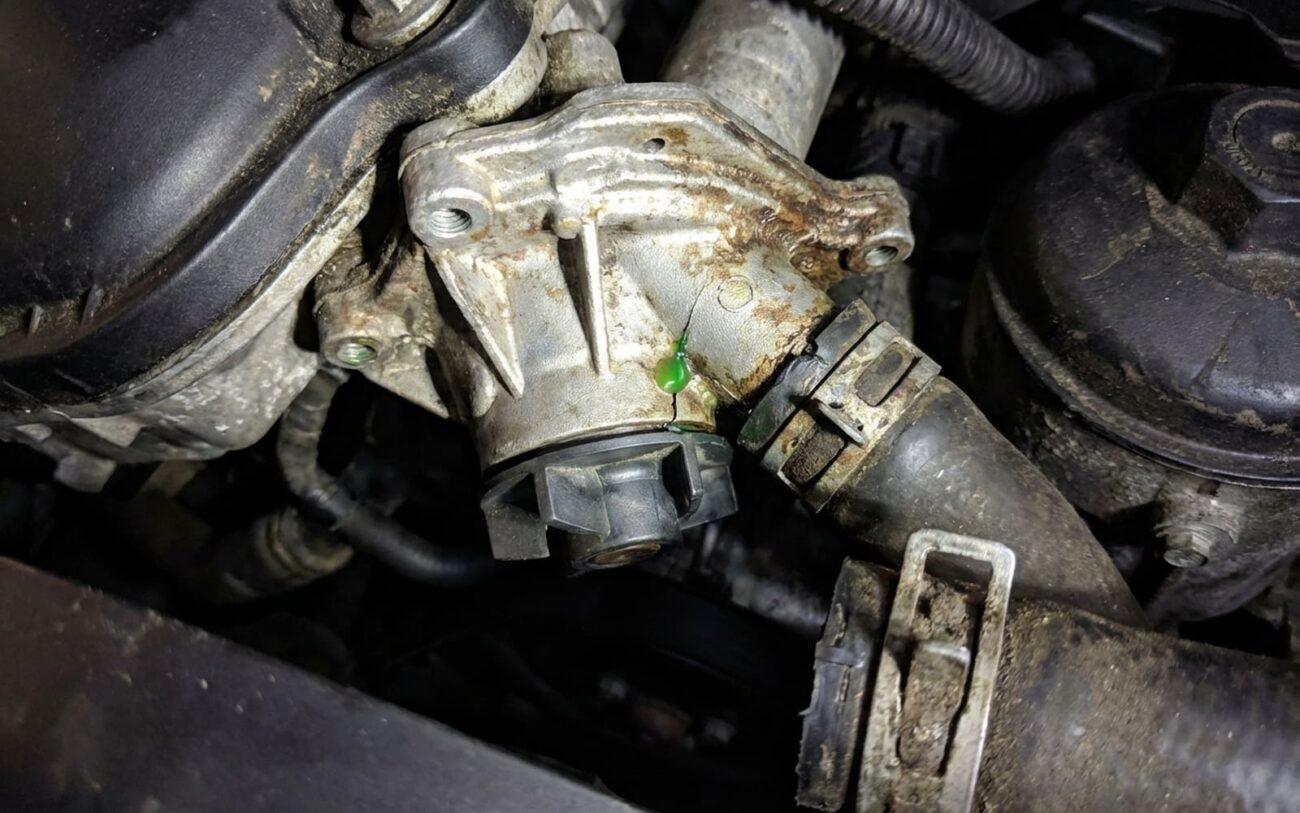
Alright, let’s talk about that hum. I’ve had countless customers come into the shop, scratching their heads, asking about this faint whirring sound coming from their car after they’ve shut it off. It’s usually near the front, by the radiator, and it can go on for 5, 10, sometimes even 30 minutes. They think it’s the engine ticking as it cools, but it’s not. It’s a steady, electric hum.
Here’s the deal: In pretty much any modern vehicle, especially your BMWs, Audis, Mercedes, and certainly EVs like Teslas, that sound is almost always normal. It’s your electric coolant pump doing its job, part of a deliberate post-shutdown cooling strategy. It’s not a sign of failure; it’s a feature.
Why Your Car Keeps Cooling After You Turn It Off
Engineers didn’t add this function to make our lives harder; they did it to protect expensive, heat-sensitive components. When I see this working as designed, it tells me the car’s thermal management system is doing exactly what it should. Let’s break down the main reasons:
-
Turbocharger Protection:
When you shut off a turbocharged engine, oil flow stops immediately. But those exhaust-side turbine housings? They’re still red-hot, often over 800°C. Without that post-shutdown coolant circulation, the residual heat soaks into the center housing, baking the oil into carbon deposits. We call that ‘coking,’ and it’ll destroy your turbo bearings over time. The electric pump keeps fluid moving, pulling that heat out and preventing premature turbo failure. It’s cheap insurance, really.
-
Battery & Power Electronics Cooling (EVs/Hybrids):
In electric vehicles like a Tesla Model S or a Porsche Taycan, the high-voltage battery pack relies on liquid cooling. After fast charging or some spirited driving, those battery cells hold a lot of heat. The pump keeps running to maintain optimal cell temperature, which is critical for preventing degradation and ensuring the battery lasts. This isn’t just a simple on/off; it’s complex logic, often across multiple CAN bus networks, much like how some vehicles separate critical thermal control from less important body functions.
-
Ancillary Heat Exchanger Protection:
Components like EGR (Exhaust Gas Recirculation) coolers and charge air coolers are prone to localized boiling if hot spots develop after shutdown. Air pockets from vaporized coolant reduce cooling efficiency and can even trigger overheating warnings. Continuous circulation prevents this, keeping everything stable. It’s all about preventing those little issues from becoming big ones.
So, when you hear that hum, it’s usually the system actively managing thermal stress. It protects critical components, and frankly, it prevents far more problems than it ever causes. BMW, for example, has been doing this for years on their turbocharged engines (N54, N55, B58) to manage heat soak. It’s a documented design behavior, not a flaw.
Recognizing Normal vs. A Real Problem
The primary symptom of normal operation is that audible hum after key-off—a consistent, low-frequency sound, distinct from mechanical engine noise. You might also notice the coolant temperature reading stays stable or drops gradually, not spiking from heat soak. And if you restart after a short stop, the cabin might feel a little cooler because the system has already carried away some residual heat. That’s all good.
But not all pump operation after shutdown is created equal. Telling the difference between smart thermal management and a genuine fault comes down to context, timing, and proper testing. I’ve seen customers mistake normal, extended operation for a malfunction more times than I can count. But I’ve also seen real issues get ignored. Here’s how I break it down in my shop:
| What You See/Hear | Likely Normal Operation | Common Fault Mimics | My Go-To Test to Confirm |
|---|---|---|---|
| Pump runs for a long time (>30 minutes) | This is common for EVs after fast charging or for performance cars with turbos after aggressive driving. The system is just doing its job to manage high heat loads. | A faulty control module (DME, BMS) getting bad temperature data, or it’s just stuck in a continuous output mode. |
Hook up a factory-level diagnostic scan tool. Monitor the commanded pump duty cycle and compare it to actual coolant temperatures from multiple sensors. If the control strategy makes sense with the live data, it’s working as designed.
|
| Pump runs continuously, even on a cold engine after sitting overnight | This is never normal. If it’s running when the engine is stone cold, you’ve got a problem. | A stuck relay, a short-to-power in the control circuit, an internal short in the pump’s electronics, or a software glitch in the DME. This will drain your battery fast. |
With the ignition OFF, use a multimeter to test for voltage at the pump connector. If you see voltage, disconnect the pump. If the voltage remains, the fault is upstream in the wiring or control side (like a relay or module). If the voltage drops, then I’d suspect a failed internal controller in the pump itself.
|
| Pump does NOT run after shutdown following hard use (e.g., highway, towing, track) | Again, this is a fault. If you’ve been pushing the car, that pump should be running. | A failed pump motor, a blown fuse, an open circuit, a faulty coolant temperature sensor, or a communication error with the control module. This puts your turbo at serious risk. |
Use a scan tool to command the pump on via an output test. If it runs, the problem is likely in the control logic or a sensor input (like a bad coolant temp sensor). If it doesn’t run, check the fuse, power, ground, and resistance at the connector. Don’t forget to verify CAN bus communication; network faults can mimic pump issues.
|
My Approach to Fixing a Fault
If your testing confirms a true fault—either unwanted operation or a failure to activate—this isn’t really DIY territory. You need specialized tools and a good understanding of these complex systems. Here’s how I typically proceed:
Fault: Pump runs continuously from a cold start. Professional Only
Fault: Pump doesn’t run when it should (e.g., after hard driving). Professional Only
Post-Repair Validation & Prevention
After any repair, verification is absolutely critical. Just because the pump is running doesn’t mean the system is working correctly. The goal is intelligent, temperature-dependent operation, not just motion.
My process is this: Start the engine, drive it until it reaches full operating temperature, ideally under some moderate load. Then, shut it off and observe. The pump should run for a duration proportional to the engine temperature (usually 5–20 minutes), and then shut down on its own. I always use a factory scan tool to monitor live data: watch for the control module to command a duty cycle, the pump speed to respond, and both to return to zero. This confirms bidirectional communication and proper control.
For a physical check, I’ll grab my infrared thermometer and measure the turbocharger housing temperature before and after the post-run cycle. A drop of 50–100°C confirms effective cooling. If the pump runs indefinitely, or if it stops immediately when it shouldn’t, then it’s back to diagnostics—there’s likely a lingering sensor or communication issue.
To Prevent Recurrence & Save Money
-
Use the Right Coolant: This is huge. Always use the manufacturer-recommended coolant—whether it’s BMW G48, Audi G12evo, or Tesla’s specific fluid. These aren’t just colored water; they’re engineered to prevent electrolytic corrosion, scaling, and pump wear. Mixing coolants or using generic stuff can lead to sludge, impeller seizure, or fouled sensors.
-
Listen to Your Car: Get to know its normal shutdown behavior. If your BMW usually runs the pump for 10 minutes and suddenly it’s running for 45, or the sound changes to a high-pitched whine or grinding, that’s your cue to investigate.
-
Regular Scans: During routine service, have your technician scan for stored codes, even if no warning light is on. Codes like 2E81 (coolant pump control deviation) or 2E7C (pump speed monitoring) often pop up long before a complete failure. Catching them early means you can plan the repair instead of facing a roadside breakdown.
The economic case here is pretty clear: fixing the fault early prevents much larger expenses. I’ve seen shops replace pumps twice before realizing the issue was a $20 relay or a faulty coolant temp sensor. Accurate diagnosis pays for itself, every single time.
| Fault Type | DIY Cost (Parts Only) | Shop Cost (Parts & Labor) | Success Rate (with proper diagnosis) | Secondary Risk if Unrepaired |
|---|---|---|---|---|
| Electric coolant pump failure | $300–$800 | $900–$1800 (can be very labor-intensive, often behind intake manifold) | 95% | Engine overheating, turbo oil coking, EGR cooler failure, battery degradation (EVs) |
| Control circuit fault (relay/wiring) | $50–$200 (for relay, fuse, or wiring repair kit) | $300–$600 (diagnosis time adds up) | 90% | Parasitic battery drain, intermittent cooling, repeated faults, potential component damage if cooling fails |
So, remember: in modern thermal management systems, that electric water pump isn’t just moving coolant. It’s actively protecting your engine, your turbo, and (in EVs) your expensive battery pack. Treat it with the respect it deserves, and it’ll keep you on the road.
