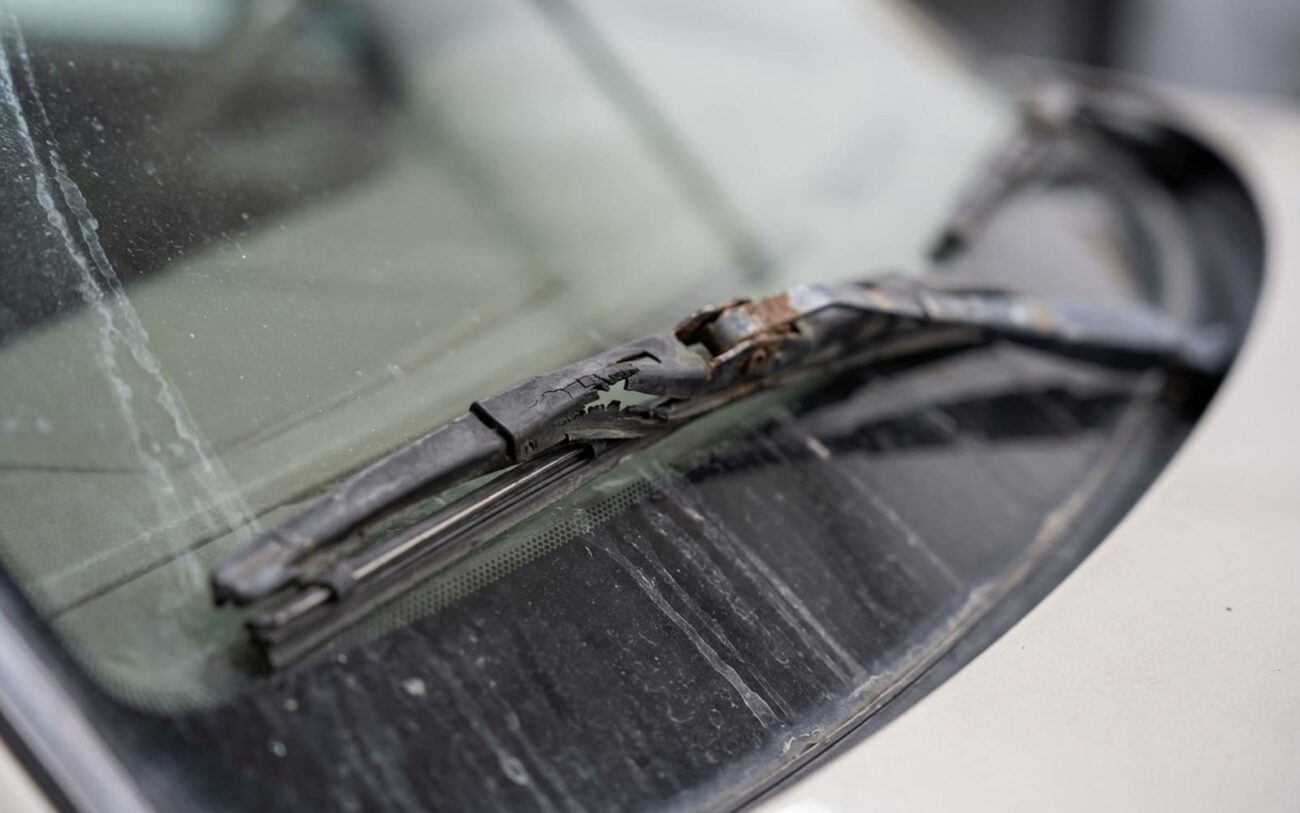
When Wipers Start Skipping at Speed — Don’t Panic, Diagnose
I’ve seen this a hundred times: you’re doing 70 on the interstate, rain’s coming down hard, and the moment you flip the wipers on, the driver’s side starts hopping like it’s on a trampoline. Leaves big streaks right in your line of sight. Passengers notice. You tense up. That’s not just annoying — it’s dangerous.
And no, it’s not always worn blades. Not always dirty glass. On cars with steep windshields — BMW E60, early 5 Series, but also some Acuras and Audis — this is baked into the design. At speed, airflow lifts the blade off the glass. Physics wins. But before you start swapping parts, let’s figure out what’s really going on.
First: Rule Out the Simple Stuff
Don’t jump to aerodynamics yet. I’ve had customers come in convinced they need new arms, only to find the windshield was coated in wax from a detail job. That slick surface? Lets the blade skate instead of glide.
Same with old blades. If the rubber’s hardened or cracked — especially after a harsh winter — it won’t conform to the glass. But here’s the test: clean the windshield with 90% isopropyl alcohol. Wipe it down until the rag comes away clean. No streaks, no residue. Then install a known-good aerodynamic beam blade (more on that later).
If it still skips above 60 mph? Now we’re talking design, not dirt.
Why This Happens: It’s the Windshield Angle
The E60 5 Series has a windshield rake of about 60 degrees. Looks sleek. Helps with drag. But that angle turns the wiper blade into a little wing at speed. Air flows over it, creates lift, and the factory arm spring — usually around 4.0 to 4.5 Newtons at the tip — can’t hold it down.
BMW knew this. They issued a service bulletin — SI B 63 08 07 — for early E60s. Called for a revised wiper arm with higher spring preload. That’s not a recall. That’s an admission: “Yeah, we didn’t account for this at 70 mph.”
And it’s not just BMW. Any car with a steep windshield and standard frame blades can do this. But here’s the thing: most people never notice until they’re on the highway in heavy rain. That’s when the combination of speed, water, and angle all line up to ruin your visibility.
Running wipers in constant chatter isn’t just bad for visibility — it kills the motor. I’ve pulled apart linkages where the gears were worn from constant judder. The motor fights uneven load, overheats, fails early. Fix this before it costs you more.
How I Fix It — Step by Step
Install Aerodynamic Beam Blades DIY-FEASIBLE
Upgrade to High-Tension Wiper Arms DIY-FEASIBLE
Skip the Aftermarket Spoilers PROFESSIONAL-ONLY / EXPERIMENTAL
Did It Work? Test Like You Mean It
No guessing. No “seems better.” You test this under real conditions.
First, measure downforce. Hook a digital fish scale to the tip of the blade, lift straight up until it breaks contact. Target: 4.5 to 5.5 Newtons. Below 4.5? Still vulnerable.
Then, road test. Rain is ideal. No rain? Use washer fluid — lots of it — and hit the highway. 70+ mph. Watch the blade like a hawk. Chatter should be gone. Flutter? Unacceptable. If it’s still hopping, go back. Maybe the arm’s misaligned. Maybe the blade isn’t OEM-spec. Don’t accept “close enough.”
Cost vs. Value — When to Walk Away
Aerodynamic Blade Replacement
Success Rate: Moderate-High (~70%) for flutter. Low risk, high reward.
Wiper Arm Replacement
Success Rate: High (>85%) for chatter. No secondary risk if installed correctly.
Add-on Spoiler/Clip
Success Rate: Low-Moderate (~50%). Risk of detachment, wind noise, scratched windshield.
Keep It Fixed — Maintenance That Matters
To Prevent Recurrence
-
Clean the windshield every few months with alcohol. Rain-X residue? Bug spray buildup? That slick film reduces friction. Blade lifts easier. Wipe it down — front and back.
-
Check arm downforce annually. Five minutes with a fish scale. If it’s below 4.5N, spring’s weakening. Replace before chatter returns.
-
Use only aerodynamic blades. “Universal” cheapos won’t cut it. Look for “aero,” “spoiler,” or “high-speed” in the name. And yes — I’ve seen a $12 blade cause more trouble than a $200 motor.
