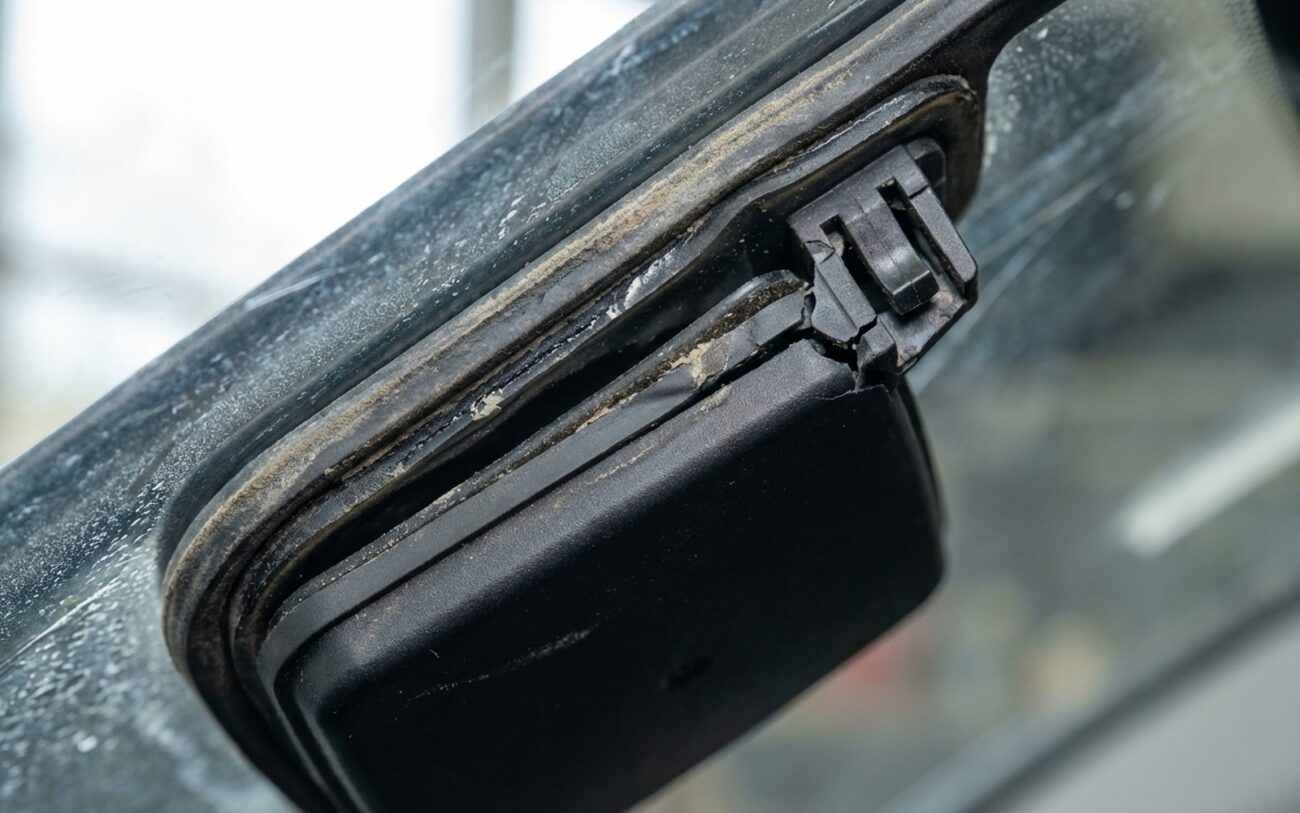
I’ve been fixing rain-sensing wiper systems for over two decades—on GMs, German luxury cars, Fords with the fancy mirror-integrated sensors—and let me tell you: 80% of the time, the problem isn’t the sensor. It’s what’s around it. But when the sensor is bad, you need to know exactly what’s failing inside and how to prove it before you start ripping things apart.
What You’re Actually Dealing With
The rain sensor isn’t magic. It’s a little optical module glued to the back of the windshield, usually right behind the rearview mirror. It shoots infrared light at a 45-degree angle through the glass. When water hits the outside, the light refracts differently, less of it bounces back, and the system says, “Hey, it’s wet—turn on the wipers.”
When that stops working right, owners get frustrated fast. Wipers flapping in the dry? Or worse—nothing happens in a downpour. I’ve had customers pull into my shop soaked because the auto wipers didn’t kick in until they were halfway through an intersection.
But here’s what most people don’t realize: the sensor itself is just one piece. The glass matters. The calibration matters. The adhesive bond matters. And yes—so does the scan tool. You can’t guess your way through this. You need data.
Symptoms and What They Really Mean
Let’s cut through the noise. Here’s what I see in real-world diagnostics:
Wipers turn on when it’s dry? Don’t jump to “bad sensor.” First, clean the windshield—inside and out—over the sensor zone. Bug splatter, road film, even interior polish can scatter the IR beam. I once had a guy come in convinced his Mercedes needed a $600 sensor. One pass with isopropyl alcohol and a microfiber cloth—fixed.
Still acting up? Then pull up the “reflectance” PID on a scan tool. On a dry windshield, you should see 85–95%. If it’s stuck at 40%, or bouncing around like a pinball, that’s not contamination. That’s a failing photodiode or IR LED.
No auto function, but manual wipers work? That’s not the wiper motor. That’s either power to the module, the module itself, or a blown fuse. Check the fuse first—yes, really. On some GMs, the rain sensor fuse is buried in the underhood box, labeled “BCMO.” I’ve seen techs replace the whole sensor because they missed a 50-cent fuse.
Slow to react or too aggressive? That’s usually lens degradation. UV exposure, ammonia-based cleaners, poor-quality windshield replacements—all of them haze the internal prism over time. Think of it like cataracts. The sensor “sees,” but it’s blurry.
And if the wipers go nuts under bridges or in parking garages? That’s not ghosts. It’s the sensor misreading rapid light changes as moisture. Could be a bad photodiode array, or it could be a dashboard reflection off a phone mount. I tell customers: remove the mount, test again. 30% of the time, that’s the fix.
What Actually Fails Inside the Sensor?
I’ve cracked open more than a few of these in the shop. Here’s the truth: you can’t repair them. The housing is sealed, the circuit board is potted, and the calibration data is burned into memory. But knowing what goes bad helps you diagnose faster.
The IR LED burns out. Not always completely—sometimes it just weakens. That means less light gets projected, so the system needs more water to trigger. I’ve seen units where the wipers only came on in heavy rain, and the PID showed 10% change instead of 30%. Swapped the module—back to normal.
Solder joints crack from thermal cycling. Common on older units. The sensor works fine when the car’s warm, but in the morning, nothing. Let it sit in the sun, and it starts working. Classic thermal expansion issue. I’ve reflowed a few in the past, but it’s a band-aid. The joint will crack again.
And moisture intrusion? Yeah, it happens. Usually after a bad windshield install. If the adhesive bond fails, water sneaks in, fogs the optics, or worse—corrodes the board. I’ve pulled sensors with green corrosion on the contacts. That’s not repairable. That’s replace.
Oh, and software? Don’t ignore it. I’ve had BMWs and Acuras come in with erratic sensing, no hardware fault. Pull the codes—there’s a pending TSB. A quick reflash, recalibrate, and it’s fixed. Always check for updates before you yank the sensor.
How I Fix It: Step by Step
Clean and Recalibrate DIY-FEASIBLE
Replace the Sensor Housing PROFESSIONAL-ONLY
Internal Failure? Replace the Module NON-REPAIRABLE → REPLACE
Test It Like a Pro
Don’t just eyeball it. Connect the scan tool.
Monitor the “rain sensor reflectance” PID. Spray water—value should drop. Wipe it away—value should rise back to baseline. If it’s sluggish, stuck, or erratic, the sensor isn’t responding. No guesswork.
And check for DTCs. Even if no light is on, there might be pending codes: “U0121 – Lost Communication with Rain Sensor,” or “B2445 – Optical Sensor Performance.” Those tell you exactly where to look.
Final test: drive in actual rain. Not a garden hose. Real conditions. The wipers should activate within 2–3 seconds, adjust speed, and stop when the glass is clear. If not, something’s still off.
Is It Worth Fixing?
Be honest. A full RSM replacement on a luxury car can run $800–$1,200. On a 10-year-old Camry worth $6,000? Maybe not.
I’ve had customers choose to disable auto wipers and use intermittent mode. It’s not lazy—it’s practical. The system is convenient, but not essential. If the repair costs more than 30% of the car’s value, consider living without it.
Keep It Working: My Prevention List
What I Tell My Customers
-
Clean the sensor zone with ammonia-free products. I keep a bottle of OEM windshield cleaner in my shop for this exact reason.
-
Use OEM glass when replacing the windshield. It’s not cheaper to cut corners here.
-
After any windshield work, demand recalibration. If the shop doesn’t have a scan tool, find one that does.
-
Watch for early signs: hesitation in light rain, false triggers in sun. That’s your window to fix it before it fails completely.
-
Inspect the sensor lens during routine cleaning. Haze? Bubbles? That’s degradation. Plan the repair.
Last thing: this system is only as good as its weakest link. The sensor, the glass, the calibration, the software—they all have to work together. Fix one, ignore the others, and you’ll be back at square one. Do it right, and it’ll last the life of the car.
