Let’s cut to the chase: when your wipers won’t park, it’s not just annoying—it’s dangerous. I’ve seen drivers pull over in downpours because their blades are frozen halfway up the windshield. And no, it’s not “just a switch.” But before you start yanking parts out, you need to know exactly what’s failing and why. I’ve rebuilt dozens of these motors, seen every failure mode, and wasted enough time on bad guesses to know the right way through this.
Symptoms That Point to the Park Switch
If you turn off the wipers and they stop wherever they are—mid-sweep, high on the glass, doesn’t matter—that’s the first red flag. But here’s the real tell: listen right after shutdown. Hear a faint hum or buzz from under the cowl? That’s the motor still trying to run. It’s not supposed to. The park switch should cut power once the blades hit the rest position. When it doesn’t, the motor keeps spinning, fighting its mechanical stop. That noise? That’s the sound of a failing switch—and possibly a motor on borrowed time.
Two patterns scream “park switch”:
- You turn off the wipers from low or high speed, and they lock in place instantly—no return stroke.
- The mist (single-wipe) function fails. You pull the stalk, release it, the wipers make one pass, and then stop halfway. They don’t finish the cycle.
That second one? That’s textbook. The park circuit is supposed to complete only when the motor reaches the home position. If the switch can’t close to start the cycle or open to stop it, the whole thing falls apart.
Don’t Guess—Test
I’ve seen techs replace entire motors because they assumed it was the park switch, only to find out the BCM wasn’t sending the command. Or the multi-function switch was flaky. Throwing parts at this problem burns money and eats time. Here’s how I isolate the real culprit.
Case 1: Wipers stop randomly, motor hums after shutdown
This usually means the park switch contacts are welded shut. The circuit never breaks, so the motor keeps running. But don’t assume—test it.
With ignition on and wipers off, back-probe the park switch terminal at the motor connector using a Digital Multimeter. If you read a constant 12V, the switch isn’t opening. Contacts are stuck. That’s your confirmation.
Case 2: Mist function fails to return wipers
Could be the switch, could be the BCM. Don’t waste time chasing ghosts.
Use a bi-directional scan tool to command a wiper park cycle. If the BCM sends the signal but the motor doesn’t respond, the fault is downstream—likely the park switch. If no signal is sent, look at the BCM or control circuit.
Case 3: Wipers stop immediately when turned off, no hum
This one’s tricky. Could be the switch is mechanically broken—cam follower snapped, plastic worn out. But don’t rule out binding linkage or frozen pivots.
Disconnect the linkage and power the motor directly. Run it through cycles. If the output shaft consistently stops in the same position, the park switch is working. If it stops randomly, the internal mechanism is shot. Final diagnosis means cracking the housing.
What Actually Breaks Inside
It’s not magic. It’s wear, heat, and bad design. I’ve pulled apart hundreds of these motors. Here’s what fails—and why.
1. Electrical Contact Degradation
Every time the wipers shut off, the park switch opens under load. That creates a tiny arc. Over time, that arc pits the contacts, builds carbon, or even welds them shut. Welded? Motor never stops. High resistance? Circuit never completes. Either way, game over.
2. Mechanical Wear or Breakage
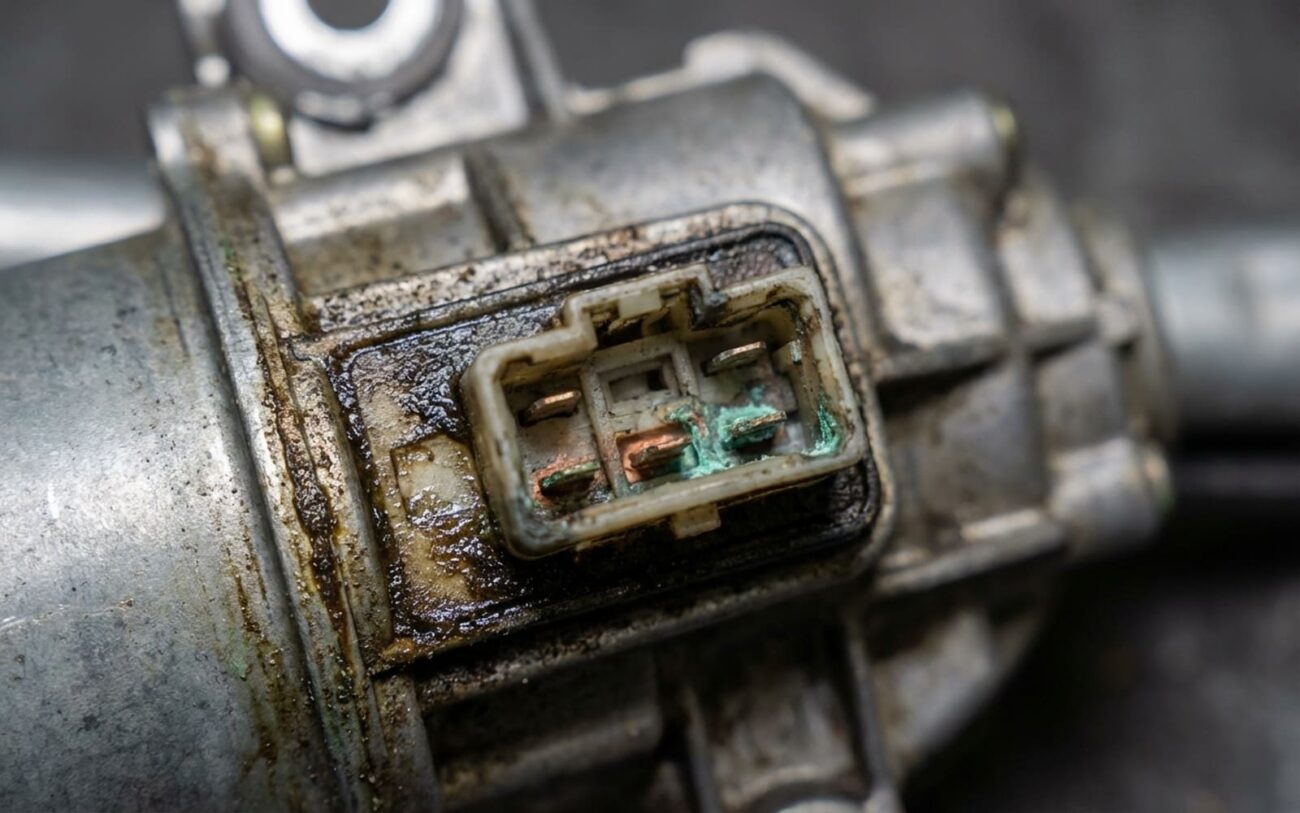
Inside the motor, a plastic cam or follower rides on a rotating lobe. When the motor hits park position, the cam presses the switch. But that plastic wears down. I’ve seen followers cracked, snapped, or completely missing. No contact, no park function. On 2004–2007 Ford Focus models, this was so common there were TSBs about it. Water got in, corroded the switch, and the plastic failed fast.
3. Thermal Distortion
If the wipers are binding—frozen, overloaded, seized linkage—the motor draws high current. That heat warps the plastic housing around the switch. Even if the contacts are good, the cam can’t actuate the switch properly. Misalignment kills function.
How to Fix It (Based on Your Motor)
There’s no one-size-fits-all fix. It depends on your motor design. Here’s how I handle each type.
External, Replaceable Park Switch DIY-FEASIBLE
Integrated Switch (Sealed Motor Unit) Professional Only
Serviceable Gear Housing with Internal Switch Professional Only
