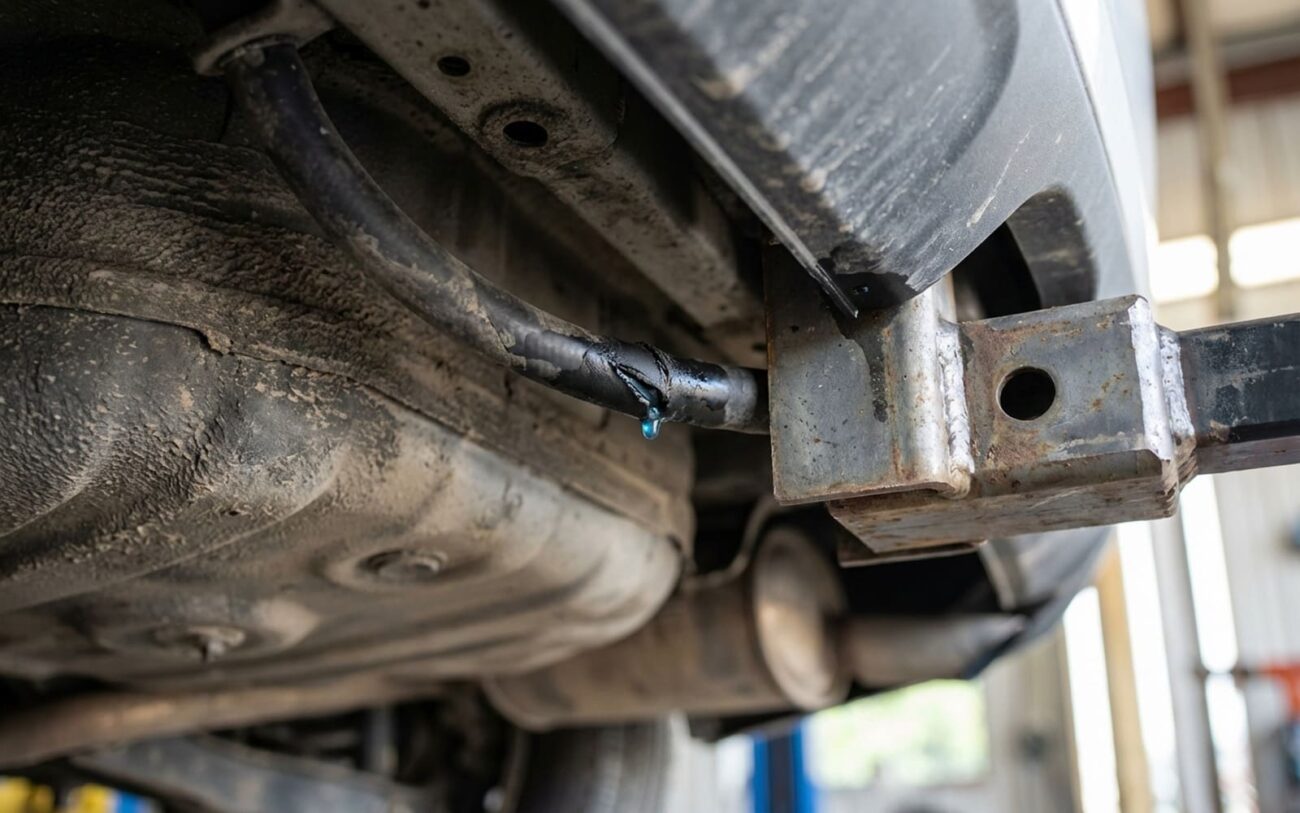
You had a trailer hitch put on last week. Now your rear wiper doesn’t spray, or your radio sounds like it’s trapped in a tunnel. Before you panic—or worse, start throwing parts at it—let me tell you what I see in my shop every single month. This isn’t magic. It’s mechanics. And 9 times out of 10, the hitch install did it. Not because the tech was careless (though sometimes they are), but because the washer line and antenna cable run right where you’re drilling and bolting. I’ve pulled crushed coax out of a Toyota Highlander like it was spaghetti. Seen washer lines sliced clean through on a Jeep Grand Cherokee. Let’s cut through the noise and figure out what’s really broken—and how to fix it right.
Two things go wrong—every time
After a hitch install, I get two calls: “My rear washer isn’t working,” or “My radio’s full of static.” Sometimes both. Coincidence? No. The rear washer line runs along the frame rail—right where you’re bolting the hitch bracket. On SUVs and wagons, it’s often taped to the wiring harness, tucked behind trim, or clipped to the crossmember. Drill one hole too deep, and you’ve punched a hole in a plastic tube. Same with the antenna. That coaxial cable? It snakes down the C-pillar, under the headliner, and into the rear glass or roof antenna. Pop off trim to get to mounting points, and you’re one wrong move from pinching or slicing it.
And don’t assume it’s just “bad luck.” Some vehicles are worse than others. The 2013–2017 Ford Escape? The washer line runs straight through the lower hitch bolt hole. I’ve seen shops install hitches without relocating it—then wonder why the owner comes back a week later with an empty reservoir. There’s even a TSB for it. But most DIYers and even some shops don’t know that.
How to test it—don’t guess
If both systems worked before the hitch and failed after, assume damage. But test before you tear anything apart.
Rear washer not spraying? Check for leaks—and pressure.
Fill the reservoir. Activate the rear washer. If fluid disappears but nothing sprays, you’ve got a leak. But where?
Here’s what I do: crawl under the back, near the rear wheel well. Find the washer line—usually black plastic, 5/32″ OD. Disconnect it from the forward side (before it goes into the rear quarter panel). Plug the front end. Now attach a hand vacuum pump to the downstream side—the part that runs to the rear. Pump it to 15 inHg. If it won’t hold vacuum, the line is compromised. That’s it. No guesswork.
And yes—make sure the pump is working. Turn on the front washer. If it sprays, the pump’s fine. If not, you’ve got a different problem.
Radio static or no signal? Test the coax.
Go to the back of the radio head unit. Unplug the antenna cable. Set your multimeter to ohms. Touch one probe to the center conductor (the pin), the other to the outer shield (the metal ring).
You should read infinite resistance (OL). If you get near 0 ohms, the cable is shorted—probably crushed. If it’s OL but still no signal, could be an open break. Either way, the cable’s toast.
Don’t trust the radio’s signal strength meter. I’ve seen radios show “full bars” with a dead cable. Test the hardware, not the dashboard.
How the damage really happens
It’s not wear. It’s not age. It’s physical trauma during install.
Drill bit goes through the frame rail? Long bit extends past the bracket—punches through the washer line like a straw. I’ve seen it happen with 3/8″ spade bits on F-150s. Line gets a perfect round hole, fluid leaks slowly, owner doesn’t notice until the reservoir’s dry.
Or the tech lifts the hitch into place, and a coax cable gets pinched between the bracket and the floor pan. That crushes the dielectric, shorts the shield to the center conductor. Signal’s gone. No second chances.
And don’t forget chafing. Even if it’s not cut during install, a washer line rubbing against a sharp bracket edge will wear through in weeks. I’ve seen that on Subaru Outbacks where the installer didn’t use a protective sleeve.
Point is: if it worked before and doesn’t now, don’t waste time chasing electrical gremlins. Look where the hitch touched.
How to fix it—without making it worse
Washer line splice DIY-FEASIBLE
Only if you can access both sides of the break. Cut out the damaged section. Use 5/32″ ID low-density polyethylene (LDPE) tubing—same as OEM. Push-fit connectors work, but I prefer compression unions. Slide on 1/4″ clamps (not worm-drive), insert, tighten to 15–20 in-lb. Overtighten and you’ll crack the fitting.
And don’t use fuel hose. It’s too soft. It’ll swell and leak under pressure. I’ve seen it.
Antenna cable replacement PROFESSIONAL-ONLY
This isn’t a “just splice it” job. Coax needs proper termination. If you butt-splice it with electrical tape, you’ll get signal loss, noise, and intermittent dropouts. The shield has to be continuous. The dielectric can’t be compressed.
I’ve had customers try it. They save $300, end up with worse reception. Then they bring it to me, and I have to pull apart the headliner, cut out their hack job, and run a new cable the right way.
Bottom line: if it’s buried in the pillar or headliner, pay a pro. You’ll need trim tools, crimp connectors, and patience. And yes—it’s expensive. But it works.
Field patch (only if you’re stuck) TEMPORARY
If you’re on the road and the washer line is nicked, wrap it with 3M Scotchcast or high-grade vinyl tape. Seal it, not just cover it. But this won’t last. Fluid, heat, vibration—tape fails fast. Use it to get home, then fix it right.
Did it actually work? Test it.
Don’t just reconnect and drive off.
For the washer: run it for two minutes. Get under the car with a flashlight. Look for seepage. Mark the fluid level. Check it again tomorrow. If it’s down, you’ve still got a leak—probably at the splice.
For the antenna: recheck continuity first. Should still be OL. Then scan AM/FM. Wiggle the cable near the repair while playing a weak station. If it cuts out, the shield is compromised. You’ll need to do it again.
What’s it going to cost?
Washer line repair: $20–$50 in parts if you do it. Shop will charge $100–$200. High success rate if accessible.
Antenna cable: $50–$150 in parts. Labor? $300–$800. Why so much? Headliner, trim, coax routing. One job can take 3–4 hours.
How to avoid this next time
Before you drill—stop. Look. Feel.
Get under the car. Remove any underbody shields. Trace the washer line and harness. If they cross a bolt hole, move them. Use zip ties to secure them away from drill paths. Don’t assume “it’s probably
