If your car shuts off at stoplights and won’t restart smoothly—especially when it’s hot—you’re not imagining things. I’ve been doing this for over 25 years, and in the last decade, I’ve seen more start-stop starter failures than cracked blocks, blown head gaskets, and failed PCMs combined. These systems aren’t magic. They’re engineering trade-offs, and the starter pays the price.
It’s Not Your Battery (But Check It Anyway)
Let’s get this straight: yes, a weak AGM battery can mimic starter failure. But here’s what most techs miss—start-stop systems are designed to disable automatic restarts when battery health drops. If your car keeps trying to restart and failing, the problem is likely mechanical.
I’ve pulled starters off cars with perfect battery readings—12.8V, 98% SoH—and found worn bushings, pitted solenoid contacts, or seized drive gears. The system didn’t stop trying because the PCM thought conditions were good. But the starter couldn’t deliver.
So before you spend $300 on a battery, do this: disable the stop-start function temporarily. Try a few hot restarts manually. If it still hesitates or clicks, you’ve got a starter issue. And if you’re still unsure? Test the voltage drop during cranking. More than 0.2V on the ground or power side means you’ve got resistance somewhere—clean the terminals, check the ground strap at the frame.
Symptoms That Actually Mean Something
Here’s what I listen for in the bay:
Slow crank when hot, fine when cold? Classic. Heat expands worn armature bushings. The rotor starts dragging against the field housing. Amp draw goes up, cranking speed drops. Seen it a hundred times on 2017–2020 Silverados with the 4.3L V6.
Click, but no crank? Could be the solenoid. But don’t assume. Check voltage at the starter’s main terminal during crank. If you’ve got 12.2V or more and nothing happens, the solenoid’s internal contacts are likely burned. They look fine until you bench-test them under load.
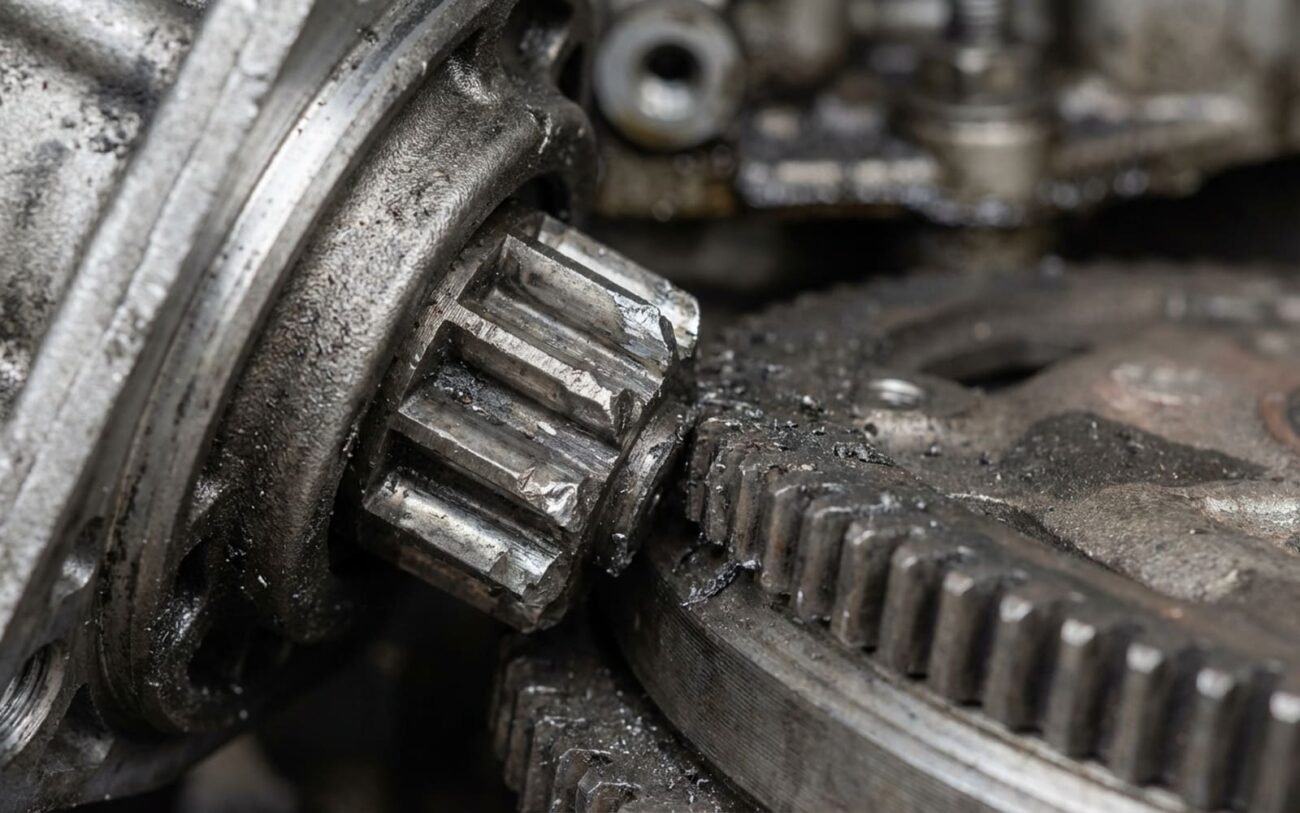
Grinding noise? That’s metal-on-metal. Either the pinion gear is chipped, or the ring gear on the flexplate is damaged. On Fords with the 2.7L EcoBoost, I’ve seen the starter mounting bolts loosen over time—vibration lets the starter drift out of alignment. Torque them to 32 ft-lbs, no more, no less.
Whirring sound, no engagement? The solenoid is throwing the pinion, but the overrunning clutch is shot. Bench-test it: apply 12V to the solenoid terminal. Pinion should extend and lock. If it spins freely, the Bendix is done.
What Dies First (And Why)
These starters aren’t just cranking more—they’re cranking under worse conditions. Every automatic stop is a hot restart. No cooldown. No mercy.
The brushes and commutator take a beating. On a normal car, you might get 5,000 starts in ten years. A start-stop system? 300,000 cycles isn’t rare. Carbon brushes wear down. Copper bars on the commutator pit from arcing. Resistance builds. By the time you hear the slow crank, it’s already losing.
Solenoid contacts get worse with heat. Every time 200+ amps surge through, tiny arcs eat away at the copper. After a few years, you’ve got a high-resistance connection. It clicks, but the motor doesn’t get full power. I’ve measured solenoids that tested “good” with a multimeter but dropped 3 volts under load.
And the drive mechanism? It’s slamming into a stationary ring gear—no coasting momentum to help it mesh. On VWs and Audis, I’ve seen the grease inside the clutch harden from underhood heat. The pinion sticks, doesn’t retract. Next thing you know, it’s chewing up the ring gear.
How I Diagnose It (For Real)
Step one: scan for codes. “Cranking Time Excessive” (P1676 on GM, P3356 on Ford) is a red flag. If battery health is confirmed good, that code usually means mechanical drag in the starter.
Step two: voltage drop test. Positive cable, ground cable, both during cranking. Keep it under 0.2V. If it’s higher, clean the connections. If it’s good, move on.
Step three: current draw test. You need a clamp meter. Hook it up, crank the engine hot. Compare to spec. If amperage is high but voltage is solid, you’ve got internal drag—worn bushings, binding armature, whatever.
And if you’re still not sure? Pull the starter. Bench-test it. I’ve had customers argue it’s “just the battery,” but once you see the pinion gear chewed up or the solenoid contacts pitted, there’s no debate.
Repair Options: What Actually Works
Rebuild? Only if it’s a serviceable unit. Most modern starters—Bosch, Denso, Valeo—are sealed. No user-serviceable parts. You can buy brush kits, but without an arbor press and dial indicator, you’re guessing on armature runout. I’ve seen DIY rebuilds fail in under 500 cycles because the bushings weren’t pressed straight.
Remanufactured? Risky. Some are good. Others are “reconditioned” with minimal internal work. I prefer OEM or high-tier remans from companies like Remy. But even then, I check the lot numbers—some batches had weak solenoids.
New OEM? Best bet for longevity. Yes, it’s expensive. But on a 2021 Traverse or a BMW X3, it’s worth it. These starters are integrated with the engine management system. A cheap aftermarket unit might not communicate properly, and the PCM could disable restarts anyway.
Disable the system? You can, with the dash button. But don’t kid yourself—it’s a band-aid. The starter can still fail on a cold start. And in California, a disabled stop-start system might fail smog. Use it to get home, not as a fix.
After the Fix: Did It Stick?
Bench-test the replacement before install. 12V to the solenoid—pinion should extend, motor should spin clean. No hesitation, no grinding.
Once it’s in, clear the codes. Then simulate real-world use: drive the car, let it stop and restart 8–10 times in a row. If it stumbles on the fifth or sixth, something’s still wrong.
Check voltage drop again—hot. And scan for new codes. If the PCM throws a “Starter Enable Signal Lost” again, you’ve got a control issue, not a power one.
How to Make the Next One Last
Change the battery every 5 years. No exceptions. Even if it tests at 12.6V, AGM batteries degrade internally. The intelligent battery sensor (IBS) relies on accurate SoH readings. A marginal battery tricks the system into attempting restarts under bad conditions.
And if you’re replacing the starter, replace the battery if it’s over 4 years old. I know it’s extra cost. But that fresh, properly coded AGM takes the load off the starter. I’ve seen starters last twice as long when paired with a new battery.
On GMs, check for TSBs. Bulletin #PIP5734B links repeated crank delays directly to starter wear—after ruling out battery issues. It’s not a recall. But it’s real.
Bottom Line
A failing start-stop starter isn’t just a nuisance. It’s a symptom of system stress. Diagnose it right, fix the root cause, and you’ll avoid being stranded—or worse, damaging the flexplate and needing a transmission pull. I’ve done that job once. Never again.
