When Your Car’s Electrical System Goes Haywire: It’s Probably the CAN Bus
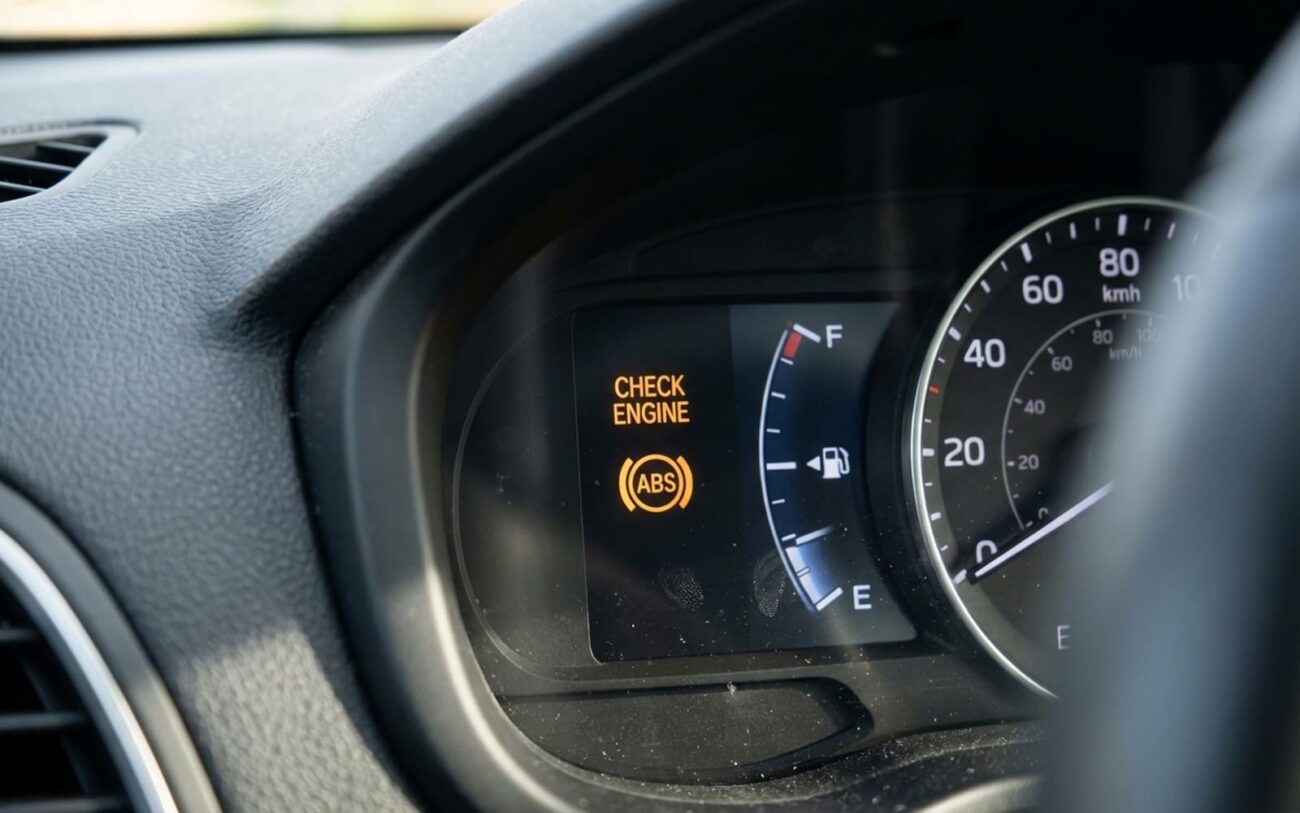
You know that feeling, right? You turn the key, the engine fires up, everything seems okay, but then you look at the dashboard and it’s lit up like a Christmas tree. ABS, airbag, check engine, traction control – all screaming at you. Or maybe you’re trying to get your state inspection done, and the OBD-II scan tool just won’t connect, even though the radio’s playing and the windows still roll down.
After 25 years in this business, I can tell you, these aren’t just random electrical gremlins. These are the classic, tell-tale signs of a CAN bus communication failure. I’ve seen it dozens, probably hundreds, of times. Systems that have no business failing together suddenly go dark, while other, seemingly unrelated things keep chugging along. That’s not a coincidence; it’s the signature of a breakdown in your car’s Controller Area Network (CAN) architecture.
Think of it like your home internet. All your smart devices talk to each other over the network. If the router goes down, or a main cable gets cut, suddenly your smart lights, thermostat, and TV all stop working, even though they’re fine individually. Your car’s CAN bus is exactly like that, but for critical systems.
Latency: HIGH
The Concept
“Modern vehicles use a digital network—like a computer LAN—where modules share data over shared wires instead of individual cables.”
Modern cars are basically computers on wheels, and all those different computers – the engine control module (ECM), transmission control module (TCM), anti-lock brake system (ABS), airbag module, body control module (BCM), you name it – they all need to talk to each other. Instead of running a separate wire for every single piece of information, they share a common pair of wires, the CAN bus, to send messages back and forth. It’s efficient, but it also means a single fault can take down a whole section of the car.
Automakers, like Toyota, typically split this network into segments for both practicality and safety. Most commonly, you’ll find a High-Speed CAN bus (HS-CAN) handling critical, time-sensitive data: engine load, throttle position, ABS activation, transmission shifting. Then there’s a Low-Speed CAN bus (LS-CAN) for comfort and convenience functions: window position, seat memory, door locks, radio. When one of these buses fails, everything on that specific segment goes dark, while the rest of the car might keep running just fine. This segmentation isn’t a flaw; it’s a safety feature designed to prevent a minor issue from disabling your brakes or steering. But when it does fail, it causes a lot of confusion.
Diagnosing the Problem: Where to Start Looking
Before you jump to conclusions and start tearing into wiring harnesses, you’ve got to rule out the simple stuff. A dead instrument cluster, for example, could just be a blown fuse, a bad ground, or a failed cluster itself – not necessarily a full CAN bus fault. The real key, in my experience, is to look for patterns. If multiple, unrelated modules suddenly stop communicating, especially across different areas of the car, you’re almost certainly dealing with a network issue. If it’s just one thing, like a single window not working, it’s probably a local problem, not the whole bus.
| Symptom | Likely CAN Bus Issue | Common External Mimics | My Definitive Test |
|---|---|---|---|
| No communication with engine, transmission, or ABS modules via scan tool. | Fault on the High-Speed CAN bus—likely an open circuit, short to power/ground, or missing termination. | Failed ECM, blown fuse for ECU power, or faulty OBD-II connector. |
First, I check resistance across pins 6 (CAN_H) and 14 (CAN_L) at the OBD-II port with the ignition OFF. It should be 60 ohms. Then, with ignition ON, I measure voltage: CAN_H should be around 2.6V, and CAN_L around 2.4V. |
| Power windows, door locks, and interior lights inoperative. | Fault on the Low-Speed CAN bus, often related to body electronics. | Failing body control module (BCM), weak battery, or poor ground. |
I’ll typically use an oscilloscope to check for signal activity at a known-good module on that bus, like a door module connector. You’re looking for clean, square waveforms. |
| Specific U-codes (e.g., U0100, U0101) for multiple modules. | A single faulty module is shorting or pulling down the CAN bus voltage, or the gateway is failing. | Pinched harness, water intrusion in a module, or corrosion at a splice. |
This is where I start disconnecting modules, one at a time, while monitoring the bus resistance or voltage. When the resistance or voltage snaps back to normal, you’ve found your culprit. |
The Gateway Module: The Brain’s Router
The Gateway Hub:
Every modern vehicle has a gateway module. This module acts as the central hub, the translator, and the bridge between the High-Speed and Low-Speed buses (and sometimes other networks like LIN or FlexRay). Because it’s the bridge, a failed gateway can make it seem like multiple, unrelated systems are down—even if those systems are actually working fine on their own bus. I’ve diagnosed cars where the engine and ABS were fully operational, but the gateway wasn’t routing messages to the OBD-II port, so the scan tool saw nothing. It’s a tricky one to pinpoint if you don’t know what you’re looking for.
It’s important to stress what a CAN bus failure isn’t: it’s not a single failed switch, or a broken wire to one sensor. Those are point failures, and they usually only affect that one component. A true CAN bus failure affects multiple modules across the network. Also, don’t confuse CAN with LIN (Local Interconnect Network); LIN is a slower, simpler protocol used for less critical devices like window motors or mirror adjustments. If your power windows are acting up, it could be a LIN bus issue, but your engine won’t care.
The Fix: How We Get Your Car Talking Again
This is Professional Territory. Seriously.
These steps require specialized knowledge, precision, proper tools, and often, factory wiring diagrams. Attempting these repairs without the right expertise can cause cascading failures, damage expensive modules, or leave your car completely inoperable. Don’t mess with the network unless you know what you’re doing.
Bus Wiring Repair Professional Only
Network Terminator Replacement Professional Only
Gateway Module Replacement Professional Only
Verifying the Repair: My Checklist for Success
Just clearing codes isn’t enough – not by a long shot. You need hard evidence that the network is healthy. Here’s my typical verification process:
- Resistance Check: With the ignition OFF, I re-measure the resistance between CAN_H and CAN_L at the OBD-II port. It absolutely must be 60 ohms.
- Voltage Check: With the ignition ON, I verify CAN_H reads approximately 2.6V and CAN_L reads approximately 2.4V.
- Full Network Scan: I perform a comprehensive network scan with my diagnostic tool. Every single module on the vehicle must respond and show no communication fault codes.
- Oscilloscope Verification: This is critical. I use an oscilloscope to verify clean, square waveforms on both CAN_H and CAN_L lines, free from noise, glitches, or voltage drops. This tells me the signal integrity is restored.
- Functional Test: Finally, I test all affected systems: power windows, door locks, ABS, stability control, cruise control, you name it. I’ll even take it for a drive to ensure everything behaves as it should under real-world conditions.
What This Is Going to Cost You (No Sugarcoating)
Let’s be honest, CAN bus diagnostics and repairs aren’t cheap. It’s specialized work requiring specialized tools and a lot of experience. Here’s a realistic breakdown:
Wiring Repair
This includes the extensive diagnostic time, gaining access to often hidden harness sections, and performing professional soldering and sealing. It can vary wildly depending on where the fault is located.
Gateway ECU
This covers the cost of the new module itself, the labor for installation, and the absolutely critical OEM-level programming and registration. Some high-end vehicles can push this even higher.
DIY Cost
I strongly advise against DIY for CAN bus issues. The diagnostic tools alone (oscilloscope, OEM scan tool subscriptions) often exceed the cost of professional repair, and incorrect repairs can lead to far more expensive damage.
How to Spot Trouble Early (And Maybe Avoid the Headache)
Preventive Maintenance & Vigilance
During routine service, I always recommend a quick visual inspection of rubber grommets where wiring passes through the firewall, doors, or under the car. A cracked or missing seal can let moisture in, which is a prime cause of corrosion and can drag down an entire bus. Also, ask your technician to perform a full network scan during routine service. Even if no warning lights are on, stored “U-codes” (network communication codes) can be an early indicator of an intermittent problem before it becomes a full-blown failure.
I’ve seen water intrusion in door modules on older Mercedes and BMWs cause intermittent window and lock issues that eventually escalated to full LS-CAN failures. Catching those early saves a lot of grief.
And if you’re working on brake systems and notice odd behavior after a repair—like a faulty brake pressure sensor or issues with post-crash brake lockup—remember that those systems often tie into the CAN network too. A brake issue might not be just a brake issue; it could be a communication problem.
