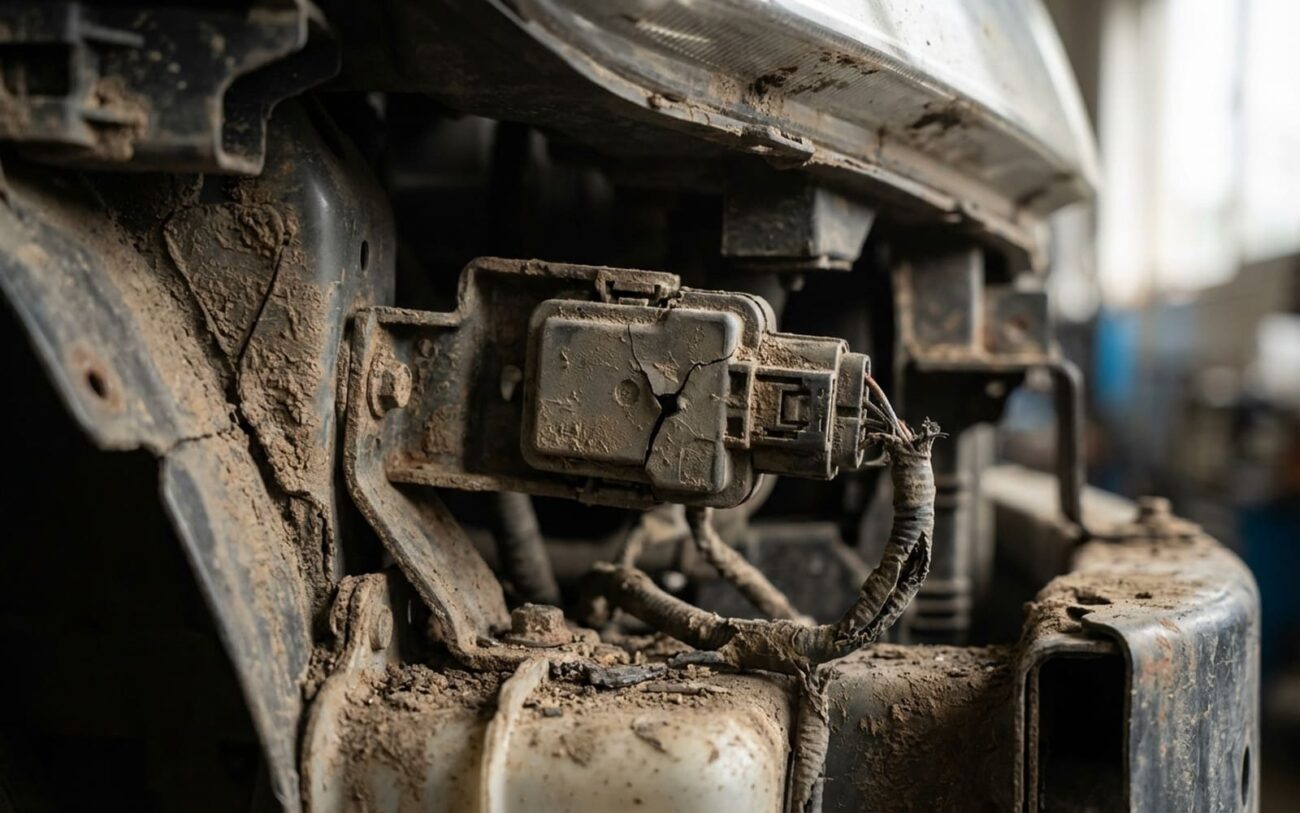
Adaptive headlights with washers? Yeah, I get the side-eye every time I explain it. “Since when do headlights need a damn car wash?” Funny—until someone’s blinded by their own dirty lens on a rainy night. Let me cut through the noise: if you’ve got high-output LED or HID adaptive lights, that washer system isn’t luxury. It’s optics hygiene. And in my shop, I see more misdiagnosed washer issues than blown head gaskets on 10-year-old Audis.
Why It’s There (And Why You Can’t Ignore It)
I’ve said it a hundred times: adaptive headlights are precision instruments. You think that matrix beam pivoting with your steering is magic? No—it’s calibrated optics. Get a smear of road salt or bug guts on the lens, and that beam scatters. Not just worse visibility for you, but now you’re blinding oncoming traffic. That’s why ECE regs in Europe—and many OEMs globally—require washers on any headlight over 2,000 lumens. It’s not a suggestion. It’s baked into the system logic.
On BMWs, Mercedes, Audis, even newer Toyotas with adaptive LED, the system often won’t even enable full adaptive mode if the washer circuit is faulted. And yeah, I’ve seen techs miss that. They go straight to replacing the whole headlight assembly—$2,000 later—when the fix was a $12 nozzle.
Symptom First, Diagnosis Second
So your lights look hazy. Before you start pulling bumpers, ask: is this optical or electrical?
If the beam’s scattered and the lens is filthy, but the washer never sprays—yeah, that’s your culprit. But if you’ve got a “Adaptive Light Fault” code? That’s not the washer. That’s internal: swivel motor dead, leveling sensor off, or a CAN bus hiccup. I’ve had guys replace pumps chasing a U0101 code—wasted time.
| Symptom | Washer Involved? | Other Likely Causes | How I Confirm |
|---|---|---|---|
| Dim or scattered beam, dirty lens | Yes – especially if washer never runs | Burned bulb (D1S/D3S), failed ballast, condensation inside |
Test: Pop the hood, hit the washer stalk (3–5 sec with lights on). Listen for the pump. If nothing, check power at the connector with a DMM. 12V? Pump’s dead. No voltage? Trace back to fuse, then BCM. |
| Washer doesn’t activate | Yes – pump, clog, or control | Blown fuse (F34 or equivalent), BCM not sending signal, software lockout |
Test: Scan tool time. Pull codes from BCM or FEM. If no DTCs, run a bidirectional test on the washer pump. Still nothing? Check fuse, then signal wire at pump. Open circuit? Splice it or replace the harness section. |
| “AHL System Malfunction” warning | No – washer faults don’t trigger this | Swivel motor jam, headlight control module failure, CAN bus error |
Test: This is adaptive system territory. Use OEM-level scan tool. Check swivel motor resistance (usually 2–5 ohms). If open, motor’s toast. Also verify headlight leveling sensor data—it should change with load. |
What Actually Dies (And How to Find It)
After 25 years, I can tell you the failure order: nozzles first, pump second, hoses third, control last. But don’t assume—test.
Clogged nozzles—by far the most common. The orifice is tiny, like 0.4mm. Use a plastic probe, not a pin. I’ve seen guys clear them with a strand of copper wire from a stranded cable—works in a pinch. Flush backward from the nozzle with isopropyl alcohol. And for God’s sake, stop using that blue dollar-store washer fluid. On BMWs and Mercedes, silicates in cheap fluid gunk up the check valves inside the nozzles. OEM fluid or ISO 4926 Class A only.
Pump failure usually comes from running dry or freezing. If someone filled the reservoir with water last winter, ice cracked the housing. Or low fluid caused the impeller to overheat. Test: 12V direct to the pump. If it doesn’t hum, it’s done. Replacement pump runs $60–$120, but labor? You’re pulling the bumper on most cars. BMWs? Front bumper off. Toyotas? Sometimes you can sneak it out, but not always.
Hoses—they crack at the bends, especially near the headlight mounting points. I’ve found splits from UV degradation, even on 5-year-old vehicles in sunny climates. And don’t forget the quick-connects—they pop loose when the bumper flexes. Check for dampness behind the grille.
Control issues—this is where techs get stuck. No power at the pump, but fuse is good and BCM is sending the signal? Could be a software lockout. On some VWs, the BCM disables headlight washers if the windshield washer runs low more than three times. Reset via VAG-COM. Or worse: corrupted flash memory in the BCM. That’s reflashing or replacement. Not a job for the DIY crowd.
How I Fix It (Shop-Tested Methods)
Nozzle Clear or Replace
Pump & Hose Replacement Pro Job
BCM Reprogram or Replace OEM Tools Only
Temporary Lens Wipe
Did It Actually Work? (Spoiler: Test Like You Mean It)
So you replaced the pump. Great. Now prove it.
Command the system: headlights on, hold the washer stalk for 5 seconds. You should hear the pump run for 2–3 seconds, then silence. Spray pattern? Should fully wet the lens, no dry spots. Nozzles retract? Good. Dripping after? Bad—means the check valve failed. Air in the line? Run it a few more times.
If you reflashed the BCM, clear codes, drive 10 minutes, then re-scan. No pending faults? Good. But monitor activation logic—some cars only run headlight washers every 50 windshield cycles. Don’t assume it’s broken if it doesn’t spray on demand.
And yeah—take it for a night drive. Check beam focus. No glare in side streets or oncoming cars. That’s the whole point.
What’s It Gonna Cost?
| Repair Type | DIY Cost | Shop Cost | Success Rate | Risks |
|---|---|---|---|---|
| Nozzle Cleaning/Replacement | $20 – $80 | $150 – $300 | High | Broken clips, over-tightened nozzle |
| Pump & Line Replacement | $60 – $150 | $300 – $600 | High | Leaks, air locks, cracked reservoir |
| BCM Reprogram/Replace | $0 (if under warranty) – $1200+ | $200 – $1500+ | Moderate to High | BCM brick, loss of other modules |
Real talk: on a 12-year-old car worth $3,000, I won’t tell you to drop $1,200 on a BCM. Some indie shops can reprogram the module to ignore the washer circuit—eliminates the warning light. It’s not legal in Europe, but in the U.S.? Gray area. Just keep those lenses clean by hand. And know that in a state inspection, you might get flagged.
Keep It From Coming Back
I tell every customer: treat that washer system like your wipers. It’s maintenance, not repair.
Use quality fluid—ISO 4926 Class A. Every refill, hit the headlight washers a few times. Clears sediment, verifies function. Check nozzles every oil change. If they’re crusty, pull ’em and clean.
And wipe the lens edges during car washes. Dirt packed around the nozzle gets shoved in when it retracts. I’ve seen that cause clogs faster than bad fluid.
Bottom line: this system exists for a reason. Don’t wait for the fault light. Stay ahead of it. Because when you’re driving at night in the rain, you want that beam sharp—not scattered like a busted flashlight.
