Alright, let’s talk CVTs and towing. If you’re here, chances are you just had your Honda, Nissan, or some other CVT-equipped car flat-towed—maybe behind an RV, maybe by a tow truck—and now it’s either making a horrible grinding noise or just won’t move. I’ve seen this play out in my shop more times than I can count, and it’s almost always the same story.
What Really Happens When You Tow a CVT Wrong
The core problem isn’t what gear the shifter was in. It’s that the transmission’s internal lubrication system gets completely starved while the wheels are turning. That’s the real killer, and it happens fast.
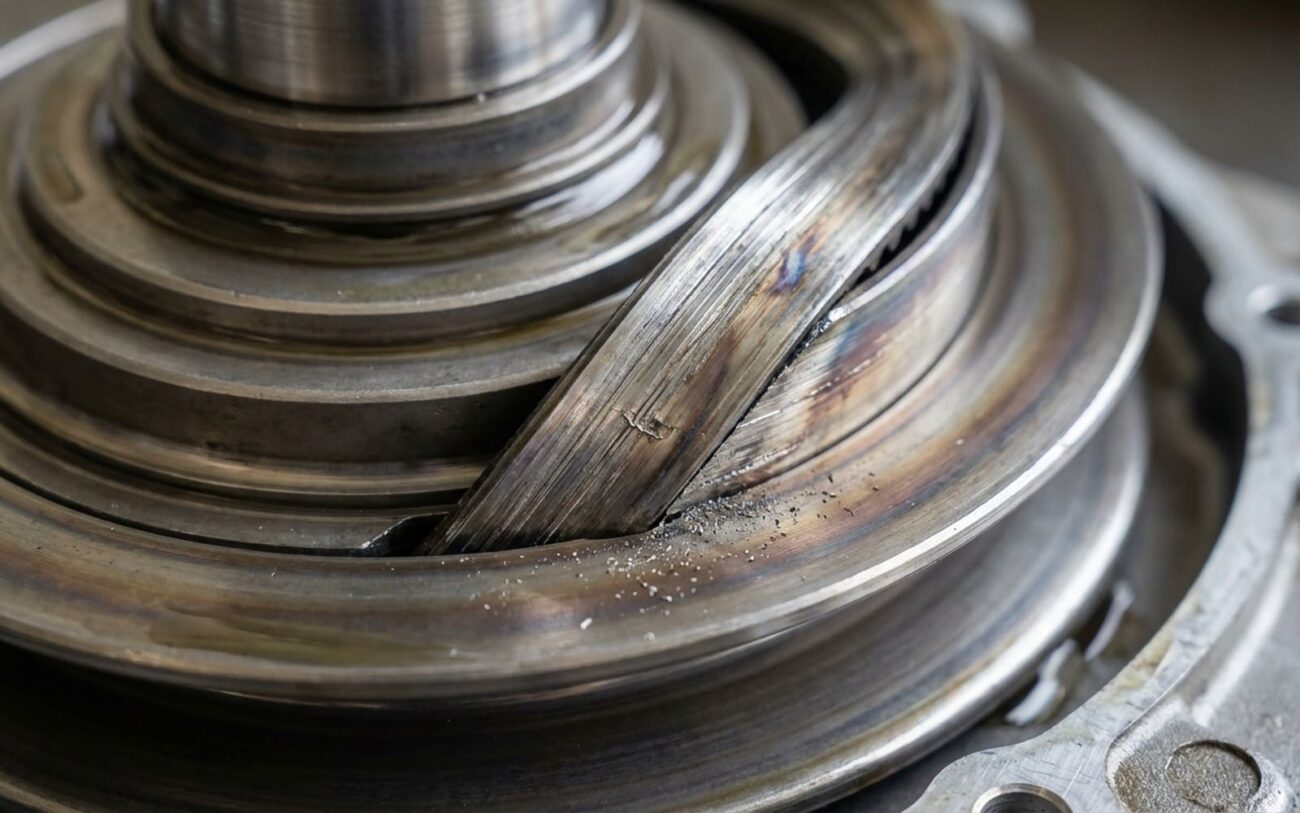
See, almost all CVTs have an oil pump that’s driven directly by the engine. When your engine is off, that pump isn’t spinning. But if you’re flat-towing with the drive wheels on the ground, those wheels are still turning, and that motion gets transferred back through the driveline into the CVT’s internal components. We’re talking about the drive and driven pulleys, and that crucial steel belt or chain that connects them.
These parts rely on a constant, pressurized film of transmission fluid to prevent metal-on-metal contact. Without that fluid, they run dry. They overheat, gall, score, and literally weld themselves together in a matter of seconds or minutes. You can imagine the kind of catastrophic internal damage that causes.
Sometimes, you get a warning. A transmission overheat light or message might pop up on the dash shortly after the tow begins. That’s the control system detecting abnormal temperature spikes because there’s no fluid circulating. That’s your last chance to stop before it’s too late. In rarer cases, the car might just fail to engage gears after the tow, with no noise. That usually means a pulley or clutch pack has seized up silently, but it still boils down to the same root cause: fluid starvation.
Diagnosing CVT Towing Damage
When a car rolls into my shop after a flat-tow with transmission problems, the first thing I do is confirm the diagnosis. The timing—failure right after towing—is a huge red flag for CVT damage, but you still have to rule out other issues. A seized wheel bearing, a broken axle, or even an engine mechanical failure can sometimes mimic these symptoms. Here’s how I approach it:
Symptom: Catastrophic Noise & No Drive After Tow
This is the classic scenario. You hear a terrible grinding, clunking, or whirring, and the car won’t move. In my experience, this points directly to the primary pump not turning, leading to widespread metal-on-metal wear inside the transmission. It’s like trying to run a marathon while holding your breath – the movement is there, but the life support (oil pressure) is cut off.
Common Mimics: A really severe wheel bearing failure, a broken axle shaft, or even a bad engine knock can sound similar. You’d be surprised.
My Definitive Test: I’ll drain the CVT fluid and immediately inspect the pan magnet. If it’s covered in metal debris, especially shiny flakes or chunks, the transmission is toast. I’ll also use a borescope to get a look at the pulley sheaves if I can, but usually, the pan magnet tells the whole story.
Symptom: Overheat Warning During/After Tow
If you saw an overheat warning light or message on the dash during or right after the tow, that’s a clear sign of no fluid circulation. The stationary pump rotor means no oil is flowing through the cooler or lubricating the components, causing temperatures to skyrocket.
Common Mimics: An engine overheating issue, blocked cooler lines (though less likely to happen during a tow without prior issues), or low engine coolant.
My Definitive Test: I hook up my scan tool and monitor the CVT Fluid Temperature (FT) PID. I’ll compare it to the Engine Coolant Temperature. If the CVT temp spikes abnormally high very quickly, or stays high without the engine running (which shouldn’t happen), that confirms the lack of circulation. I’ll also check for any stored codes like `P0846`, which often indicates a primary pressure sensor issue due to low/no pressure.
Symptom: No Gear Engagement, No Noise After Tow
This one’s a bit trickier, but still points to the same root cause. If the car just won’t engage any gears, but you don’t hear any grinding, it often means a primary pulley, driven pulley, or the steel belt has seized from running dry. It just locks up solid.
Common Mimics: A faulty shift solenoid, a failed park pawl, or an electronic shifter issue. These can sometimes prevent engagement without internal damage.
My Definitive Test: I use bidirectional controls on the scan tool to actuate the shift solenoids and monitor the pressure PIDs (Pressure Control Solenoid A, B, etc.). If I command pressure and see no change, or if the pressures are way off, it’s a strong indicator of internal mechanical failure or a pump issue. I’ll also try to manually rotate the axles (if possible and safe) to see if there’s any binding in the transmission itself.
Your Repair Options (And The Hard Truth)
Let me be clear: CVT internal diagnostics and replacements are not for the faint of heart, or for the average DIYer. You need specialized scan tools, heavy lifting equipment, and a deep understanding of these transmissions. Missteps here will lead to immediate repeat failure, and you’ll be right back where you started.
Making Sure The Fix Actually Worked
After any repair, whether it’s just a fluid exchange or a full replacement, you absolutely have to validate it under real-world conditions. For a fluid exchange, I’ll monitor the CVT Fluid Temperature (FT) PID with my scan tool during a good 30-minute road test. The temperature should rise and fall normally, without any sudden spikes. And for the love of all that’s holy, check that fluid level at the exact temperature specified by the manufacturer—usually between 95–113°F. An infrared thermometer on the pan is your friend here.
For a full replacement, I make sure all gears engage smoothly, and then I perform the manufacturer’s adaptive drive cycle using the scan tool. This teaches the new transmission how to operate with the rest of the vehicle. Then, it’s a careful listen for any abnormal noises and a thorough inspection for leaks after at least three full heat cycles. You don’t want to send a car out only for it to come back a week later with a new problem.
The Hard Financial Reality
Let’s talk money, because this is where it really hurts. A simple fluid exchange, if you catch it early enough, might run you $250–$400 at a shop. If you’re doing it yourself, you’re probably looking at $120–$200 just for the fluid and any specialized tools you might need.
Full Replacement
This is the brutal part. For a full replacement with a remanufactured unit, including parts and labor, you’re typically looking at $5,500 to $8,500. On many vehicles, especially older ones, that figure can easily exceed 50% of the car’s market value. At that point, it often makes more financial sense to sell the car for parts or scrap it.
How to Never Let This Happen Again
Prevention is Key
Look, this problem is entirely preventable. It comes down to understanding your vehicle and how it’s designed. Here’s what I tell all my customers:
-
Read Your Owner’s Manual: I can’t stress this enough. Every single CVT-equipped vehicle’s manual will have a “Recreational Towing” section. Most explicitly warn against flat-towing with the drive wheels down. This isn’t a gray area; it’s a hard rule.
-
Always Use a Flatbed: The only truly safe way to tow a CVT vehicle, whether it’s for a short distance or cross-country, is with all drive wheels completely off the ground. A flatbed tow truck is the way to go. If you’re behind an RV, you need a trailer.
-
Maintain Your Fluid: While not directly related to towing, proper fluid maintenance is crucial for CVT longevity. Change your CVT fluid every 30,000 to 60,000 miles, and only use the OEM-specified fluid. This maintains thermal stability and lubrication properties, which are vital for these transmissions.
-
AWD Models Need Extra Caution: If you have an AWD CVT vehicle, be even more careful. These often have even stricter towing limitations due to the complex interactions of the AWD system. Always check the manual for specific instructions.
