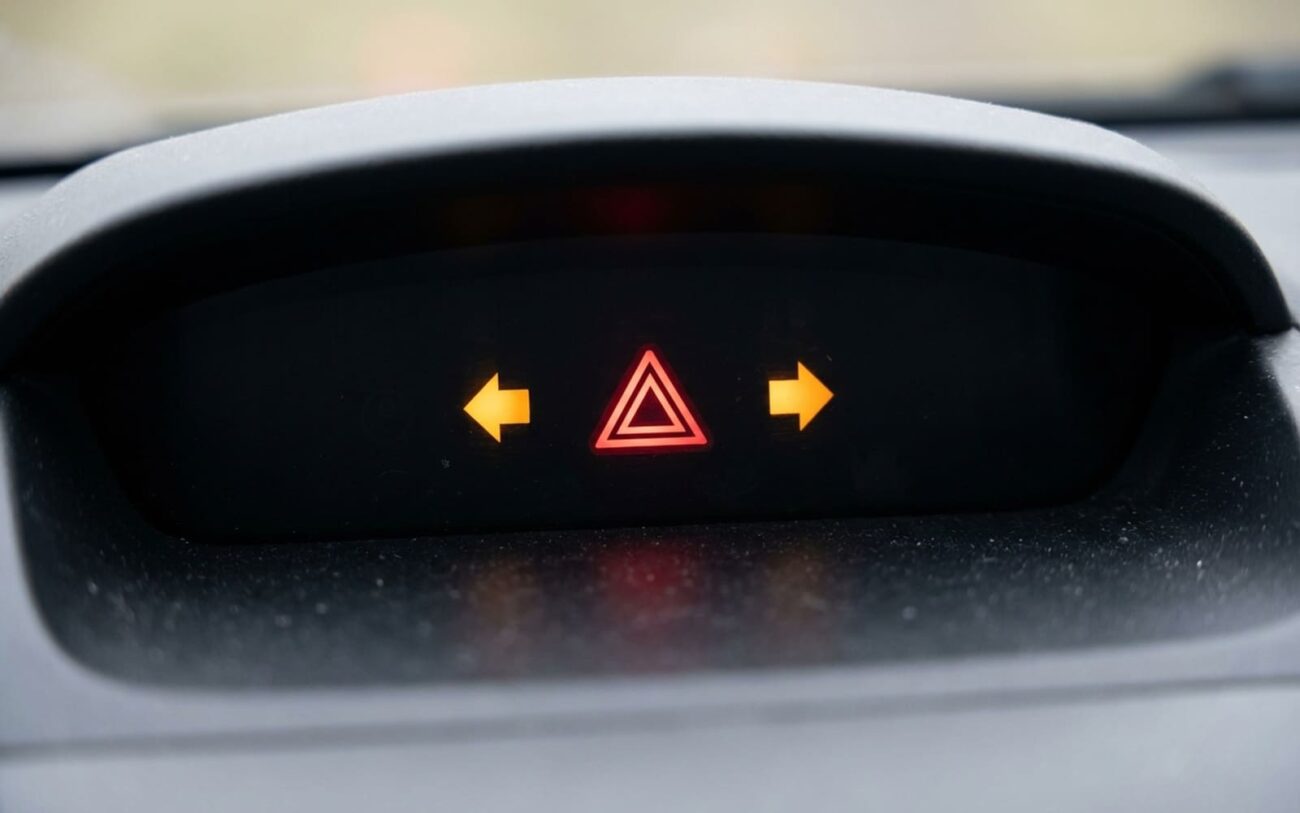
You flip the turn signal and nothing happens. No blink. No click. But hit the hazard button? All four corners light up just fine. That’s not a mystery—it’s a message. I’ve seen this exact setup on everything from beat-up Civics to high-mileage Rams, and it tells me one thing loud and clear: the problem is almost certainly in the multifunction switch. Let me walk you through how I break it down in the shop.
What the Symptoms Are Really Saying
Hazards work. Turn signals don’t. That’s not a coincidence—it’s a diagnostic shortcut. The hazard circuit feeds power directly to all four bulbs through its own path, bypassing the turn signal switch entirely. So if the lights flash when you hit the button, you’ve just ruled out half your system: bulbs, fuses, flasher module, and wiring to the lights are all good.
That leaves the front end: the multifunction switch (MFS), the wiring between it and the Body Control Module (BCM), or the BCM input itself. In my experience, 9 times out of 10, it’s the switch. But you don’t replace parts on a hunch—you test.
How I Test It (and Why You Should Too)
First—safety. Disconnect the battery and wait 15 minutes. There’s an airbag sitting right there, and you don’t want to set it off while poking around the column. I’ve seen techs skip this and pay for it—both in medical bills and customer trust.
Once it’s safe, unplug the switch connector. You’ll need a digital multimeter (DMM) set to continuity. Probe the input terminal (usually powered with ignition on) and check for continuity to the left and right output circuits as you move the stalk.
No continuity when the stalk is engaged? That’s your confirmation. But—and this is critical—don’t skip checking for power and ground at the connector first. I’ve chased “bad switches” only to find a corroded connector or a blown ignition feed. On older GMs, especially, the connector behind the switch loves to bake under the dash and lose connection.
If the switch tests dead but power and ground are good, the switch is done. If you’re getting power but no output, and the connector’s clean, it’s not the wiring—it’s the switch internals.
What Actually Breaks Inside That Switch
It’s not magic. There are four main failure points I see over and over:
First, contact wear. The copper or silver alloy contacts inside the switch wear down from thousands of cycles. They get pitted, oxidized, or just too thin to carry current. You’ll see this on older Hondas and Toyotas—smooth operation, but no electrical connection.
Second, the plastic cancel cam. It’s under constant spring pressure and heat cycles. On Fords from the early 2010s, I’ve pulled switches where the cam snapped clean off. The stalk moves, but nothing engages.
Third, cracked solder joints on the internal PCB. This is huge on certain Rams—2010 to 2013 models in particular. The board flexes with steering wheel movement, and over time, the solder cracks. You might get intermittent signals before total failure. I’ve tested these with a dental pick—wiggle the board, and the signal flickers. That’s your smoking gun.
Fourth, spring failure. The detent spring gives you that “click” feel. If it breaks or loses tension, the contacts don’t make firm contact. The stalk feels loose, or you have to hold it partway to get a signal.
And no—this isn’t a fuse issue. If the flasher module were bad, hazards wouldn’t work. Same for bulbs or wiring. That’s why “hazards work, signals don’t” is such a clean diagnostic window.
Fix It Right: Your Options
Check the Connector First [DIY-FEASIBLE]
Replace the Switch Professional Only
Solder Repair (Only If You’re Desperate) Professional Only
Did It Work? Here’s How to Know
Don’t just turn the key and call it good. Test everything. Left and right signals—do they flash at normal speed? Do they self-cancel after a turn? Hazards still work? Check high beams, wipers, cruise control—anything on that stalk. A pinched wire during reassembly can knock out multiple functions.
For Electrical Validation
-
Use your DMM to measure resistance across the switch contacts when engaged. Should be under 0.5 ohms. Higher than that? You’ve got a poor connection—either dirty contacts or a bad repair.
-
Scan for BCM codes. Even if no light is on, the module might have stored a history code for MFS input failure. Clears the “unknown” factor.
Is It Worth Fixing? Let’s Talk Real Numbers
| Repair Type | DIY Cost | Shop Cost | Success Rate | Secondary Risk if Failed |
|---|---|---|---|---|
| Connector Cleaning & Inspection | $20 (cleaner, grease) | $50–$100 (0.5 hr labor) | 15% (only effective for minor corrosion) | Minimal—no risk to other systems. |
| Switch Replacement | $100–$300 (OEM or aftermarket part) | $350–$600 (parts and 1.0–1.5 hr labor) | 98% (near-complete fix when done correctly) | High—incorrect handling can damage clock spring or airbag, leading to $500+ in additional repairs. |
| PCB Solder Repair | $10 (solder, flux) | $150–$250 (1.0 hr labor for skilled tech) | 80% (depends on accurate fault identification) | Moderate—intermittent failure may return; switch could fail completely later. |
Real Talk:
If the repair costs more than 30% of your car’s value, think hard. A $500 fix on a $1,500 car doesn’t make sense—even if it’s a necessary one. Turn signals are safety equipment, no question. But sometimes, the smarter move is to redirect that money toward something more reliable. I’ve had customers cry over this, but I’d rather be honest than have them stranded again in three months.
How to Make It Last Longer Next Time
These switches wear out. They’re mechanical. But you can slow it down. Stop yanking the stalk. A smooth, firm motion is all you need. I’ve seen drivers treat it like a gearshift—slamming it up and down. That kills the cancel cam and wears the contacts faster.
If you’re already pulling the wheel for another job—say, a clock spring or ignition switch—ask the tech to inspect the switch’s plastic pivots. A dab of manufacturer-approved lubricant keeps them from drying out and cracking. I use a silicone-based grease, nothing petroleum-based (it eats rubber).
And watch for early signs. If your signals start acting up—intermittent, no self-cancel, or needing a “sweet spot” to work—don’t wait. That’s the switch telling you it’s on the way out. Same as a blower motor bearing whining before it seizes. Small warning. Big consequence if ignored.
