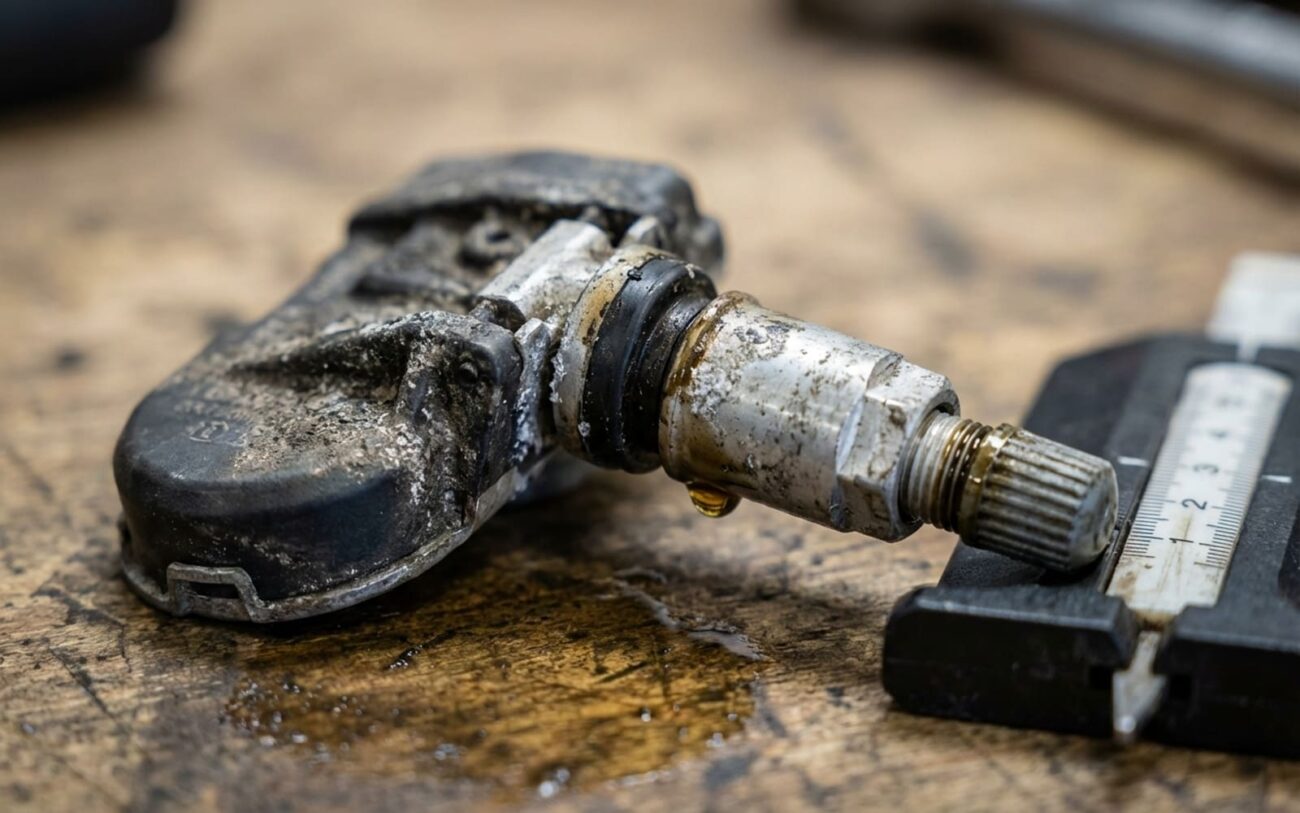
That TPMS Light Won’t Shut Up? Let’s Fix This Right.
I’ve seen this a thousand times: customer checks tire pressure with a decent gauge, hits the spec dead on, and the dash still screams “low pressure.” Sometimes it’s one tire, sometimes it flickers on and off. Nine times out of ten, it’s not the tire—it’s the sensor. And no, resetting the system won’t magically fix a dead battery inside a $100 sensor.
The real red flag? When the pressure reading on your screen doesn’t match reality—and it stays wrong after you’ve relearned the system. Or worse, you get a DTC like “LF Sensor Fault” or “No Signal from RF.” That’s not a glitch. That’s your car telling you it’s blind on that wheel.
And that’s dangerous. I’ve pulled tires off cars where the owner “knew” the pressure was fine because they checked it once a month—only to find the sidewall cooked from running 20 psi for weeks. Underinflated tires don’t just wear fast—they overheat, delaminate, and can blow out without warning. TPMS isn’t a luxury. It’s a safety net. Cut one leg off, and you’re walking blind.
Symptom First, Diagnosis Second
Before you rip a sensor out, rule out the simple stuff. I’ve chased ghosts because someone used a $10 tire gauge from the gas station. If the tire’s hot from driving or sitting in the sun, pressure reads high—so don’t test then. And if you just rotated the tires? The system might not know where the sensors are anymore. Relearn it.
But if the problem sticks around after that, it’s time to dig deeper. Here’s how I approach it in my shop—methodical, no guesswork.
| What You’re Seeing | What It Could Be | How to Test It |
|---|---|---|
| One tire shows wrong pressure, won’t correct. | Bad sensor (drift, battery), bad gauge, temp effect, or needs relearn. |
Check pressure cold with a calibrated gauge. Relearn the system. If it still reads wrong, the sensor’s likely bad. |
| TPMS light on, DTC for one sensor. | Dead sensor, RF interference, bad receiver, or wrong ID in ECU. |
Use a TPMS tool to wake the sensor at the valve. No response? It’s dead. If it wakes, check if the ID is registered in the ECU. Missed this once on a 2016 Highlander—wasted two hours. |
| Signal drops in and out. | Dying battery or RF interference (e.g., near radio towers). |
Monitor live data with a scan tool. If dropouts happen everywhere, battery’s dying. If only in certain areas, it’s environmental. I had a customer who lived near a cell tower—his RF noise killed two sensors before we figured it out. |
Why Sensors Die (And It’s Not Always What You Think)
Most people think sensors just “stop working.” But I’ve pulled enough of them apart to know the real story. There are four main failure points—and only one of them is truly electronic.
First: battery. These things run on sealed lithium cells, good for 7 to 10 years. No recharge, no swap. When it’s dead, it’s done. I see this constantly on 2013–2015 Accords—battery dies right at 9 years, like clockwork.
Second: the pressure transducer. It’s a tiny chip that measures pressure, and over time, thermal cycling and moisture can make it drift. You’ll see readings that are consistently high or low—never right, even after calibration.
Third: physical damage. I’ve seen techs at quick-lube shops pry on the sensor with a tire iron like it’s a lever. One hard hit, and the circuit board cracks. Or a curb strike bends the stem. Doesn’t take much.
Fourth: seals. The rubber gasket between the sensor and the rim dries out. So does the valve cap. Once moisture gets in, corrosion sets in. I pulled one last month—looked fine outside, but inside? Green fuzz on the contacts. Toast.
And here’s the thing: a leaking valve core isn’t a sensor failure. It’s a sealing issue. You can replace the core with a brass TPMS-specific tool and fix the leak—no sensor replacement needed. But if the stem itself is corroded? That’s game over.
How I Fix It—And What You’re Paying For
If it’s just a leaky valve core, I fix it in 10 minutes. $3 part, $20 labor. Done. But if the sensor’s dead? That’s a different beast.
You can’t just swap it like a spark plug. You’ve got to break the tire bead, remove the tire, then pull the sensor from the rim. That means a tire machine, torque wrench, and TPMS programming tool. On most cars, torque is 40–60 in-lbs. Go over that on an aluminum rim, and you’ll crack it. I’ve seen it happen.
Then you install the new sensor with a fresh seal, nut, and core—never reuse old hardware. Reinstall the tire, balance it, then program the sensor ID into the ECU. Skip the programming? Light stays on. Mess up the ID? Same thing. I don’t care how perfect the install was—if you didn’t relearn it, it’s not fixed.
| Repair Type | DIY Cost | Shop Cost | What Goes Wrong |
|---|---|---|---|
| Valve Core Replacement | $3–$8 | $20–$50 | If the stem or base is corroded, new core won’t seal. |
| Single Sensor Replacement | $60–$160 | $225–$375 | Wrong programming, over-torqued nut, or cracked rim. |
Now, if your car’s over 10 years old and one sensor failed? The others are on borrowed time. I’ve had customers replace one, then get another failure three months later. And another after that. At that point, I suggest replacing all four. Yeah, it’s $800–$1,200 at a shop. But on a car worth $3,000? Some people just disable TPMS and check manually. That’s their call—but I make sure they understand the risk.
How to Keep It From Happening Again
Pro Tips from the Bay
-
Always use metal valve caps. The rubber ones? Useless. Metal caps seal the valve and keep moisture out. I’ve seen sensors last 3 extra years just from this.
-
Tell the tire shop to treat TPMS sensors like glass. No prying, no dropping. On the 2015–2017 F-150s, I see at least one damaged sensor a week from careless mounting.
-
Sensors are consumables. Same as brake pads or wipers. If your car’s over 7 years old, assume they’re on the way out.
-
When one fails, the others are the same age. Replacing all four isn’t required, but it saves you headaches. I do it on my own truck—peace of mind is worth the cost.
