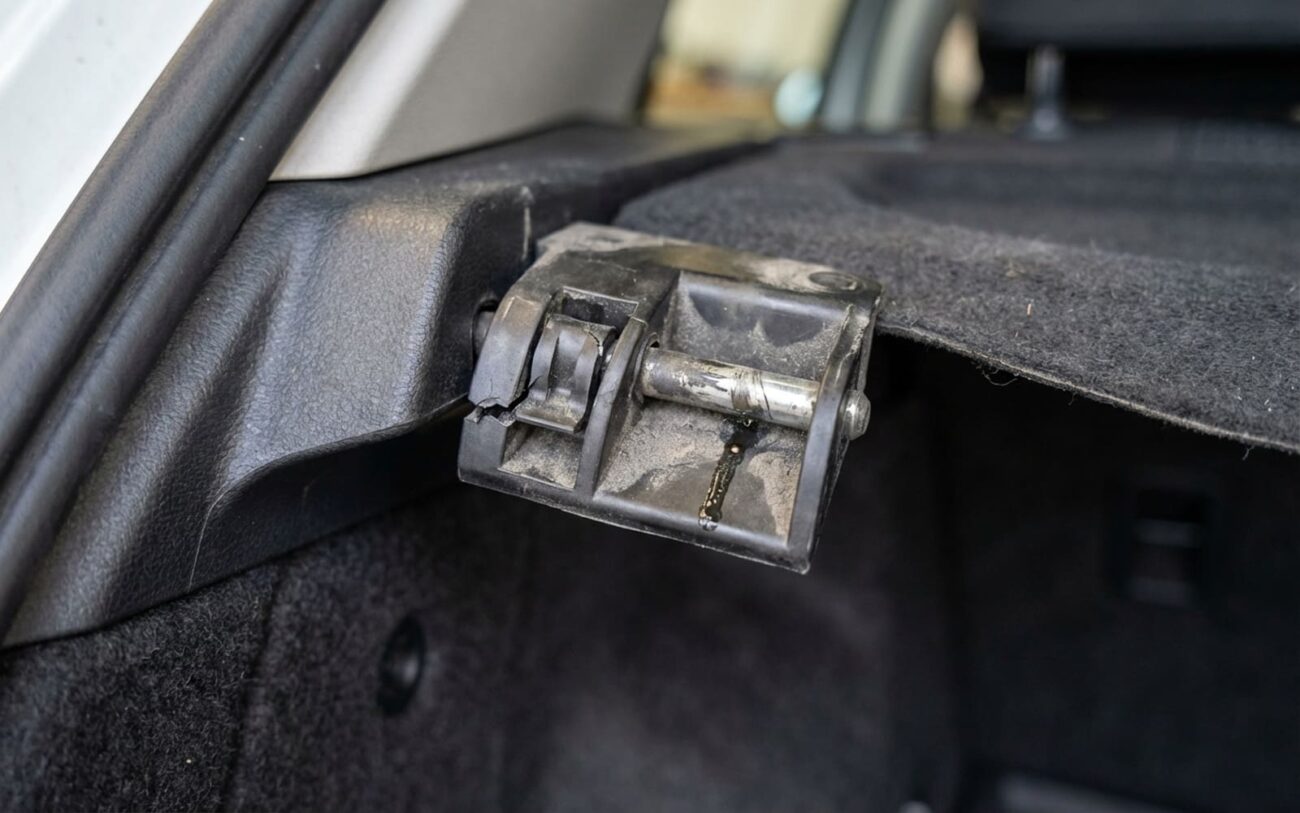
You hear it every time you hit a bump—this faint squeak behind your head, like someone stepping on a loose floorboard. Most people think it’s the rear suspension. Or maybe the seat belt retractor. I’ve seen techs replace struts, check control arms, even pull trim panels looking for the source. And then I pop the trunk, lift the parcel shelf, and find the real culprit: three-dollar rubber grommets turned to dust.
The Real Problem: Trunk Shelf Mounts That Outlive Their Rubber
That squeak isn’t coming from the rear axle. It’s the trunk shelf mounts—those little plastic pins and rubber sockets nobody thinks about until they start complaining. They’re supposed to isolate the shelf from body flex. But over time, the rubber dries out. It hardens. Then cracks. And once that cushion is gone? Metal-on-plastic chatter every time the body twists.
On a 2012–2017 Honda Accord, I’ve replaced these grommets on at least a dozen cars. Same story: driver hears a creak, assumes it’s suspension. Mechanic checks shocks, finds nothing. Then I come in, lift the shelf, and the grommet falls apart in my hand.
It’s not a safety issue. But it’s annoying as hell. And left unattended, it can lead to broken pins or even a shelf that shifts during hard braking.
How to Diagnose: Skip the Guesswork
Don’t pull anything yet. First, isolate the noise.
Have someone drive over a speed bump while you sit in the back seat. Listen. Is it a rhythmic squeak, timed to the bumps? Does it happen when turning into a driveway? That’s not suspension travel—that’s body flex.
Now press down on the rear deck with your palm. If the noise changes—or stops—you’re on the right track.
Next, open the trunk. Remove the shelf (usually just snaps out). Look at the body-side sockets. Are they cracked? Brittle? Pull one out. If it crumbles, that’s your answer.
Check the shelf pins too. On older Toyotas, I’ve seen them snap clean off from someone dropping a toolbox in the trunk. One guy had a loose floor mat that worked its way under the shelf and bent the pin over time. Small stuff. Big consequences.
| Symptom | Trunk Shelf Mounts? | Other Likely Causes | Definitive Test |
|---|---|---|---|
| Squeak over bumps | Yes — if it changes when pressing on shelf | Trunk latch, rear seat bracket, trim panel |
Apply silicone to each mount point. Test drive. If noise stops, mounts are bad. |
| Shelf sags near rear window | Likely — collapsed bushing or broken pin | Warped shelf, incorrect part |
Remove shelf. Compare socket condition side to side. Lay shelf on flat surface to check for warp. |
| Shelf moves when pushed up | Yes — worn socket or cracked pin | Missing pin, damaged torsion bar |
Insert known-good pin into body socket. If loose, socket is worn. |
Why They Fail: It’s Not Just Age
Heat cycles do a number on the rubber. Park your car in the sun all day? The trunk gets hot. Then it cools at night. That expansion and contraction dries out the rubber. UV exposure makes it worse—especially on convertibles.
But it’s not just environmental. Constant micro-movement wears them down. Every time the body flexes over a bump, the pin rubs against the socket. No lubrication. No service interval. Just metal and plastic doing what they do best—grinding each other down.
And on some models, the design was flawed from the start. The 1998–2002 Honda Accord? Factory grommets were undersized. They started rattling at 60k miles. There’s a TSB for it—Honda even released updated parts. But most owners never knew.
Repair Options: Know When to DIY and When to Walk Away
Replace the grommets DIY-FEASIBLE
This is the bread and butter fix. The grommets pop out with a trim pick. Clean the socket with isopropyl alcohol. Press in the new one—make sure it’s seated flush. I use a light coat of silicone lube. Keeps it supple. Costs $5–$10 for a set. Takes 20 minutes.
On a Toyota Camry, the part number is 90467-10014. For a Honda, it’s 04345-S0X-A00. Don’t guess—look it up. Some grommets look the same but have different inner diameters.
Fix a cracked shelf pin DIY-FEASIBLE TO PROFESSIONAL-ONLY
If the pin is cracked but still intact, I’ve had luck with JB Weld Plastic Bonder. Clean it with alcohol. Sand lightly. Mix the epoxy. Clamp it. Let it cure 24 hours. Don’t rush it.
But if the pin is shattered? Or if it’s a composite shelf (like on some BMWs)? Forget it. The repair won’t hold. You’ll be doing it again in six months.
Stretched body socket TEMPORARY
This is rare. But when the metal socket gets oval-shaped from years of wear, you’ve got a problem. No grommet will fix that.
Some guys wrap the pin in Teflon tape. Works for a while. I’ve seen it last a month. Maybe two. But it’s not a fix. It’s a band-aid.
Real repair? Welding or reinforcement by a body shop. Not worth it on a 15-year-old sedan. Replace the shelf and live with a little play—or find a donor car with good mounts.
Did It Work? Test Like a Pro
Reinstall the shelf. It should click into place with a solid, even snap at each mount.
Now tug up on each corner. No movement. No creak. If it shifts, the grommet isn’t seated right.
Take it for a test drive. Hit some bumps. Turn hard into a parking lot. Listen. If it’s quiet, you’re done.
If you used epoxy? Wait. Don’t reinstall until it’s fully cured. Then test the pin’s strength by hand. If it cracks under light pressure, it’ll fail on the road.
Cost: Don’t Overpay
| Repair Type | DIY Cost | Shop Cost | Success Rate |
|---|---|---|---|
| Grommet Replacement | $5–$25 | $75–$150 | 95%+ |
| Epoxy Repair | $10–$20 | $100–$200 | 70% (varies) |
| Shelf Replacement | $50–$300 | $50–$100 labor | 100% |
If a new shelf costs more than $250, and your car’s worth $3k, just replace the grommets. Or hit a junkyard. I’ve pulled good shelves off totaled Camrys for $40.
Prevent It From Coming Back
When you remove the shelf—say, for speaker upgrades—don’t twist it. Lift straight up. Twisting cracks pins.
Once a year, wipe down the pins and sockets. Spray them with silicone lube. Not WD-40—that dries out rubber. Silicone keeps it soft.
And check for play. Every time you load groceries, give the shelf a quick tug. If it moves, fix it now. Waiting just makes it worse.
Bottom line: this isn’t a critical repair. But it’s one of those small things that makes a car feel tight and solid. And that’s worth fixing.
