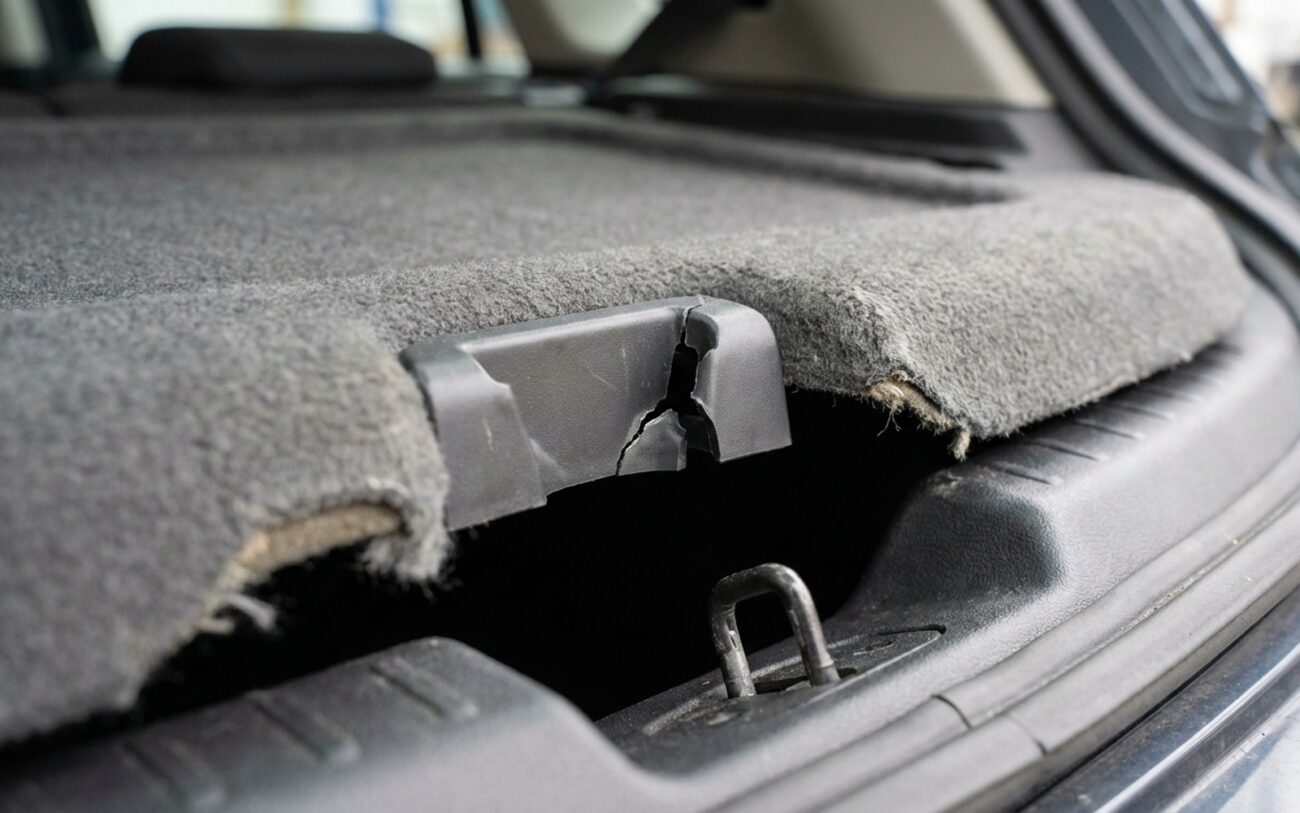
That buzzing behind your head on rough roads? I’ve diagnosed hundreds of these. And 8 out of 10 times, it’s not a failing bearing, not a loose heat shield — it’s the trunk shelf. That flimsy panel behind the back seats. It sags, it flexes, it starts vibrating like a snare drum. And because it’s right behind your ears, it sounds like it’s coming from the rear suspension. Classic misdirection.
Stop Guessing. Test It.
Here’s how I do it in the bay: I pull the rear seats, clear out the trunk, and yank the shelf out completely. No half-measures. Then I take it for a test drive over a known rough stretch — expansion joints, potholes, the works. If the noise is gone? Game over. Shelf’s the culprit.
If the buzz is still there, now you’re into real diagnostics — wheel bearings, suspension bushings, exhaust hangers. But if the cabin goes quiet? You just saved yourself $400 in unnecessary parts.
Why These Things Die
They’re not built to last. Most shelves are cardboard honeycomb — literally — sandwiched between vinyl or fabric. It’s light, cheap, and terrible long-term.
Heat cycles kill the adhesive. I’ve pulled shelves where the fabric peeled up like old wallpaper. Once that edge lifts, it buzzes against the core every time you hit a bump.
Weight crushes the core. People toss gym bags, toolboxes, even groceries on top. That middle section wasn’t designed to support 30 lbs. Once it sags, it’s game over.
And the plastic mounting tabs? Brittle as glass after 8 years. Yank the shelf wrong — even once — and you snap a tab. Now one end flops. I’ve seen guys “fix” it with duct tape. That lasts about three bumps.
How I Fix It — And What Actually Works
Fabric lifting? DIY-FEASIBLE
Broken tab? DIY-FEASIBLE TO PROFESSIONAL-ONLY
Sagging or soft core? NON-REPAIRABLE → REPLACE
And yeah — I’ve used the pool noodle trick. Cut a 6-inch chunk, wedge it between the shelf and deck. Stops the noise. But it blocks your rearview mirror, shifts when you brake, and looks dumb. Only use it if you’re desperate and can’t fix it right away.
Did It Actually Work?
Don’t trust a short drive. Take it out for 20–30 minutes. Hit rough pavement, railroad tracks, speed bumps. If you glued or epoxied something, press down on the shelf with your hand. No creaking. No flex.
If you repaired a tab, make sure it clicks in solid. Try to wiggle it. If it moves, it’ll come loose again.
And if the noise comes back? Check the speaker grills. Sometimes the shelf’s not touching the body — it’s just resting on a loose rear speaker cover. That’ll buzz too.
How Much Is This Gonna Cost?
| Repair Type | DIY Cost | Shop Cost | Success Rate | Secondary Risk if Failed |
|---|---|---|---|---|
| Adhesive Repair | $20–$40 (adhesive, felt tape) | $150–$300 (labor) | High for minor delamination | Adhesive may fail over time; excess glue can bleed through and stain fabric. |
| Tab Repair | $10–$50 (epoxy or plastic weld kit) | $200–$400 (labor + parts) | Moderate | Repair may fail if shelf is frequently removed; stress can re-break the tab. |
| Replacement | $150–$600 (OEM or aftermarket part) | $300–$800 (part + labor) | Very High | Minimal, provided the correct part is used and installed properly. |
Cost-Saving Tip
I’ve started sending customers to a local indie body shop for shelf replacements. They charge half what the dealer does. And they actually care about fitment. Just make sure they don’t use a junkyard shelf — those are usually already sagging.
Keep It Quiet — Long Term
Treat it like trim, not a shelf. Nothing heavy on top. Gym bag? On the floor. Luggage? Floor. That’s where the structure is.
And clean it right. No soaking. Damp cloth only. Waterlogged core is a death sentence.
I check mine every time I rotate the tires. Pull it out. Look for cracks, soft spots, lifting fabric. Push up in the center. If it gives more than a quarter inch, it’s time to act.
Small fixes now save you noise, frustration, and bad diagnostics later. I’ve said it before — the simplest thing is usually the answer.
