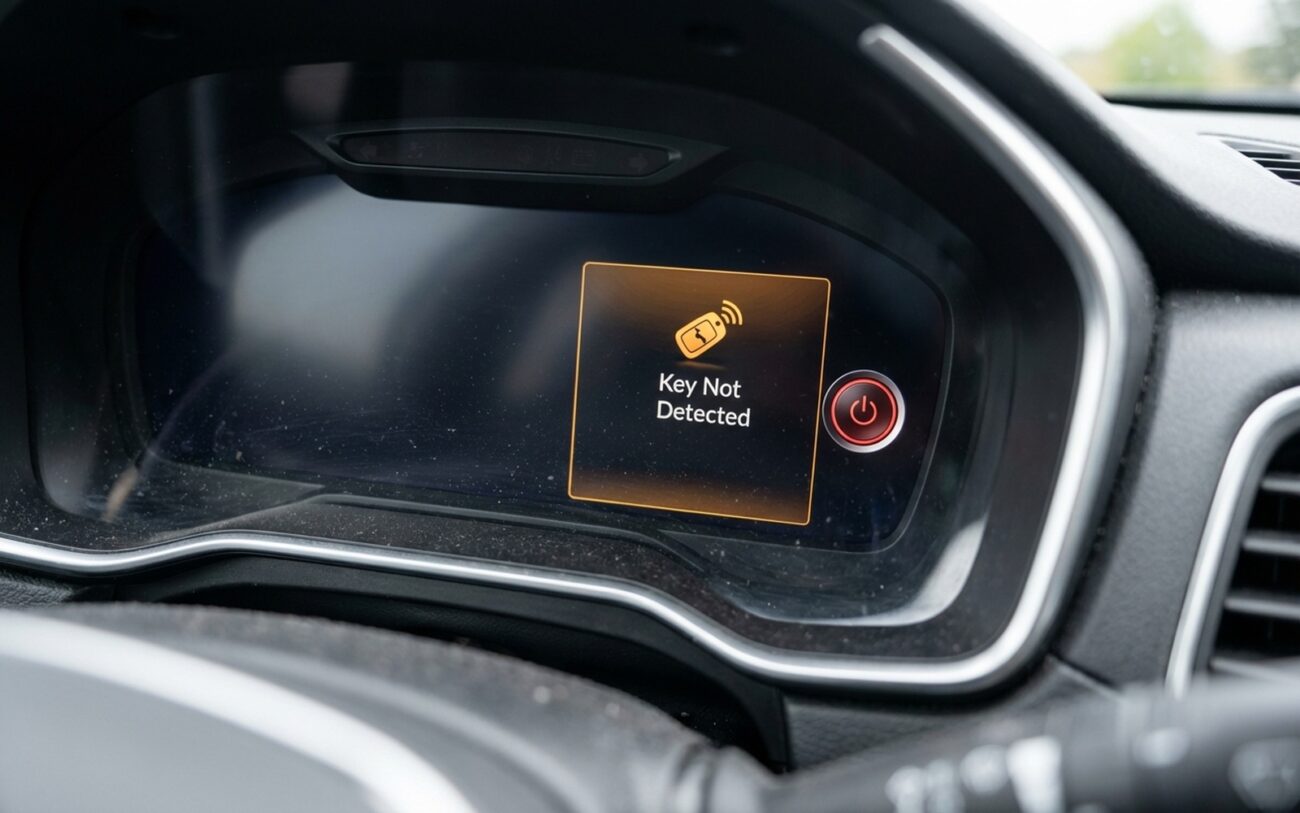
Push-button start isn’t magic — it’s a security handshake, plain and simple. I’ve torn into hundreds of these systems, and more than half the time, the owner was told it was “the starter” or “the battery.” Wrong. It’s almost always the communication between the key fob and the Body Control Module (BCM) that’s broken. Press that button, and if the car doesn’t see a valid encrypted signal from your key within inches, nothing happens. No crank. No start. And no, jumping it won’t help — this isn’t a dead battery issue (unless it really is, which we’ll get to).
What the symptom tells you — and where to look first
I don’t guess. I watch what the car does — or doesn’t do — and that tells me where to start.
No dash lights, no click, nothing. That’s not a key fob problem. That’s power. Check the 12V battery voltage — if it’s below 12.2V, charge it. A weak battery kills the BCM’s ability to wake up and talk to the key. Seen it a hundred times on 2018+ Camrys where the alternator undercharges over winter. Also check fuse #17 (usually labeled “BCM” or “IGN”) and the ground at the kick panel. No power to the brain, no start — period.
Dash lights up, but no crank when you press the button. Now we’re in the security zone. The BCM is awake, but either it can’t read the key, or it’s missing a safety signal. On automatics? Check the brake pedal switch. Unplug it and test for continuity — if it’s open when the pedal’s pressed, that’s your culprit. Same logic on manuals with clutch switches. These switches cost $15 and take 10 minutes to swap. But don’t assume it’s fixed — verify in live data with a scan tool that the signal reads “Active” when pressed.
Engine cranks but won’t start, or starts and dies in 2 seconds. This one gets misdiagnosed as fuel or spark — I’ve seen shops replace fuel pumps on Explorers only to have it die again the next day. Reality? The immobilizer authenticated the key for a split second, then lost it. The ECM cuts fuel and spark immediately. That’s by design. If you’re getting spark and fuel pressure at first, but the engine won’t sustain, pull up the immobilizer status in the ECM. If it flips from “Valid” to “Invalid,” you’ve got a signal integrity issue — not an engine problem.
Testing the real problem — skip the guesswork
A $30 OBD2 scanner won’t cut it. You need access to BCM and ECM security data — specifically “Immobilizer Status,” “Key Authentication,” and “Security Link.” I use a Snap-on MODIS with OEM-level permissions, but even a decent Autel MaxiCOM can work if it supports your make.
Here’s my diagnostic flow:
- Confirm 12V battery is above 12.6V and all fuses are intact (especially BCM and ignition).
- Check for communication with the BCM via scan tool. If no data, backprobe power and ground — don’t assume the fuse is enough.
- With the key fob inside the cabin, check “Key Status” in the BCM. If it says “Not Detected,” try holding the fob directly against the start button. Many have a backup antenna coil built in. If it starts now, the fob battery is weak or the cabin antennas are failing.
- Monitor immobilizer status during crank. If it shows “Valid” then drops out, look for “Security Link Lost” DTCs. That’s usually a failing PAM or internal BCM issue.
What actually fails — and why
The key fob’s RFID chip is passive — it doesn’t need a battery to respond to the car’s signal. But the battery does boost the transmission range and powers the remote functions. A weak CR2032 can cause intermittent detection, especially if the fob’s been dropped or exposed to moisture. I’ve cracked open fobs where the circuit board was corroded from sweat or rain — yes, that happens.
The Passive Antenna Module (PAM) is a bigger weak spot. It’s got a fine copper coil wrapped around a plastic bobbin, usually behind the dash or center console. Thermal expansion, vibration, and age can break that wire. No continuity, no signal. And because it’s not a simple on/off switch, it often fails intermittently — which drives owners crazy. “It worked yesterday!” Yeah, until the coil shifted.
There are known issues. Ford had a TSB for 2013–2015 Fusions where a capacitor in the PAM would fail, causing random no-starts. Honda had similar problems on 2014–2016 Pilots. Always check for service bulletins before replacing anything. Saves time, saves money.
How to fix it — and what not to touch
This is not a DIY job beyond battery swaps
Security modules require OEM-level tools, programming procedures, and PIN codes. Get it wrong, and you’ll lock the system. Then it’s dealer-only — and a tow.
Key Fob Battery Replacement DIY-FEASIBLE
PAM Replacement PROFESSIONAL-ONLY
Immobilizer Relearn PROFESSIONAL-ONLY
And yes — holding the fob against the start button does work sometimes. That’s because there’s a backup antenna coil behind the button. It directly energizes the transponder. If that works but normal operation doesn’t, it’s either a weak fob battery or a failing PAM. But don’t rely on it. That’s a band-aid, not a fix.
Validating the repair — because “it started” isn’t enough
I don’t call it fixed until I’ve tested it under real conditions.
For a fob battery: try starting 10 times from the driver’s seat, no holding it against the button. If it fails once, the issue wasn’t just the battery. Also test passive entry — can you unlock from 5 feet away? If not, the fob’s RF output is weak.
For PAM or immobilizer work: with the engine running, pull up the ECM data. Confirm “Immobilizer Status: Disabled” and “Key Status: Valid.” Take it for a drive, shut it off, restart it hot. Then scan again for pending DTCs. If you see “Key Authentication Failed” or “Signal Loss,” the repair isn’t complete. Intermittent faults love to hide.
Prevention — because this stuff shouldn’t fail early
Change your fob battery every 3–4 years, even if it seems fine. I’ve got a stack of dead fobs in my shop trash from people who waited until it died completely. Use quality batteries. Keep keys out of direct sun — UV kills plastic and electronics. Don’t toss them on concrete or drop them in water.
And pay attention to early signs. If you have to hold the fob closer to the button, or the doors don’t unlock from a distance anymore, that’s not “normal wear.” That’s the system degrading. Fix it early, or you’ll be calling a tow truck in the rain.
To Prevent Recurrence
-
Replace fob battery every 3–4 years — don’t wait for failure.
-
Avoid extreme heat, moisture, and physical impacts to the fob.
-
If passive entry range drops, investigate — don’t ignore it.
-
Address “Key Not Detected” warnings immediately — especially while driving.
