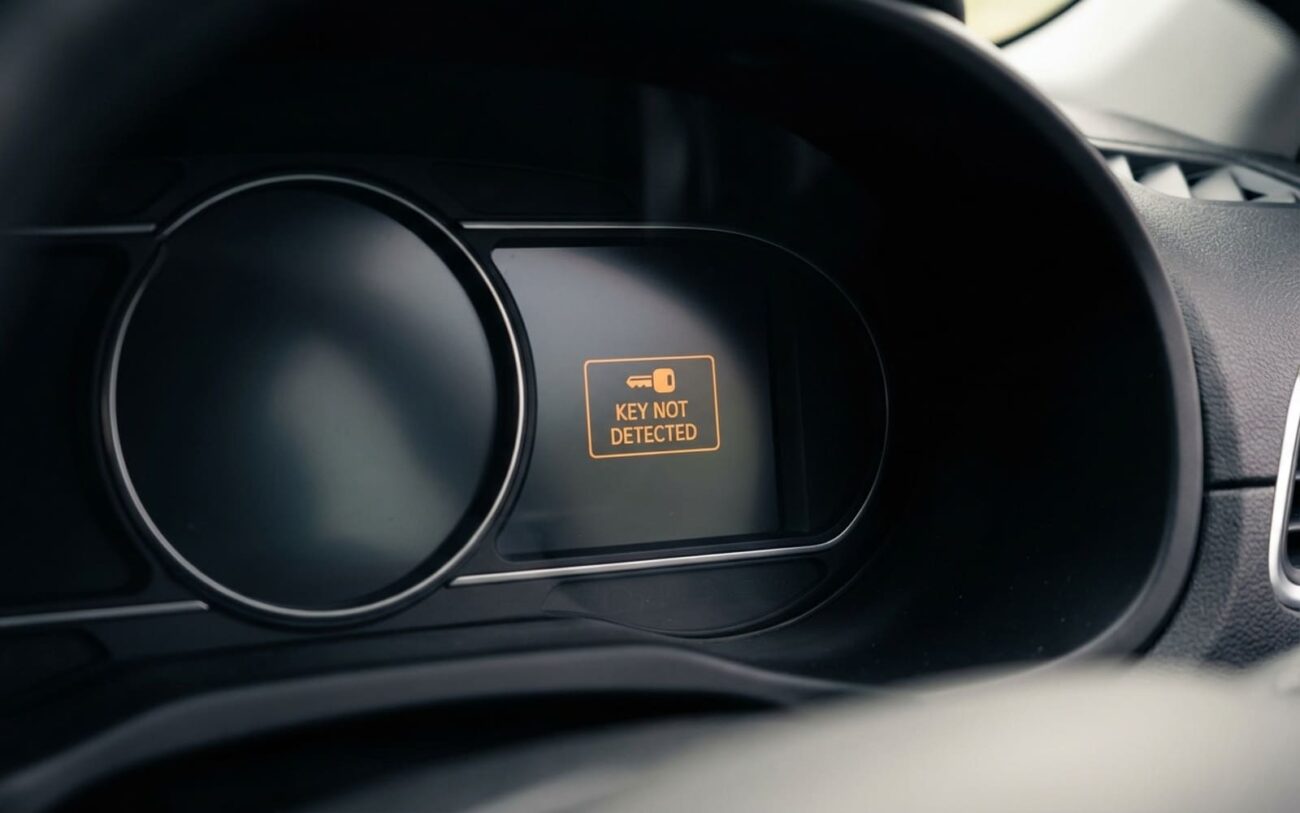
You walk up to your car, touch the handle, and nothing. No unlock, no lights, no chirp. You press the start button—“Key Not Detected.” That sinking feeling? I’ve seen it a hundred times in my shop. And yeah, it’s usually a dead key fob battery. But not always. And if you’re not careful, you’ll swap a $5 battery and still be stuck, wondering what the hell went wrong.
Symptoms That Point to the Fob Battery — But Could Be Worse
Let’s be real: when the car won’t start and the fob’s dead, your brain goes straight to the battery. That’s fair. But here’s what I’ve learned after 25 years of diagnosing these systems — the fob battery is the first suspect, not the only one.
Classic signs of a weak fob battery:
-
No passive unlock when touching the door handle.
-
Start button does nothing, or gives a “Key Not Detected” warning.
-
Fob buttons feel unresponsive, especially at a distance.
-
LED on fob is dim or off (if equipped).
But here’s the catch — all of these can also be caused by something on the car’s side. A failed door handle antenna, a flaky RF receiver module, or even a low 12-volt battery can mimic a dead fob. And I’ve seen guys replace three fobs before realizing the problem was a broken coax line in the driver’s door.
How I Diagnose This — Step by Step
I don’t guess. I test. And I start simple.
Step 1: Check the fob battery voltage.
Pull the fob apart (gently — I’ve seen too many cracked housings). Use a multimeter. A fresh CR2032 should read 3.0V or higher. If it’s below 2.7V under load, it’s weak. Below 2.5V? It’s done. That’s the threshold where the RF signal can’t reach the car’s antennas reliably.
Step 2: Try a known-good fob.
Got a spare? Use it. If the car starts and unlocks normally, your original fob (or its battery) is the issue. If not, the problem’s in the car — not the fob.
Step 3: Test passive entry with a scan tool.
This is where most DIYers stop, but it’s where I go deeper. Plug in a factory-level scan tool and check the “Key Fob Presence” data stream. Walk around the car, press the fob buttons near each door. If the system sees the fob, the battery’s fine — the issue is likely a failed door handle antenna or a software glitch in the Body Control Module (BCM).
Step 4: Try the emergency start.
Hold the fob against the start button (or steering column on Toyotas, near the shifter on Hondas). If the car starts, the transponder chip is alive — it’s just the battery too weak to transmit. That’s a $5 fix. If it still won’t start, you’ve got a deeper issue: bad fob circuitry, failed receiver, or immobilizer fault.
Why the Battery Died — And It’s Not Just Age
Yeah, most CR2032s last 2–4 years. But I’ve pulled fobs with brand-new batteries that were already dead. Why?
Three reasons:
- Cheap batteries. I tested a pack of off-brand CR2032s last month — half read under 2.8V out of the blister pack. That’s not a battery; that’s a paperweight. Stick with Panasonic, Energizer, or Duracell. No exceptions.
- Stuck buttons. Dirt, sand, or wear can keep a button slightly depressed. That keeps the fob’s circuit awake, draining the battery fast. I’ve seen this on Jeeps parked near beaches — salt gets in the fob, corrodes the contacts, and boom — 3-week battery life.
- Internal shorts. Rare, but it happens. A failing capacitor or micro-short on the board can kill a battery in days. If you replace the battery and it dies again in a week, the fob itself is bad.
And no — leaving your fob near a phone or microwave won’t kill the battery. That’s an old myth. But extreme heat (like on a dashboard in Arizona) will bake it dry.
How to Fix It — For Real
Replace the Battery — Right
Replace the Fob — When Needed
Emergency Start — When You’re Stranded
Did You Actually Fix It? Test Everything.
Don’t just start the car and call it good. Test it like you’re getting paid to.
-
Passive unlock works when touching the door handle.
-
Remote lock/unlock works from 15+ feet.
-
Start button works without error messages.
-
If your dash shows fob battery status, it reads “normal.”
If any of these fail, don’t just swap the battery again. Go back to the scan tool. Check the RF signal strength. A weak antenna or bad ground in the BCM can kill reception even with a fresh fob.
What This Will Cost You — Real Numbers
| Repair Type | DIY Cost | Shop Cost | Success Rate | Secondary Risk if Failed |
|---|---|---|---|---|
| Battery Replacement | $3 – $10 (CR2032 cell) | $15 – $50 (labor + battery) | Near 100% if battery was the only issue | Fob housing damage from improper opening; using low-quality battery |
| Fob Replacement & Programming | N/A (requires programming tools) | $200 – $800+ (OEM fob + programming) | 100% with correct procedure and tools | Incorrect programming can lock out all fobs until reset; expensive if done at dealer |
That $8 battery swap? I’ve seen people ignore it for years, then get hit with a $600 fob bill. Not because the car’s complicated — because they waited until the fob was completely dead and couldn’t be revived.
How to Keep This From Happening Again
Treat the fob battery like oil — it’s wear-and-tear. Replace it before it fails.
-
Swap every 2–3 years. Especially if you drive daily or live in extreme heat or cold.
-
Buy fresh batteries. Don’t grab one from the back of the drawer. Shelf life matters.
-
Watch the range. If you used to unlock from across the lot and now you need to be within arm’s reach — it’s time.
-
Heed the dash warning. “Key Fob Battery Low” doesn’t mean “start panicking.” It means “you’ve got a few weeks left — use them wisely.”
And if you’ve got two fobs? Rotate them. I’ve had customers pull a spare out after two years and find a corroded battery — even though it was never used. Lithium cells don’t like sitting.
