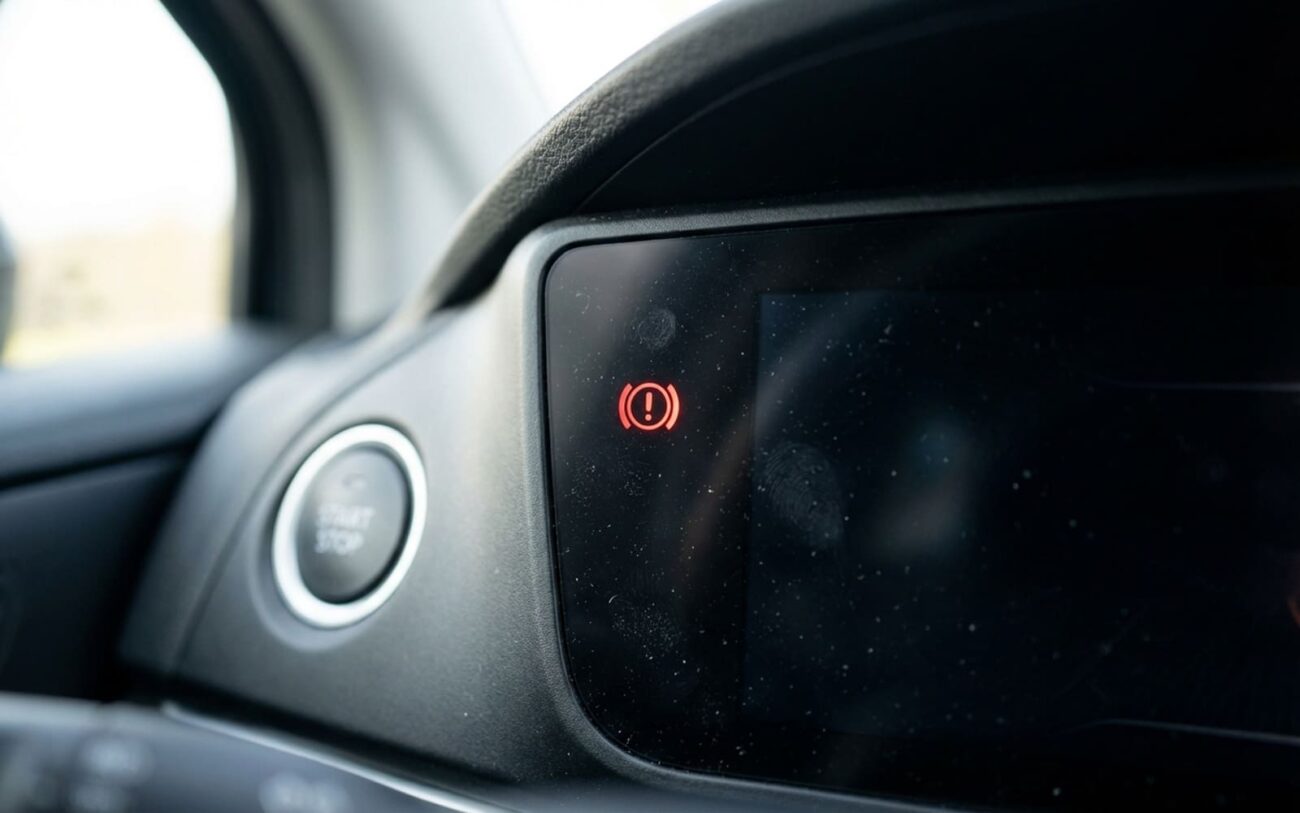
You press the start button. The light on it comes on—so you know the car sees your key. But nothing. No crank. No click. Just silence. I’ve seen this exact scenario walk into my shop hundreds of times over the last 25 years. And every time, the owner thinks it’s the battery. Or the starter. It almost never is.
Here’s what’s really going on: the car’s brain—the Body Control Module (BCM)—isn’t getting confirmation that your foot is on the brake. That’s a hard stop. No brake signal, no start. Period. It’s a safety lock, not a mechanical failure. And the two components most often responsible? The brake pedal position switch and the BCM itself. One’s a $60 part you can swap in 10 minutes. The other? A $1,500 repair with programming, VIN coding, and all the headaches that come with it.
What the Symptoms Are Telling You
If the start button lights up when you enter the car, that tells me two things: your key fob is recognized, and the BCM has power. That rules out a dead battery or total BCM failure. But when you press the brake and hit the button and get zero response—no crank, no relay click—the car is saying: “I don’t know if the brake is pressed.”
First thing I check? The brake lights.
If they don’t come on when you press the pedal—or worse, they stay on all the time—the brake switch is almost certainly the issue. That switch is a mechanical plunger, usually mounted above the brake pedal arm. On a 2013–2018 Toyota Camry, it’s a common failure point. I’ve replaced dozens.
Real-world example: a 2016 Honda Accord came in last month. No start, but the button lit up. Brake lights stayed on. We unplugged the switch—lights went off. Problem confirmed. New switch, 12 minutes, car fired right up.
But if brake lights work fine, and you’re still getting no start? That’s when I start thinking BCM. Especially if there are other glitches—windows slow to respond, interior lights flickering, door locks cycling on their own. Those are red flags.
And here’s a pro test: if the car starts with a remote start fob but not from inside, the engine, starter, and security system are all good. The failure is in the signal path—brake switch to BCM to start command. The BCM isn’t processing the input.
How to Diagnose—Without Guessing
You can’t fix this with a code reader from AutoZone. You need a scan tool that reads live data—specifically the “Brake Switch” PID. Plug it in. Watch the status as you press the pedal. It should switch from “Released” to “Applied” with about an inch of travel.
No change? Then the signal isn’t getting through. Could be:
- A failed brake switch (mechanical wear, stuck plunger, corroded contacts)
- Wiring damage between the switch and BCM (chafed, pinched, or corroded)
- A BCM that isn’t reading the input (internal fault)
If the start button doesn’t light up at all when you get in, that’s a different path—likely a BCM power, ground, or communication issue. But if the button lights up and other systems respond, the BCM is at least partially alive.
Here’s the diagnostic table I use daily:
| Symptom | Likely in Named Component | Common External Mimics | Definitive Test to Confirm Source |
|---|---|---|---|
| No crank on button press; button lights up. | Brake Pedal Switch circuit fault (open/short). | Faulty start/stop button, blown fuse, Park/Neutral safety switch fault. |
Using a scan tool, monitor “Brake Switch” PID. Signal must change from “Released” to “Applied” with ~1″ of pedal travel. No change = switch or circuit fault. |
| No crank; no button illumination. | BCM power/ground fault or internal failure. | Ignition switch fault, low battery, faulty wiring to button. |
Verify BCM wake-up and power/ground circuits with multimeter per wiring diagram. Use scan tool to attempt communication with BCM. If no comms, fault is in BCM or its primary circuits. |
| Intermittent no-start. | Brake pedal switch with “chatter” or BCM with poor solder joints. | Loose connector at pedal switch or BCM, corroded terminals. |
Use a digital storage oscilloscope to monitor the brake switch signal waveform while operating the pedal. Look for signal noise or dropouts. For BCM, perform wiggle test on harness while monitoring network communication. |
| DTCs for implausible brake signals. | Faulty brake pedal switch internal mechanism. | Short-to-power in wiring harness between switch and BCM. |
Disconnect switch harness. Using a multimeter, manually actuate the switch. Verify internal contacts open/close as specified. Stuck contacts confirm switch failure. |
Why These Things Fail—And What’s Really to Blame
The brake switch? It’s used every time you drive. The plunger wears. The spring weakens. Moisture gets in. On newer vehicles with Hall-effect sensors (no physical contact), vibration and heat can still kill them. But the BCM isn’t usually the root cause—it’s just reporting bad data.
The BCM is a different beast. It controls lights, locks, windows, push-to-start. And it’s often mounted in the passenger footwell—on Toyotas, Hondas, Fords. That’s a problem. If the cabin air filter is clogged or the sunroof drains are blocked, water can drip in. I’ve pulled BCMs that were soaked. Corrosion on the board, failed grounds, CAN bus errors. That’s what kills them.
And yes—software glitches happen. A bad jump-start or improper battery replacement can spike the system and corrupt BCM memory. Some models (looking at you, 2017+ Chrysler) require a specific reset procedure after battery service. Skip it, and you get phantom issues.
How to Fix It—Without Wasting Money
Brake Pedal Switch Replacement DIY-Feasible
BCM Connector/Wire Repair Professional Only
BCM Replacement & Programming Professional Only
Specialist BCM Board Repair Specialist Only
How to Know It’s Really Fixed
After replacing the brake switch, don’t just start it once. Use your scan tool. Watch the brake switch PID as you press the pedal. It should change cleanly—no flickering, no delay. Then cycle the ignition five times: brake down, press start, engine runs, shut off, repeat. Every cycle should work. If it does, you’re good.
For BCM repairs, it’s more involved. Clear all codes. Perform module initialization if needed. Test every function: headlights, brake lights, turn signals, windows, locks. Check that remote start still works. Make sure there are no CAN bus errors. Full system functionality is the only acceptable outcome.
Cost, Value, and the Hard Truth
Brake Pedal Switch Replacement
DIY cost: $20–$80 (part). Shop cost: $150–$300.
BCM Connector/Wire Repair
Professional-only. Cost depends on complexity of wiring repair.
BCM Replacement & Programming
Professional-only. Includes parts, labor, and critical OEM programming.
Here’s the reality: if your car is worth $3,000 and the BCM replacement is $1,500, you’re investing half its value. If the rest of the car is solid—engine, transmission, body—it might make sense. But if it’s aging with other issues, weigh the long-term costs. I’ve seen customers spend big on a BCM only to face transmission or suspension repairs months later.
How to Prevent This From Happening Again
To Prevent Recurrence
-
Replace the cabin air filter regularly. A clogged one can cause condensation on the evaporator, which drips toward the BCM—especially in humid climates.
-
Clear sunroof and cowl drains. I’ve seen water pool in the footwell after a heavy rain—BCM damage follows.
-
Watch for early signs: brake lights that come on late, or a start button that works only after multiple tries. That’s often the switch failing.
-
Flickering interior lights or erratic door locks? Could be a BCM power supply issue—bad ground, corroded connector. Catch it early, save a tow.
