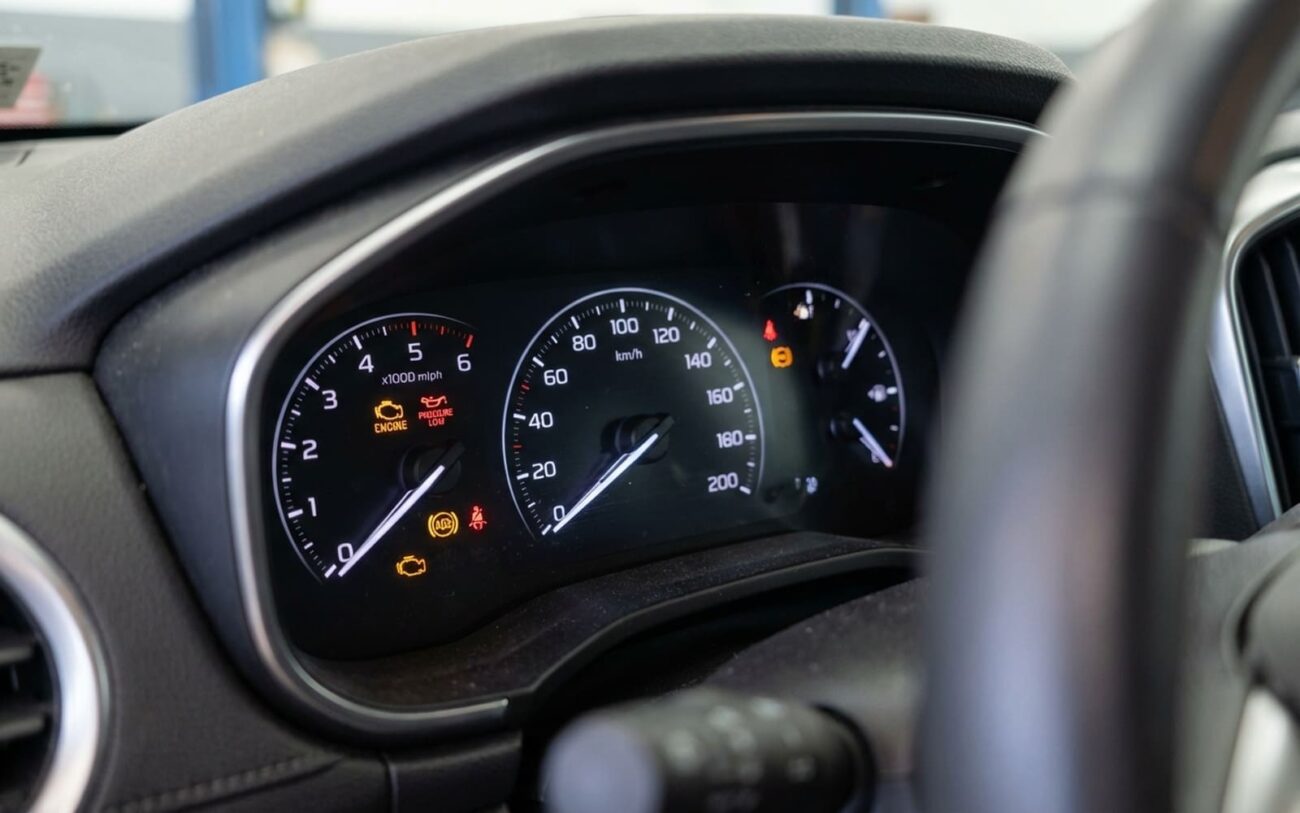
That little dance your gauges do when you turn the key? Yeah, it’s not for show. I’ve seen thousands of clusters come through my bay—some working fine, some dead on arrival—and that startup sweep tells me more in two seconds than a scan tool does in ten. Let’s cut through the noise and talk about what’s really happening behind that dash.
What the Sweep Actually Tests
It’s not a party trick. When you hit “ON,” the instrument panel cluster (IPC) runs a self-check. Every needle—speedo, tach, temp, fuel—gets a command to move full scale. The microprocessor inside is verifying three things: the stepper motor works, the needle isn’t stuck, and the circuit path is intact.
On most GMs from 2008 on, this happens in under 1.5 seconds. Fords? Slightly faster. Some European clusters do a half-sweep, which is normal for those models—so don’t panic if it’s not a full throw. The key is consistency. If it’s always done this, it’s designed that way.
And no, it doesn’t wear out the gauges. These motors are rated for tens of thousands of cycles. You’ll kill the cluster with heat or voltage spikes long before the sweep wears anything out.
Symptoms That Mean Trouble
If the sweep changes, pay attention. That’s your first warning. I’m not talking about a gauge being wrong after startup—that’s usually a sensor. I’m talking about the sweep itself being off.
Here’s what I look for:
| What You See | Where to Look | What It’s Not | How to Confirm |
|---|---|---|---|
| All needles move together, full range, smooth. | Normal operation. Nothing to do here. | Not a sign of failure |
Check service info. Some clusters log “Self-Test Pass” in the IPC data stream. |
| One gauge twitches or lags during sweep. | Internal cluster issue—cracked solder or failing stepper motor. | Not a sensor problem (data hasn’t even started yet) |
Run actuator test with scan tool. If it fails warm but passes cold, it’s thermal expansion at work. |
| Gauge sweeps fine, then reads zero or max after startup. | Sensor or wiring fault. Cluster is likely fine. | Not a stepper motor issue |
Back-probe cluster connector. Check for proper signal voltage from PCM (e.g., 0.5–4.5V for temp sensor). |
| No movement at all during startup. | No power, ground, or CAN signal. Could be fuse, wiring, or module failure. | Not a stepper motor issue (whole system is down) |
Test for 12V and ground at cluster connector. Use scan tool to check if other modules are online—dead network means no cluster comms. |
When the Cluster Is Actually Broken
Most gauge problems aren’t in the cluster. But when the sweep itself is messed up—jumpy, partial, or one gauge stuck—that’s internal. I’ve pulled apart hundreds of these, and three failures come up over and over.
Cracked solder joints—especially on the stepper motor leads—are public enemy number one. Thermal cycling from daily driving expands and contracts the circuit board. Over time, the solder cracks. You’ll see this on 2005–2012 GM trucks, 2008–2013 Fusions, and a bunch of Chrysler minivans. A visual inspection under a 10x lens usually shows hairline fractures. Reflowing them with a fine-tip iron and rosin-core solder fixes it 80% of the time.
Failing stepper motors are less common but just as annoying. They don’t burn out—they wear out. You’ll get a gauge that moves in jumps or drifts after startup. I test these with a bi-directional scan tool. If it stutters during the command test, it’s the motor. Replacing it takes patience—those little gears are fragile.
Internal electronics failure—like a dead voltage regulator or corrupted EEPROM—is rare but serious. If the cluster loses calibration, it might read fuel level wrong even with perfect sensor input. Some BMWs and Audis do this after a battery disconnect. Reprogramming helps, but not always. These usually need a full rebuild or replacement.
And yes—tapping the dash might make it work. But that’s not a fix. That’s your dashboard telling you, “I’m failing, now.” I’ve seen guys do it for months until the gauge died completely. Don’t be that guy.
Repair Paths That Actually Work
I’ll lay it out straight: most shops skip diagnosis and go straight to cluster replacement. It’s easier, but it’s not always right. Here’s what I do instead.
First—check the connector. I’ve lost count of how many clusters I’ve seen pulled for “bad fuel gauge,” only to find corroded pins or a loose terminal. Remove the cluster with proper trim tools (never pry), clean the contacts with DeoxIT, and reseat it. On a 2010 Silverado with a dead temp gauge? That fixed it. Cost: $0.
Second—test before you tear. If the sweep is glitchy, run a bi-directional actuator test. Command each gauge to move. If one hesitates, it’s likely a bad motor or solder joint. I’ve got a temperature-controlled station in my shop, and I reflow suspect joints before committing to a full repair. Works more often than people think.
Third—repair or replace? If it’s internal, you’ve got options. For older cars, repair makes sense. I use a mail-in shop in Indiana that specializes in clusters—$250, turn-around in five days. For newer cars, especially Fords and GMs post-2015, replacement with programming is faster. But—and this is critical—you must program the VIN, mileage, and PATS data. Skip it, and the car won’t start. I’ve seen this happen twice. Not pretty.
And junkyard clusters? Risky. Some will work, some won’t. The programming requirements vary even within the same model year. Check with your dealer or scan tool vendor before buying.
Did It Really Fix It?
So you cleaned the connector, replaced the cluster, or had it repaired. Now what?
Don’t just turn the key and walk away. Watch the sweep. Is it smooth? Full range? Any lag?
Then grab a scan tool. Run the actuator test again. Command each gauge to full scale. If the fuel needle jumps at 3/4, you’ve still got an issue.
Finally, compare live data. While driving:
- Speedo vs. PCM vehicle speed (±2 mph max)
- Coolant temp gauge vs. actual reading from scan tool
- Fuel level vs. fuel sensor PID
If they match, you’re good. If not, you’ve either got a bad signal, a programming error, or the cluster still isn’t right.
Is It Worth Fixing?
Let’s talk reality. A full cluster replacement with programming can run $1,200. On a $4,000 car? Might not make sense.
| Repair Type | DIY Cost | Shop Cost | Success Rate |
|---|---|---|---|
| Clean/resocket connector | $0–$20 | $100–$200 |
High, if connection was the issue |
| Professional cluster repair | Not recommended | $200–$500 |
Medium to high with experienced tech |
| New cluster + programming | $300–$800 (part only) | $800–$1500+ |
Very high when done right |
If the car’s worth more than the fix, go for it. If not, an OBD2 scanner and phone app can give you speed, temp, and voltage. It’s not OEM, but it’s reliable. I’ve got customers running like that for years.
Prevention and Early Detection
You can’t stop aging, but you can slow it down. The biggest killer of clusters? Bad voltage. A weak battery or failing alternator sends dirty power to sensitive electronics. I’ve seen 16V spikes fry a cluster’s regulator in days.
Test your charging system yearly. Running voltage should be 13.8–14.7V. Clean the battery terminals. And if your car has a known cluster issue (like those 2008–2012 GMs), consider a voltage stabilizer—$30 part, easy install.
And watch the sweep. If it slows down or one gauge starts acting up, address it. Don’t wait for total failure. Also, remember: modern cars are networks. A glitch in the infotainment module can sometimes mess with the cluster—just like how a bad infotainment system can interfere with ADAS. Always check the whole system, not just the obvious part.
