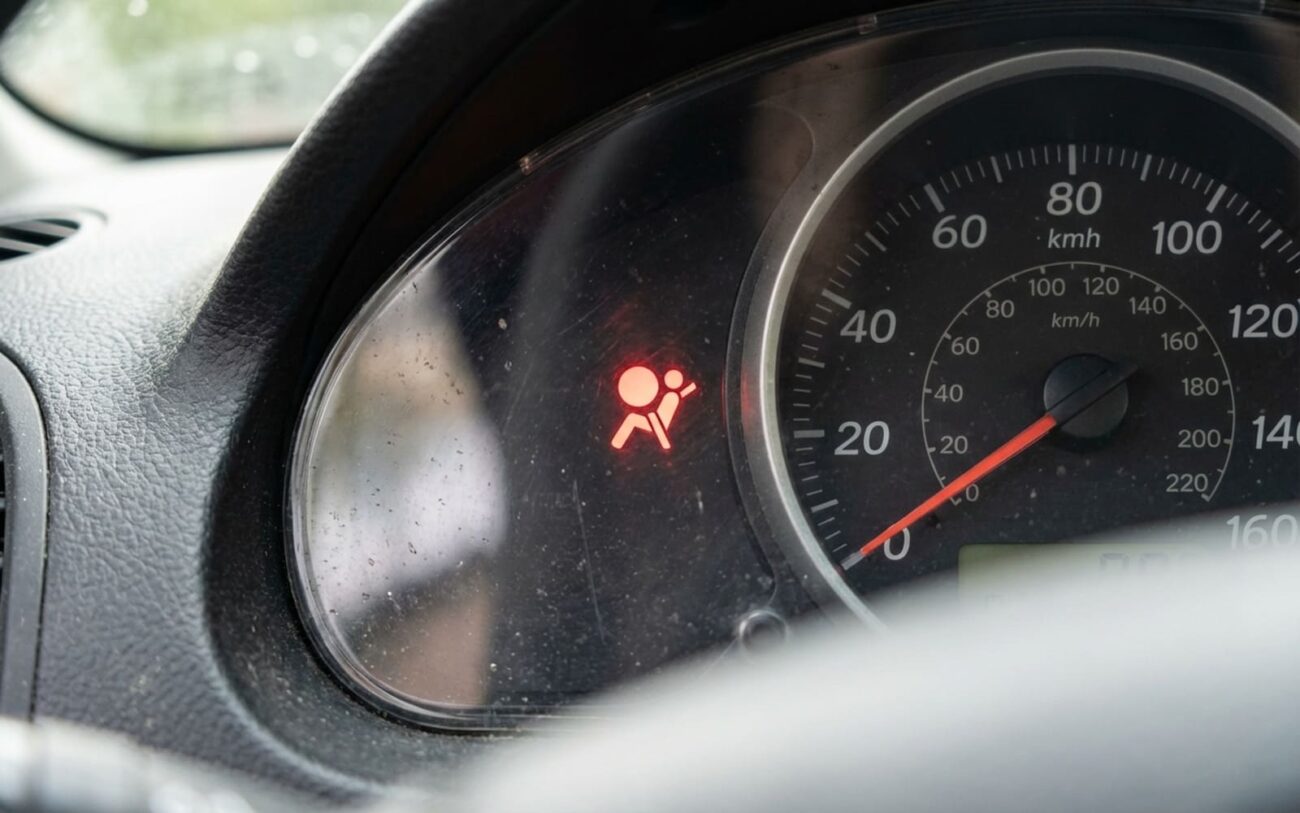
I’ve pulled more than a few airbag control modules out of crumpled steering columns over the years — and more than once, the owner looked at me like I’d just told them their car was haunted when I said the airbags weren’t supposed to go off. Let’s clear something up: just because you walked away from a crash doesn’t mean the system failed. Sometimes, it worked perfectly. Other times? Yeah, something’s broken. But you don’t know which until you stop guessing and start diagnosing.
What the SRS Light Is Actually Telling You
If the airbag light is on after a crash, the system has already made a decision: it’s disabled itself. That’s not a glitch — it’s by design. The Sensing and Diagnostic Module (SDM) saw a fault and cut power to the squibs. Could be a severed wire in the door jamb, a connector knocked loose under the seat, or internal damage to the module. But here’s what most people miss — that same light might’ve been flickering before the crash and they never noticed.
I had a 2018 Camry in last month. Owner said the airbags didn’t deploy in a 25 mph T-bone. Light was on. Pulled the codes — B1231: driver-side impact sensor open circuit. Looked under the dash, found the sensor harness yanked clean out of the bracket. Not damaged — just disconnected. Someone had been under there for an aftermarket alarm install six months prior and never seated the lock properly. So the system wasn’t broken — it was sabotaged by a bad mod.
No light? That doesn’t mean everything’s fine. It means the module didn’t detect a fault it could record. But if the impact knocked the battery loose before the SDM could write a code, you’ll get no warning. Seen it on older Hondas with corroded battery terminals — the system goes dark mid-crash. So no light isn’t a clean bill of health. It’s just less obvious trouble.
Was It Supposed to Deploy? Let’s Talk Physics, Not Feelings
“It felt like a hard hit” doesn’t mean squat to the SDM. These modules don’t feel anger or fear — they read G-forces, delta-V, and impact vectors. I’ve had customers insist their 8 mph curb strike should’ve set off the bags. Nope. Frontal airbags typically need 9–14 mph delta-V on a rigid barrier to trigger. Hit a mailbox or a snowbank? Might be 20 mph on the speedometer, but if the deceleration is gradual, the sensors won’t see a crash.
And don’t forget underride scenarios. Car slides under a trailer? The crumple zone never engages. The force bypasses the front rails, so the sensors see minimal deformation. On a 2020 Silverado I worked on, the front bumper was gone, radiator support bent — but EDR data showed only 7 mph delta-V and no threshold breach. Airbags stayed in. System worked.
Side impacts are even trickier. Modern systems use multiple sensors — door, B-pillar, header — and the OCS decides which bags fire. If the passenger seat was empty, that side airbag won’t deploy, even if the impact was on that side. It’s not a fault. It’s math.
Real Failures vs. “By Design” — How I Tell the Difference
Here’s my process — step one is always EDR data. If the car supports it (most post-2010 do), I pull the “black box” with a Bosch CDR or OEM tool. That tells me impact speed, change in velocity, seat belt status, and whether the SDM armed and fired commands. No EDR? You’re working blind.
If EDR shows 18 mph delta-V and no deployment, now we’ve got a real issue. Next step: scan for SRS DTCs. If I see U0121 (lost communication with SDM), I check power and ground at the module — 12V on pin 3, ground on pin 7 (varies by make). If power’s good, the module’s likely toast.
On Toyotas, I’ve seen the SDM fail internally due to capacitor leakage — common on 2012–2016 models. You can smell it if you open the case: burnt electrolyte. No fix — replace the whole unit.
Wiring issues? I check the squib circuits with the battery disconnected and module unplugged. Should read 2–4 ohms across driver and passenger circuits. Open loop? Trace the harness. On Fords, the clock spring is a frequent culprit — wears out around 100k miles. I’ve replaced more than a few that tested intermittent.
Repairs That Actually Work — And Ones That Get You Killed
This Is Not DIY Territory
I don’t care how many YouTube videos you’ve watched. Airbags deploy at 200 mph and generate over 2,000 psi. I’ve seen a tech in another shop lose two fingers because he didn’t disconnect the battery and wait. The module’s backup power set it off while he was unplugging the steering wheel. It’s not worth it.
Clock Spring Replacement
When the horn, airbag, or cruise control stops working, it’s usually the clock spring. I replace these on Accords around 120k miles — they wear out. Procedure: disconnect battery, wait 15 minutes, remove steering wheel (torque to 35 Nm), install OEM part (aftermarket ones fail too fast), then clear codes and verify squib resistance. Never reuse the mounting bolts — they’re torque-to-yield.
Impact Sensor or SDM Replacement
Sensor in the door? Yeah, that’s common on GMs. But you can’t just plug in a new one. Most require module programming via J2534 and OEM software (like GM’s Tech2 or GDS2). The system needs to learn the new sensor’s calibration. Skip that, and you’ll get false codes or no deployment. Same for the SDM — VIN-specific programming is mandatory. No shortcuts.
Inflator or Module — No Repair, Only Replace
These are sealed units. If the inflator fails (like in the Takata recall), you replace the whole airbag assembly. No rebuilds. No used parts. And for God’s sake, don’t try to “reset” a deployed module — that’s a liability lawsuit waiting to happen. Once it fires, it’s trash.
Did It Actually Work? How to Verify
Clearing the code isn’t the end. I do three things:
- The SRS light must illuminate for 3–5 seconds at key-on, then go out. If it doesn’t light at all, the bulb or circuit is dead — that’s a hidden fault.
- Scan tool must show zero active or pending DTCs. Not “cleared” — zero. And live data should confirm all squib circuits are within 2–4 ohms.
- If the SDM was replaced, I verify communication on the CAN bus and run a system self-test. Some BMWs even require a simulated crash event to confirm logic paths.
And don’t waste your time with a $50 scanner from AutoZone. You need something like Snap-on VERUS or Autel MaxiSys that can do bidirectional controls and module programming. Otherwise, you’re just playing pretend.
Prevention: The 30-Second Check That Saves Lives
I tell every customer the same thing: when you turn the key, watch the dashboard. The SRS light should come on for a few seconds, then go off. That’s your daily system check. If it doesn’t light up, the bulb’s out or the circuit’s dead. If it stays on, there’s a fault. Simple.
And keep the area under the seats clean. I pulled a soaked floor mat out of a 2019 Highlander last year — water had pooled for months, corroded the OCS connector. The system thought the passenger seat was always empty. Could’ve led to a kid getting hit by an airbag — or worse, no deployment at all.
Finally, if you’ve had any interior work done — stereo, seat replacement, dash removal — double-check that all airbag connectors are seated. I’ve found too many left dangling under the console. One bump, and the circuit opens.
Bottom line: airbags are the last line of defense. They don’t deploy every time — and that’s okay. But when they’re supposed to, they better work. And that starts with knowing the difference between a system that did its job and one that failed you.
