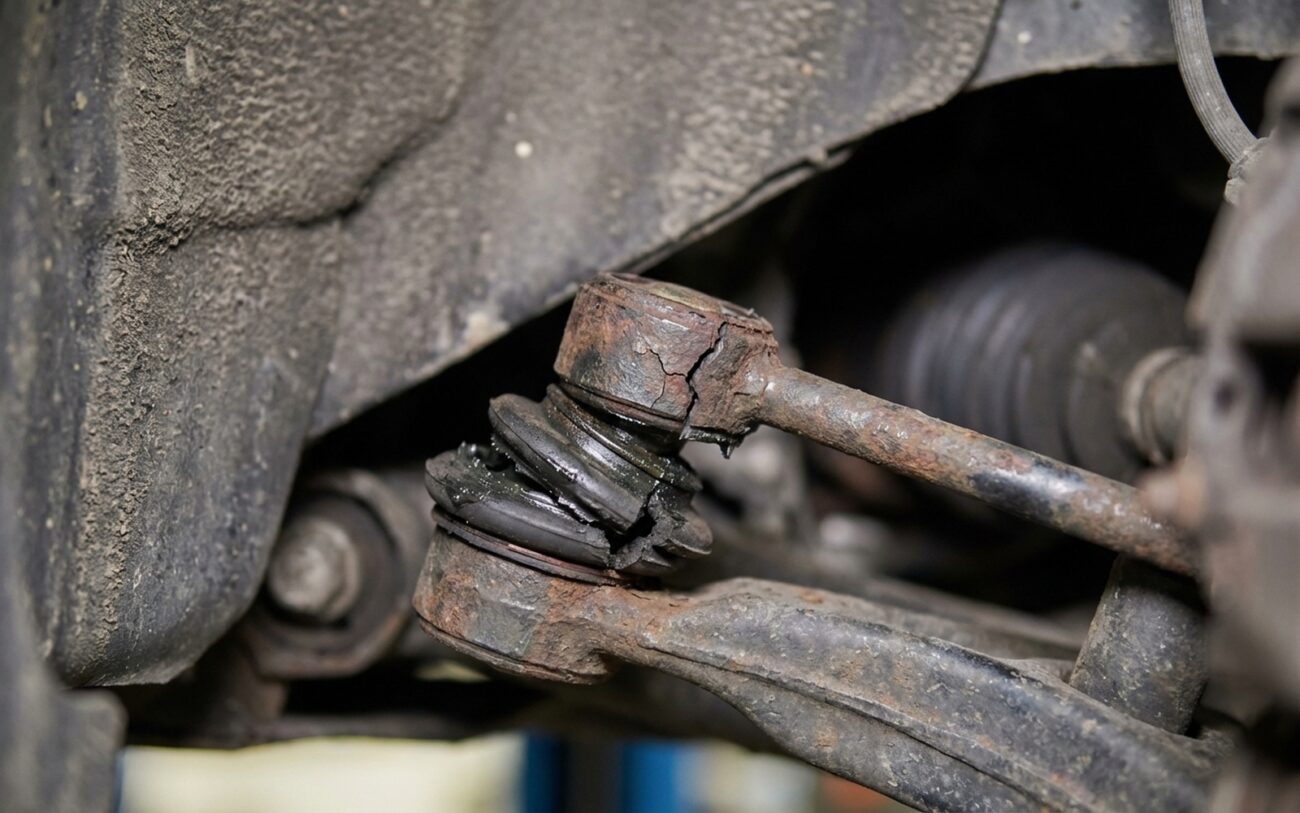
You know that feeling when your car starts acting like a boat in a storm? Leaning hard in corners, feeling squirrelly, like it’s about to roll over during a routine turn? Your gut’s usually right: something serious in the suspension has given up the ghost. And more often than not, after 25 years in this business, I’ve found one of the most common culprits is the humble anti-roll bar, what most folks call the sway bar.
This isn’t just some accessory; it’s a critical piece of steel that ties your left and right suspension together. Its job is to resist body roll when you’re cornering, keeping your tires flat on the pavement and your car stable. When it’s broken, disconnected, or even just severely corroded, that stability vanishes. You’ll feel excessive lean, the steering will feel loose or delayed, and the whole chassis reacts unpredictably. It’s like driving a top-heavy SUV on a highway ramp, but worse. I’ve even seen cases, especially with a broken rear sway bar, where the inside rear wheel lifts right off the ground during a hard corner. That’s not just unsettling; it’s downright dangerous.
Diagnosing the Real Problem: What to Look For
Here’s the tricky part: sway bar symptoms can mimic a bunch of other suspension problems. Excessive body roll, vague steering, even clunks over bumps could be worn shocks, bad bushings, or loose steering components. That’s why you can’t just guess; you need a thorough visual and physical inspection.
Excessive Body Roll in Corners
When a car comes in feeling like it’s going to tip over in every turn, that’s the classic sway bar symptom. But before I condemn the bar, I always consider other possibilities: worn out strut or shock absorbers, collapsed strut mounts, or even degraded control arm bushings.
My Test: I get the vehicle up on a lift, letting the suspension hang free. Then I start checking for play. I’ll grab the sway bar end links and try to move them. There shouldn’t be any slop. Next, I’ll try to rotate the sway bar itself by hand. If it spins freely, or if I see a clean break, a missing end link, or a bracket that’s completely separated, then we’ve found our culprit.
Vague Steering or Front-End Wander
If the front end feels loose, like it’s wandering, especially at speed, it could definitely be a disconnected or broken front sway bar end link. If both sides are affected, it’s even more likely. However, don’t overlook common mimics like worn tie rod ends, loose ball joints, or even a steering rack that’s coming loose from its mounts.
My Test: First, a visual check of the end links to confirm they’re actually attached. Then, with the car on the ground and an assistant gently turning the steering wheel back and forth, I’ll use a pry bar to check for play in the tie rod ends and ball joints. Any movement there, and you’ve got another problem to chase.
Inside Rear Wheel Lifting or Spinning
This is a less common but very dangerous symptom, usually seen on sporty sedans or performance-tuned suspensions when the rear sway bar has failed or disconnected. The car loses so much lateral stiffness that the inside rear wheel unloads completely, losing traction. This can also happen with severely damaged rear springs or completely failed rear shock absorbers.
My Test: I’ll get under the car and thoroughly inspect the rear sway bar, its links, and all mounting brackets. Any sign of damage or disconnection points to the bar. I’ll also perform a quick bounce test on each rear corner. If the car bounces more than once or twice, those shocks are shot, and that needs to be addressed too.
A Quick Tip on Noises:
Don’t overlook noise. A rhythmic crunching when turning is usually a sign of CV joint wear. If you hear a clunk, it’s critical to determine whether it’s coming from the suspension or drivetrain to avoid misdiagnosis. I’ve seen too many people chase suspension clunks when it was actually a loose exhaust or a bad engine mount.
Why Sway Bars Fail: The Root Causes
When the sway bar itself fails – not just a bushing or link – it almost always boils down to one of three things. This isn’t just theory; these are the patterns I’ve seen over thousands of repairs.
Metal Fatigue
Corrosion
Impact Damage
The Fix: Repairing or Replacing Your Sway Bar
When to Call a Pro (and When You Can DIY)
Look, some sway bar repairs, like replacing just the end links, are definitely DIY-friendly. But if you’re dealing with structural failures, severe corrosion, or broken mounting tabs, you need a professional assessment. And I can’t stress this enough: welding a snapped sway bar is NEVER recommended. It creates brittle zones that are prone to sudden, catastrophic failure under load. It’s a risk you just don’t take.
Snapped or Missing Sway Bar DIY or Pro
Broken Mounting Tab or Bracket Non-Repairable
Severe Corrosion Professional Only
Post-Repair Validation: Don’t Skip This!
Never assume the job is done once the parts are bolted on. A proper validation process ensures safety and longevity. This is where you confirm you actually fixed the problem, and didn’t create new ones.
My Post-Repair Checklist
-
Take the car for a good road test. Find some winding roads, hit a few bumps. The car should feel stable, with minimal body roll and responsive steering. It should feel like it used to.
-
Listen carefully for any new clunks, rattles, or vibrations when hitting bumps or entering turns. Sometimes, a new noise means something wasn’t quite right.
-
Here’s a pro tip: tell the customer to bring it back after about 100 miles. I’ll put it back on the lift and recheck all those fastener torques. New bushings and links can settle, and loose bolts lead to component detachment – and that’s a serious safety issue.
Cost, Risk, and Making the Right Decision
Now, let’s talk about the money. Sway bar repairs aren’t usually bank-breakers, but it’s good to know what you’re getting into, and when it might be time to cut your losses.
| Repair Type | DIY Cost (Parts) | Shop Cost (Labor Incl.) | Success Rate | Secondary Risk |
|---|---|---|---|---|
| Single Sway Bar Replacement | $150 – $400 | $400 – $800 | ~100% | Under-torqued fasteners can loosen, risking sudden loss of handling. |
| Full System Overhaul (Bars + Links) | $300 – $800 | $800 – $1,500 | 98% | Incorrect setup can create unpredictable handling in emergency conditions. |
My “40% Rule” for Big Repairs
This is something I tell my customers regularly: if the repair cost for a safety-critical suspension component like this exceeds 40% of the car’s private-party value, it’s time to seriously consider whether investing in a different vehicle makes more financial sense. Driving with compromised stability is a major liability, and sometimes, it’s just not worth throwing good money after bad.
Keeping It Healthy: Prevention & Monitoring
The best repair is the one you never have to do. So, make sway bar inspection part of your routine maintenance. When your car’s up for an oil change, tire rotation, or even just a seasonal undercarriage wash, take a few minutes to look at those sway bars. Visually check the end links and brackets for any signs of damage, missing hardware, or excessive rust. If you’re in a snowy climate, regular underbody washing is crucial to remove salt and debris that accelerate corrosion. A little preventative maintenance goes a long way in keeping you safe and saving you money down the road.
