You turn the key, fire up the A/C, and instead of a blast of cold air, you get a sad little wheeze. Maybe there’s a musty smell—like old gym socks left in a locker. I’ve seen this a thousand times. And before you start tearing into the dash or blaming the compressor, let me tell you: it’s probably the cabin air filter. Not maybe. Not sometimes. Nine times out of ten, that’s the culprit. I’ve been turning wrenches for over 25 years, and this is one of the most common HVAC complaints I see—especially on vehicles with over 30,000 miles.
What You’re Feeling (And Why It’s Not the Compressor)
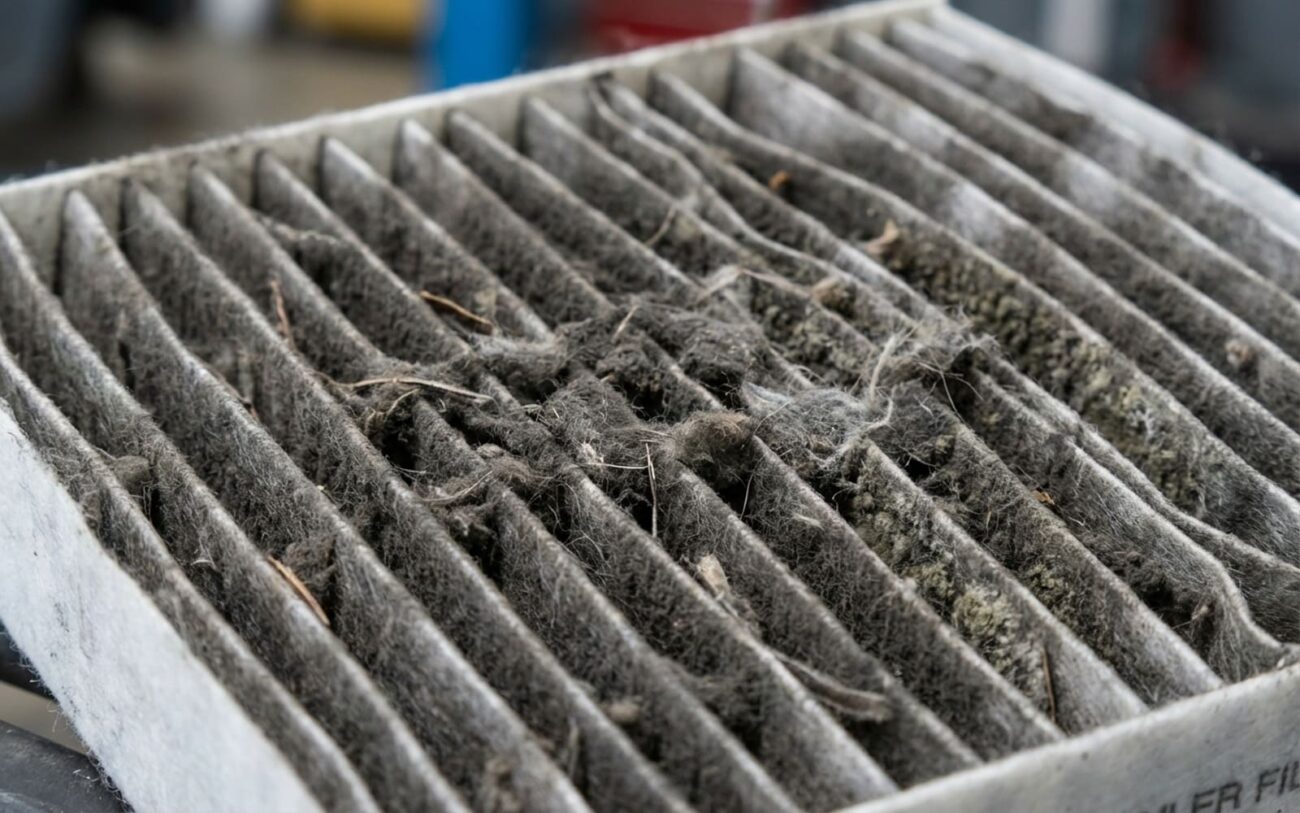
If your airflow is weak no matter what fan speed you’re on, and it’s worse when the A/C is engaged, don’t jump to conclusions. The blower motor isn’t failing. The evaporator core isn’t clogged. At least, not yet. What you’ve got is a physical blockage—air can’t get through because the filter’s packed solid with dust, pollen, road grime, and leaves. I’ve pulled filters out that were black and damp, held together more by mold than paper.
And here’s the thing: the blower motor has to work harder to pull air through that mess. You’ll hear it—higher pitch, more strain, sometimes a whine. I’ve replaced more than a few motors that weren’t worn out from age, but from being overworked behind a filter that should’ve been changed two oil changes ago.
The musty smell? That’s not “just how A/C smells.” That’s biology. Moisture from the evaporator core condenses on the wet, dirty filter, and boom—mold and mildew start growing. It’s not just annoying; it’s pumping spores into the cabin. If someone in the car has allergies, asthma, or sinus issues, that smell is a red flag.
Is It the Filter or Something Else?
Look, I get it. You see the symptoms, you assume it’s the filter. And often, you’re right. But I’ve also seen techs replace a filter, charge the customer, and send them out the door—only for them to come back a week later with the same problem. That’s why you test.
| Symptom | Likely in Cabin Air Filter | Common External Mimics | Definitive Test to Confirm Source |
|---|---|---|---|
| Reduced Airflow | Severe particulate buildup blocking the filter media. | Obstructed cowl vent (leaves, debris), failing blower motor, or debris in evaporator core fins. |
Remove the filter and run the fan at medium speed. If airflow returns, the filter was the restriction. If not, check the cowl area under the windshield for debris and test the blower motor’s voltage and amperage draw. |
| Musty Odor | Mold growing on trapped organic material in a wet, dirty filter. | Bacterial growth on evaporator core due to blocked condensate drain. |
Smell the removed filter. If it stinks, that’s your source. If the smell persists after removal, the evaporator or HVAC case is contaminated. Check the A/C drain tube—no drip means it’s clogged. |
How Filters Actually Fail (And Why Cheap Ones Are Worse)
Filters don’t burn out. They don’t short. They fail mechanically or biologically. First, saturation. Dust, pollen, soot—it all piles up until the media can’t pass air. At that point, it’s like breathing through a wet towel. Some filters use electrostatic charge to trap fine particles, but once they’re loaded, that benefit is gone.
Second: pleat collapse. I see this a lot with off-brand filters. The pleats are supposed to increase surface area, but if the material’s too soft, airflow pressure flattens them. I’ve held filters that looked fine from the outside but were crushed inside—blocking over half the airflow. On a 2018 Honda CR-V last month, that was the whole problem. OEM filter fixed it in ten minutes.
Third: biological growth. A filter full of organic gunk and exposed to A/C condensation becomes a petri dish. Mold, bacteria—thriving in the dark, damp space. And yes, activated carbon layers help with odors, but they saturate too. Once they’re full, they’re just dead weight.
How to Fix It (Without Wasting Time or Money)
Replace the Filter (Right)
Start with a decent filter—OEM, Bosch, Mann, or FRAM. I don’t care if it costs $5 more. The cheap ones use flimsy media that collapses or lets through fine dust. You’ll need a trim tool to remove the glovebox or access panel on most cars (Toyotas, Hondas, Fords—same story). Vacuum out the housing before installing the new one. And for God’s sake, check the service manual. On some BMWs, the filter’s behind the wheel liner. On a Subaru, it’s under the cowl. Don’t guess.
Inspect the Ductwork
If the old filter was shredded or shedding material, don’t just slap in a new one. Use a borescope if you’ve got one. Shine a light down the duct. If you see debris, pull it out with long forceps or a vacuum with a narrow nozzle. Leftover gunk gets sucked into the evaporator fins, causes permanent blockage, traps moisture, and grows more mold. I’ve seen evaporators so packed they needed replacement—$800 job—because someone ignored a $25 filter.
Did It Work? (Test Like a Pro)
Don’t just assume. Check.
For airflow: if you’ve got an anemometer, measure airspeed at the center vent with the fan at 3/4 speed. Compare it to spec or a known-good car. No meter? Use your hand. The airflow should be strong, consistent, and the blower should sound smooth—not strained or loud.
For odor: start the A/C. First breath should be clean. If there’s even a hint of mustiness, the mold’s spread beyond the filter. You’ll need to fog the HVAC system or clean the evaporator core. I use a foaming disinfectant with a duct insertion tool—takes 20 minutes, but it works. On some cars (looking at you, Mazda3), you might need to remove the glovebox or lower dash to access the case.
And don’t forget the defroster. A clean filter means better airflow across the windshield. That’s not just comfort—it’s safety. Fogging kills visibility. Fix the filter, fix the defog.
What It’ll Cost (And Why It’s Worth It)
| Repair Type | DIY Cost | Shop Cost | Success Rate | Secondary Risk if Failed |
|---|---|---|---|---|
| Standard Filter Replacement | $15 – $50 | $50 – $120 | Near 100% if filter was the blockage | None. If symptoms persist, root cause is elsewhere—blower motor, clogged cowl, or evaporator. |
| Filter + Evaporator/Housing Cleaning | $50 – $150 | $200 – $500 | High for odor; variable for airflow if fins are packed | Aggressive cleaning can bend fins or leave chemical residue. Use HVAC-safe products. |
This Isn’t Optional Maintenance
It doesn’t matter if you drive a $15,000 Corolla or a $70,000 X5. Clean air matters. Proper HVAC function matters. Ignoring a clogged filter to save $30 can cost you a blower motor, a fogged windshield, or a full HVAC teardown. I’ve seen it. Don’t be that guy.
Keep It From Happening Again
Prevention Plan
-
Change the filter every 15,000 to 30,000 miles—check your manual. If you drive in dust, pollen, or city traffic, cut that in half. On a 2016–2020 Jeep Wrangler I work on weekly, the filter’s clogged by 12,000 miles if it’s been off-roading.
-
Inspect it once a year. Takes five minutes. If it’s dark, damp, or smells, replace it. No debate.
-
At the first sign of weak airflow or a hint of odor? Pull the filter. Don’t wait. Catch it early, save the system.
Think of it like oil changes or wiper blades. Small, cheap, preventive. But skip it, and you pay later—sometimes way later. A clean cabin air filter keeps the air breathable, the blower happy, and the windshield clear. And yeah, it’s just a filter. But in my shop, I’ve learned: the little things? They’re the ones that matter most.
