Dual-zone climate control not syncing? It’s not just annoying—it’s a diagnostic puzzle. I’ve seen this on everything from base-model Camrys to loaded Suburbans. The fix isn’t always obvious, and half the time, people are throwing parts at it without knowing where the real failure is. Let me cut through the noise.
First: Is It the Head Unit or Something Else?
The head unit—the climate control panel on your dash—is the command center. It takes input from sensors, processes your knob turns or button presses, and sends signals to the blend door actuators. When sync fails, your gut might say “bad module,” but that’s not always true. In fact, I’d say 60% of the time, the head unit isn’t the problem.
Here’s what I do when a customer says “passenger side won’t respond when I hit SYNC.” First, I watch what actually happens. If both sides blow the same temp—say, driver wants 60°F, passenger wants 80°F, but both get 70°F—that’s a red flag. But it doesn’t mean the head unit is dead. Could be the actuator isn’t moving, or the cabin sensor is lying to the system.
And don’t get fooled by the chime. Yeah, the dash beeps when you press SYNC. That just means the button registered. It doesn’t mean the command was sent—or received.
How to Tell Where the Failure Is
I run a three-step check. Always. No exceptions.
- Command the actuator directly with a scan tool. If it moves when forced, the motor and ducting are fine. That puts the fault upstream—likely the head unit or a signal issue.
- Check the cabin temp sensor live data. Compare it to an infrared gun reading inside the cabin. If the sensor says 85°F but the air is 70°F, you’ve got a sensor fault—not a control module issue.
- Monitor the CAN bus during a SYNC press. If the HVAC module never sees the command, the head unit isn’t talking. But if it sees the command and ignores it? That’s a BCM or software problem.
On 2014–2018 Fords, I’ve seen the body control module drop the SYNC signal because of a weak battery—even after replacement. GMs? Same thing. There’s a TSB for recalibrating the HVAC module after battery service. Skip that, and you’ll chase ghosts.
So What Actually Breaks in the Head Unit?
When the head unit is the problem, it’s usually one of three things: hardware wear, thermal damage, or software glitches.
Rotary encoders—the guts behind the temp knobs—are the #1 wear item. They’re cheap plastic switches with spring-loaded contacts. After five years of twisting, the contacts oxidize or wear thin. Result? Intermittent input. You turn the knob, nothing happens. Or it jumps from 60°F to 85°F randomly. I’ve pulled units apart and seen the carbon tracks completely worn off.
Then there’s the blend door driver IC—a tiny surface-mount chip that sends PWM signals to the actuators. On GM trucks, these fail from voltage spikes during jump-starts or alternator surges. No repair manual mentions it, but I’ve replaced enough of these to know the pattern.
Thermal stress is quieter but just as deadly. Dashboards bake in the sun—180°F isn’t uncommon. At night, it cools to ambient. That cycling cracks solder joints under big chips like the main processor. You’ll see symptoms come and go with temperature. Car hot? Works fine. Cold morning? One side dead. That’s thermal expansion at work.
And yeah, software fails too. The HVAC module stores blend door calibration data—where “full cold” and “full hot” actually are. If that gets corrupted (often after a battery disconnect), the system defaults to single-zone mode. I’ve fixed more than one BMW and Mercedes with a simple reflash using ISTA or SDS. No parts, no disassembly. Just follow the TSB.
How I Fix It (And When I Don’t)
Software Reflash or Recalibration Professional Only
Circuit Board Repair Professional Only
Full Unit Replacement
Did It Actually Work?
Never assume. I test every repair before closing the dash.
After a reflash or replacement, I clear DTCs and use the scan tool to monitor live data. Press SYNC—does the HVAC module register it? Then set driver to 60°F, passenger to 90°F. Measure vent temps with an IR gun. You should see at least a 15–20°F split. Less than that? Either the actuator isn’t traveling fully, or the calibration failed.
And check for ghost codes. Sometimes a U0100 (lost communication with HVAC) pops up if the module didn’t initialize properly. That’s a red flag—recheck programming.
Is It Worth Fixing?
| Repair Type | DIY Cost | Shop Cost | Success Rate | Secondary Risk |
|---|---|---|---|---|
| Software Reflash | $0 (if scan tool owned) | $150 – $300 | 95%+ when aligned with known issue or TSB | Negligible if proper procedure followed |
| Circuit Board Repair | $20 – $50 (parts and tools) | $400 – $700 | 60–80% (highly skill-dependent) | Permanent board damage requiring full replacement |
| Unit Replacement | $300 – $800 (OEM-remanufactured) | $800 – $1,500+ (labor, programming, part) | Near 100% when properly programmed | Incorrect calibration or network integration; dash trim damage during install |
Be honest with yourself. If your car’s worth $4,000 and the quote’s $1,200, that’s a tough sell. You can still set different temps manually—just can’t sync. Not a safety issue. Not a drivability problem. On a daily driver with no ADAS integration? I’d live with it.
But on a luxury SUV where climate control ties into seat heaters, steering wheel heat, and driver profiles? Then it’s part of the experience. Replacement makes sense.
How to Make It Last Longer
Heat kills these modules. I’ve tested dash temps—black interiors in July hit 180°F easy. That’s oven-level. Solder joints fatigue, plastic housings warp, capacitors dry out.
So park in the shade. Use a sunshade. It’s not just for comfort—it’s component preservation. Every 20°F drop helps.
To Prevent Recurrence
-
Park in the shade or use a reflective sunshade to keep dashboard temperatures down.
-
Be gentle with the controls; avoid aggressive twisting of knobs or slamming buttons.
-
Do not use harsh chemical cleaners directly on the unit; spray cleaner on a cloth first.
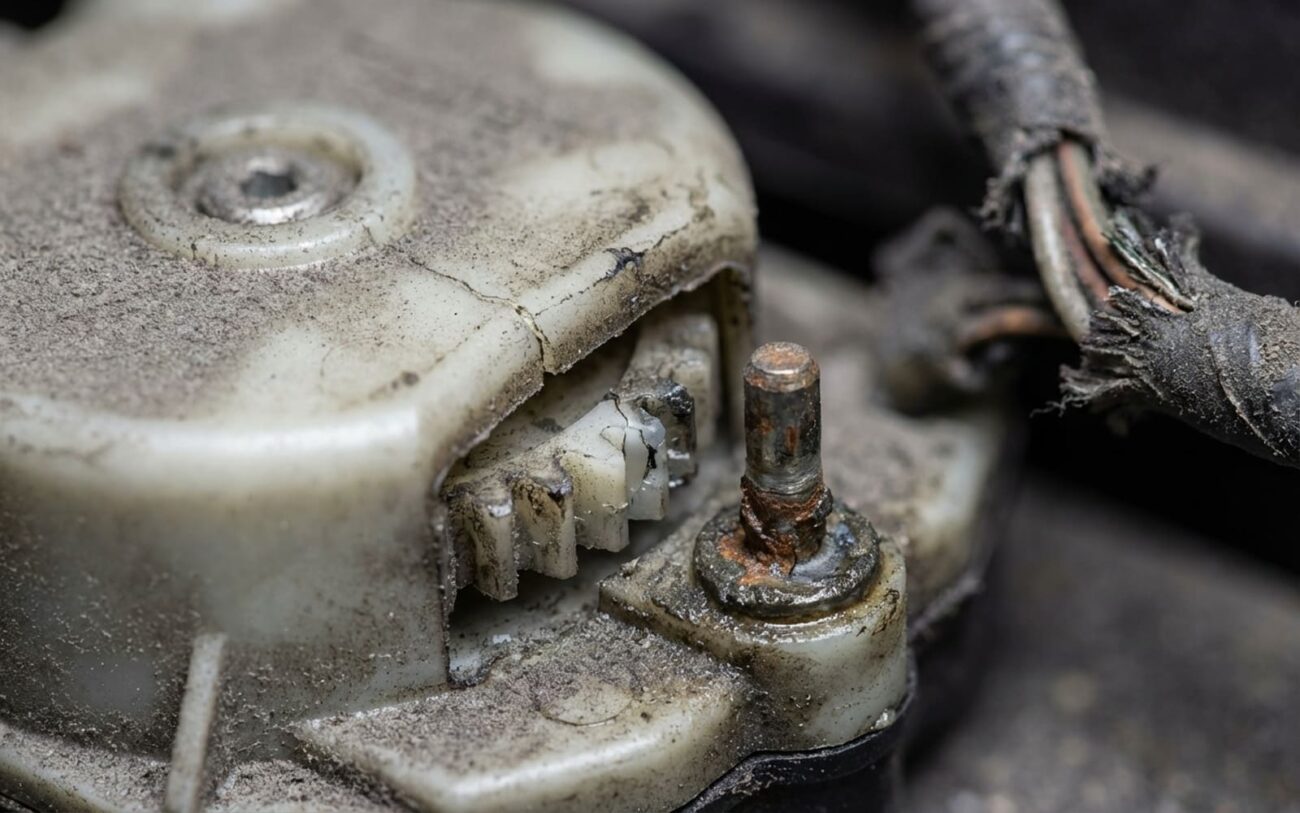
And if you notice the temperature split shrinking over time, or one side feels sluggish, don’t wait. That’s early encoder wear. Fix it before it fails completely. Also, if you hear clicking or grinding behind the dash when adjusting temp? That’s the actuator binding—mechanical, not electronic. Easier and cheaper to fix. But don’t confuse it with a head unit fault.
Bottom line: diagnose before you replace. I’ve saved customers hundreds by checking the simple stuff first. And if it is the head unit? Know your options—reflash, repair, or replace. Pick the one that fits the car, the budget, and your skill level.
