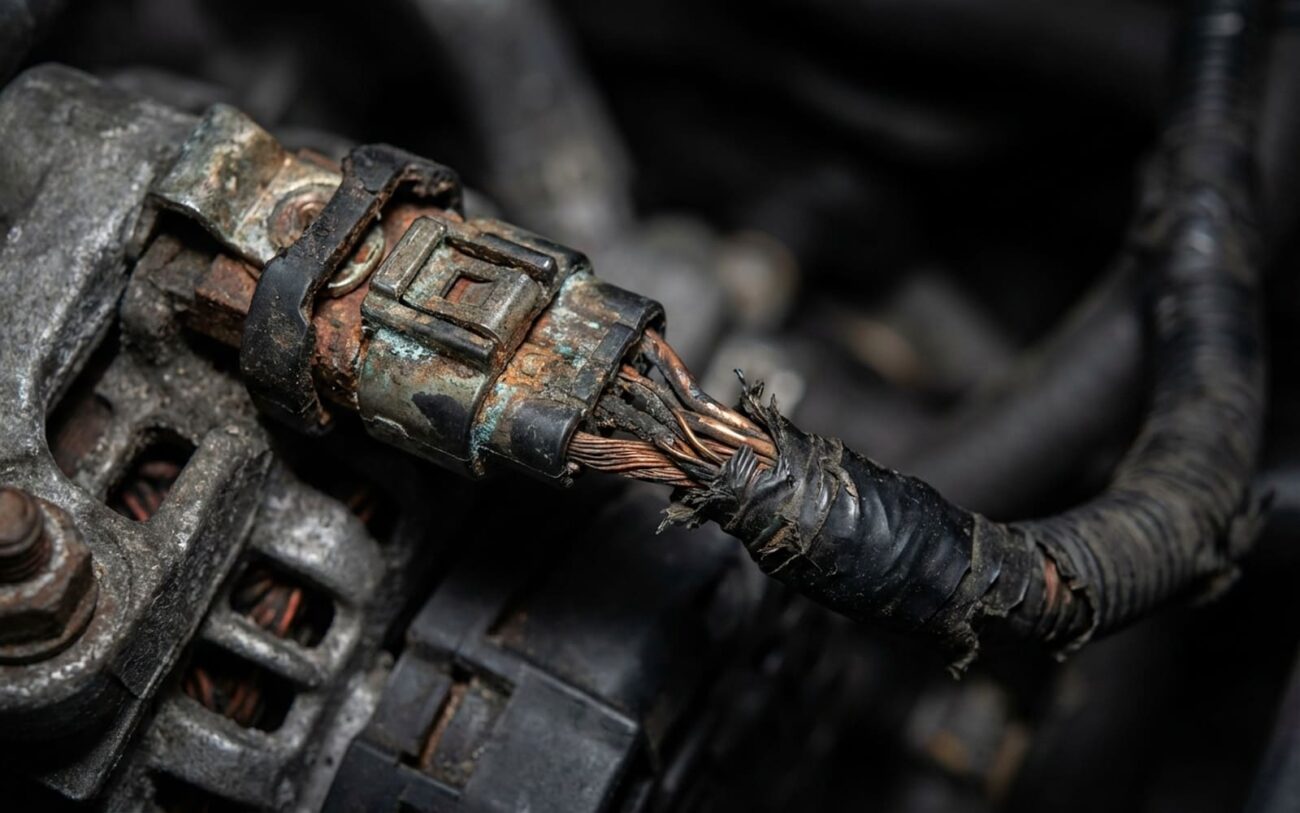
Alright, let’s talk about that weird feeling you get in your Hyundai Solaris or Rio—that sudden heavy steering, especially when you’re idling and the AC kicks on. I’ve seen this symptom come through my bay countless times over the years, and I can tell you right now: you’re not imagining things, and it’s usually not your power steering unit itself that’s the real problem. It’s almost always a sign your electrical system is struggling to keep up.
These cars, like the YF Solaris and UB Rio, use what we call Motor Driven Power Steering (MDPS), or Electric Power Steering (EPS). Forget the old hydraulic pumps; this system runs entirely on electricity. That means it needs a steady, healthy supply of juice from your battery and, more importantly, your alternator. When that supply falters, the steering gets heavy—it’s the EPS module cutting back on assist to protect itself.
What’s Really Happening Under the Hood
Here’s the deal: when you hit that AC button, you’re throwing a couple of big electrical loads at your system all at once. The AC compressor clutch can pull 5 to 10 amps instantly, and if you’ve got the blower motor cranked up, that’s another 10 to 15 amps. Now, try turning the steering wheel at a standstill or low speed. The EPS motor suddenly demands a huge surge—we’re talking 30 amps or even more, just like that. If your alternator isn’t up to snuff, it can’t respond fast enough to this combined demand. The system voltage drops, and the EPS control unit, which is programmed to protect itself from low voltage, reduces its assist. That’s why the wheel feels like it’s locking up on you.
Once you get moving and the engine RPMs come up, the alternator starts spinning faster, its output rises, and the voltage stabilizes. Suddenly, your steering feels normal again. It’s not magic; it’s a textbook case of an alternator that can’t handle the load at idle.
Think of it like trying to run a power tool off a generator that’s too small. The moment you hit the trigger, the generator bogs down, and the tool barely spins. Your car’s electrical system is no different.
And it’s not just the steering. Keep an eye out for other signs. Do your headlights dim noticeably when you turn the wheel with the AC on? Do the dash lights flicker in time with the AC compressor cycling on and off? That’s voltage sag, plain and simple. A healthy charging system should hold a rock-solid 13.5 to 14.5 volts, even under heavy load. When it doesn’t, you’re not just risking heavy steering. Chronic low voltage can glitch your ECU, TCM, and even your infotainment system. I’ve personally seen more than a few EPS control units fail prematurely, not because they were faulty, but because they were constantly operating below 12.0 volts. Leave this problem alone long enough, and you’ll end up with a dead battery or stranded on the side of the road.
How I Pinpoint the Problem (Test, Don’t Guess)
Before you start replacing parts, you absolutely need to confirm what’s actually failing. While “heavy steering with AC on” screams alternator, it’s not the only thing that can cause it. A worn EPS motor, a binding steering rack, or even a failing EPS control unit could mimic the symptom. A seized AC compressor could mechanically drag the engine down, reducing alternator RPM and output. And don’t forget the basics: a weak battery or corroded cables can make a healthy alternator look bad. The key here is proper testing.
My Go-To Approach:
I always start with a fully charged battery (12.6V or higher at rest, engine off). Then, I get the engine to normal operating temperature. That’s when you can run your controlled load tests and really see what the charging system is doing. We’re looking for voltage stability, not just whether it’s putting out some charge.
Here’s how I break it down:
| Symptom | What It Usually Means | Other Things to Rule Out | The Definitive Test I Use |
|---|---|---|---|
| Heavy steering with AC on | Alternator can’t keep up with combined electrical load. | Failing EPS motor, binding steering rack, weak battery, corroded cables. | Grab your multimeter. With the AC off, you should see 13.5–14.8V at the battery terminals. Now, turn on the AC (max fan), high beams, and turn the steering wheel lock-to-lock. The voltage must stay above 12.8V. If it dips below, your alternator is weak. |
| Headlights dimming with AC/steering | Alternator isn’t putting out enough current (amperage) under load. | Bad battery, high-resistance cables (battery or ground), loose serpentine belt. | You’ll need a DC clamp meter on the B+ cable. Engage all accessories (AC, high beams, defroster, radio). The alternator output should reach 70–90% of its rated capacity. If it’s rated for 100 amps, you should see 70–90 amps. |
| Battery warning lamp illuminated | Usually a faulty voltage regulator or a failed diode rectifier. | Broken serpentine belt, faulty instrument cluster circuit, intermittent wiring issue. | Set your multimeter to AC voltage. Measure across the battery terminals while the engine is running at about 2000 RPM. If you see more than 0.5V AC, you’ve got a failed diode rectifier inside the alternator. |
If you’ve got access to a professional scan tool, look for live data like “Generator Load %” or “System Voltage” in the engine or body control module. Watch those values closely when you engage heavy loads. If the system voltage consistently drops below 12.5V during combined AC and steering load, your alternator simply isn’t keeping up. I’ve seen so many shops misdiagnose this, replacing expensive EPS units or even steering racks when a simple $10 multimeter test would have pointed directly to the alternator.
What’s Actually Breaking Down Inside the Alternator?
Once you’ve confirmed the alternator is the culprit, the next question is what part of it has failed. An alternator is a pretty robust piece of equipment, but certain components are prone to wear and tear, especially with age and heat.
-
Voltage Regulator: This is the brain of the alternator. It controls the field current, telling the alternator how much power to produce. When it starts to fail, it often defaults to a lower output, meaning it can’t ramp up quickly enough to meet those sudden MDPS demands.
-
Diode Trio (Rectifier): The alternator actually generates AC current, and these diodes convert it to the DC current your car needs. If even one diode fails, your output can drop by a third, and you’ll get what we call “AC ripple” in the system. That ripple can really mess with sensitive electronics like the EPS module, causing glitches.
-
Stator & Rotor Windings: These are the copper coils that generate the electricity. They can degrade over time from chronic overheating. If the windings short out internally, the alternator’s efficiency drops, and its maximum output is severely reduced.
-
Brushes & Slip Rings: These are consumable parts that wear down over tens of thousands of miles. They provide the electrical connection to the spinning rotor. If they’re worn, you’ll get intermittent contact, especially at low RPMs, which directly impacts your idle output.
Your Options for a Fix
Once you’ve confirmed the alternator is the issue, you’ve got a few ways to tackle it. It really comes down to your skill level and how much you want to spend.
Full Alternator Assembly Replacement DIY-FEASIBLE
Regulator & Brush Assembly Only ADVANCED DIY
Load Reduction TEMPORARY ONLY
Don’t Forget to Verify: Post-Repair Validation
This is critical. I never assume a job is done just because a new part is bolted in. You absolutely have to verify that the new alternator is performing correctly under real-world conditions. The goal is simple: the system must maintain stable voltage and current under a full load.
My Validation Checklist:
1. Voltage Test: Start the engine, let it idle. Turn on the AC (max fan), high beams, and blower. Your voltage at the battery terminals must stay above 13.0V. Ideally, I want to see it between 13.5–14.5V.
2. AC Ripple Check: With the engine at about 2000 RPM, measure AC voltage across the battery. It needs to be less than 0.1V AC. Anything higher means your rectifier diodes are failing or already bad in the new unit (it happens).
3. The “Feel” Test: This is simple but effective. With the AC on and the car idling, turn the steering wheel lock-to-lock a few times. It should feel consistently light and smooth, just like it’s supposed to.
Cost, Risk, and Making a Smart Decision
Here’s a quick breakdown of what you’re looking at financially, and what risks come with each option:
| Repair Type | DIY Cost (Parts) | Shop Cost (Est.) | My Success Rate (Typical) | Secondary Risk |
|---|---|---|---|---|
| Full Alternator | $150–$400 | $450–$750 | >95% | Low. Most new/reman alternators come with a warranty. |
| Regulator/Brushes | $30–$80 | $200–$400 | ~80% | Moderate. You’re not addressing potential mechanical wear (bearings) or other internal electrical faults. |
My Economic Tip:
While it’s always good to weigh a repair against the car’s overall value, don’t skimp on the charging system. For a solid Hyundai or Kia, fixing this is absolutely essential. A failing alternator can cause cascading failures in other expensive modules like the ECU or TCM, turning a relatively simple repair into a nightmare.
Keeping It From Happening Again: Prevention & Monitoring
Alternators rarely just quit without warning. Most issues develop gradually, and with a little vigilance, you can catch them early and save yourself a headache.
-
Belt Maintenance: Always follow the factory schedule for replacing your serpentine belt and tensioner. A worn or loose belt can slip under load, preventing the alternator from spinning fast enough and generating full power.
-
Clean Terminals: Check your battery terminals and alternator connections regularly. Corrosion adds resistance, which can fool the voltage regulator into thinking the battery is fully charged when it’s not, leading to chronic undercharging.
-
Watch for Oil Leaks: Take a look around your alternator. If you have a valve cover leak, oil can drip onto the alternator, breaking down its internal insulation and accelerating wear on the windings and brushes.
-
Listen Up: A high-pitched whine or a grinding noise coming from the alternator at idle often signals failing bearings. Catching this early can prevent a full electrical failure.
In my experience, this whole “heavy steering with AC on” problem (Hyundai Solaris heavy steering with AC on or Hyundai Rio power steering problem AC) is one of the most preventable electrical complaints I see. It’s not some mysterious glitch. It’s about understanding that your EPS system is power-hungry, and your alternator has to be in top shape to feed it. Diagnose it right, fix the root cause, and monitor your system. That’s how you keep the steering light and your car reliable for years to come.
