Battery Swap Blues: Why Your Steering Just Went Heavy
Alright, so you just swapped out a dead battery, reconnected everything, and now your steering feels like you’re wrestling a freight train. No power assist, just pure muscle. I see this happen all the time in the shop, especially with modern vehicles. It’s not a hydraulic pump whining or leaking, because most newer cars use an Electric Power Steering (EPS) system. When that steering suddenly goes rock-hard after a battery change, it’s almost always a software ‘brain freeze,’ not a broken part.
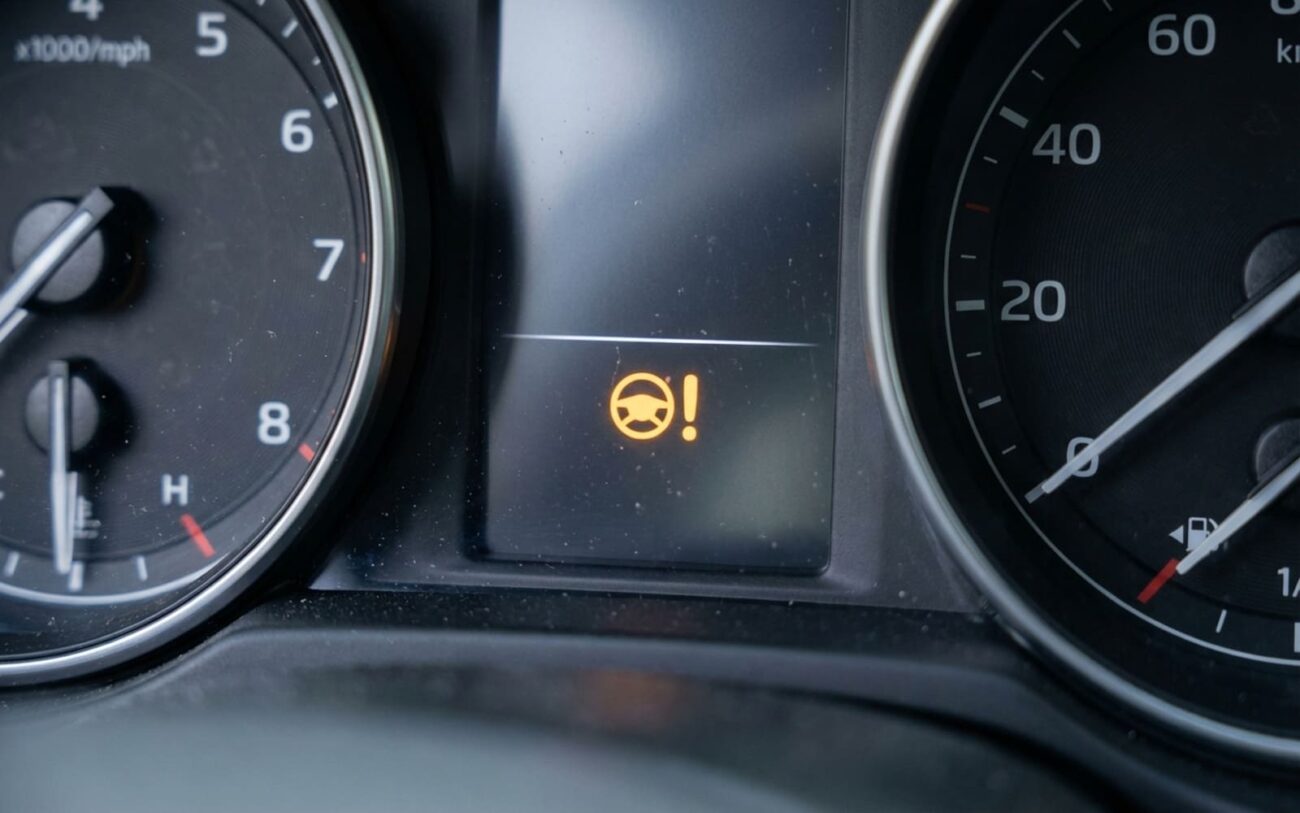
What’s happening is the EPS control module got confused when it lost power. It needs to re-learn its “zero point” — basically, where straight ahead is and how much torque you’re applying. Until it does, it’ll shut down the assist to prevent any erratic behavior. You’ll definitely see a warning light on the dash, usually a steering wheel icon, sometimes with an exclamation mark. It might say “Power Steering” or “EPS Fault.” That’s the module telling you it’s logged a “soft fault” and it’s not going to help you steer until it’s happy again.
Motor Load: 0.0%
Why the EPS Gets a ‘Brain Freeze’
Think of it like this: your car’s EPS module is a mini-computer. When you disconnect the battery, it’s like pulling the plug on your desktop mid-update. The hardware itself (the motor, the rack, the sensors) is usually perfectly fine. But the software, which stores critical calibration data like the steering torque sensor’s zero point and the steering wheel’s center position, forgets where it was. It’s not a mechanical failure; it’s a loss of memory.
That’s why you don’t feel vibrations, knocking, or wandering like you would with worn tie rods or a cracked steering knuckle. If the problem showed up immediately after a battery change, I’d bet my last wrench it’s a calibration issue nine times out of ten. It’s just confused, not broken.
My Diagnostic Approach: What to Check First
Before jumping to conclusions, I always follow a systematic approach. Just because the steering is heavy doesn’t mean the EPS rack is toast. Often, it’s something simple like a blown fuse or a poor connection that’s mimicking a total failure. Here’s how I break it down:
| Symptom | Most Likely Cause (After Battery Swap) | Other Things to Rule Out | My Go-To Test |
|---|---|---|---|
| No power assist, EPS warning light on. | EPS module lost calibration data or its current software state due to power interruption. | Blown EPS fuse, weak battery voltage (even a new battery can be undercharged), faulty steering angle sensor (SAS) that coincidentally failed. |
Connect a bi-directional scan tool. Check for EPS module communication, read any stored Diagnostic Trouble Codes (DTCs), and monitor live data from the torque sensor. |
| No communication with EPS module via scan tool. | Module’s power supply was upset by a voltage spike during battery reconnection, or it’s simply ‘off-line.’ | CAN bus network fault (other modules might be offline too), a bad ground, or a loose connector at the EPS motor/module. |
First, check all EPS-related fuses. Then, use a multimeter to verify proper 12V power and ground at the EPS module connector. |
| DTCs specifically for steering angle or torque sensor. | Calibration data was lost or a fault was latched after the power interruption. | A faulty clock spring (spiral cable) in the steering column, or the wheel was turned significantly while the system was powered down. |
Perform a steering angle sensor zero-point calibration using a bi-directional scan tool. This is often the magic bullet. |
Getting Your Power Steering Back: The Fixes
Safety First, Always
While some basic resets are DIY-friendly, anything involving module replacement or re-flashing requires professional-grade tools. You need to be sure that system behaves predictably, especially at highway speeds. Don’t mess around with steering if you’re not confident.
Software/Calibration Reset DIY-Feasible (with right tool)
Module Re-initialization or Re-flash Professional Only
EPS Rack/Motor Replacement Professional Only
How I Confirm the Fix Worked
After any repair, especially with steering, you can’t just cross your fingers and hope. I’ve got a checklist to make sure everything’s back to normal and safe:
Post-Repair Checklist
-
The EPS warning light on the dash is OFF and stays off after several key cycles (turning the car on and off a few times).
-
Power assist returns immediately when you start the car, even when you’re just sitting still.
-
Steering effort feels smooth and consistent across the entire range of motion, from parking lot maneuvers to highway speeds. No weird spots or sudden changes in assist.
-
If I’m using a scan tool, it confirms “Zero Point Learned: OK” or a similar status for the steering angle sensor.
What’s This Going to Cost You?
The good news is, if it’s just a calibration issue, it’s usually not too bad. If you’re looking at a full rack, well, that’s a different story.
Shop Software Reset
This is typically what a shop charges for an hour of diagnostic time and the calibration procedure. High success rate for this specific problem.
DIY Scan Tool
The cost to buy a bi-directional scan tool capable of performing these resets. If you plan on doing more DIY work, it’s a solid investment that pays for itself.
Full Rack Replacement
This includes the cost of the new part, labor, and the necessary programming. Only necessary if the EPS hardware is truly damaged, which is rare after a simple battery swap.
My Prevention Tip
Next time you’re swapping a battery, use a memory saver. It’s a small device that plugs into your OBD-II port and keeps a trickle of power flowing to the modules. This prevents the EPS (and other modules like your radio presets or window auto-up/down) from losing their minds in the first place. Trust me, it’s worth the twenty bucks.
