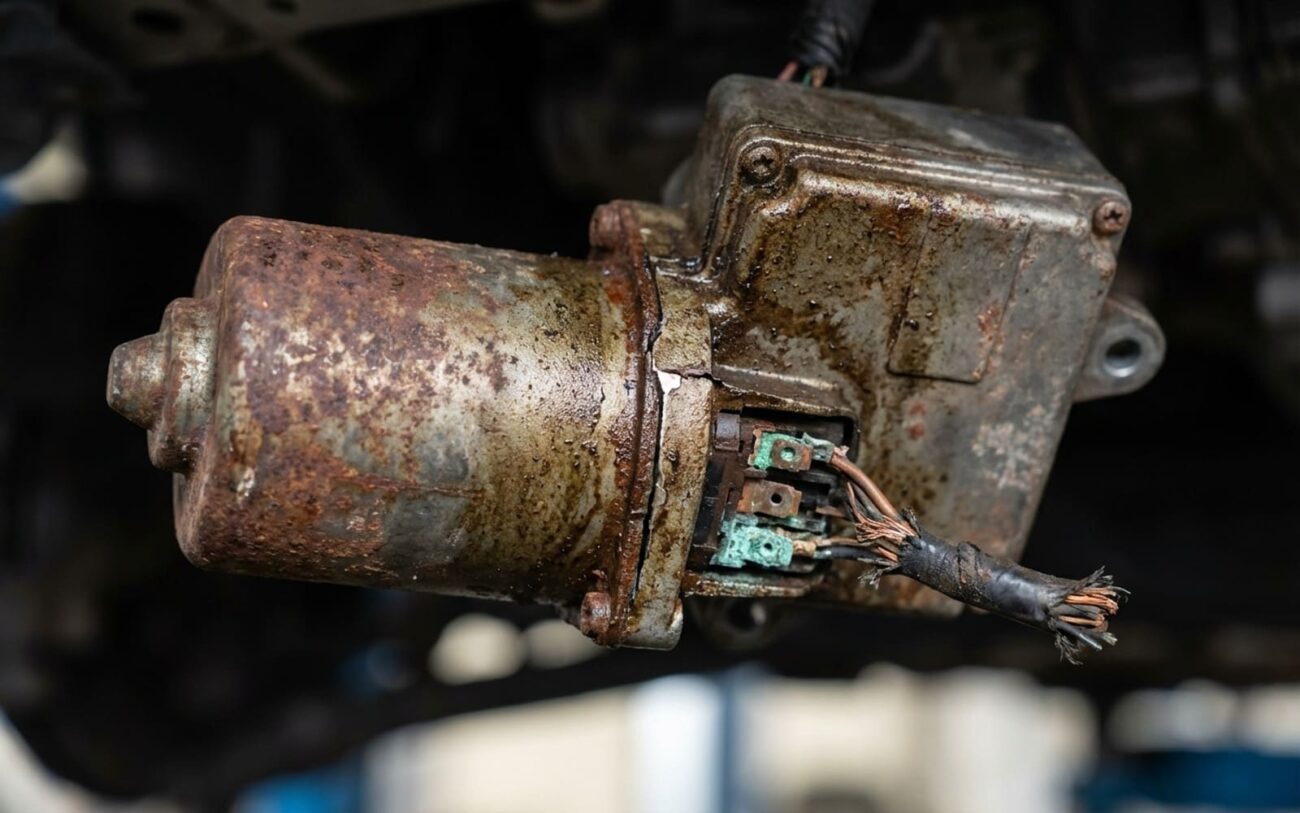
After more than two decades wrenching on cars, I can tell you that when an Electric Power Steering (EPS) system goes belly up, you usually know it. It’s not subtle. I’ve seen this play out countless times in my shop, particularly on models like the Fiat 500, the Mini Cooper R56, and even some of the earlier Tesla Model S cars. Each has its own quirks, but the end result is often the same: a steering system that just doesn’t want to cooperate.
What EPS Failure Feels Like
The most dramatic symptom, and the one that usually sends folks straight to the shop, is a complete and sudden loss of power assist while you’re driving. One minute you’re cruising, the next it feels like you’re wrestling a bear just to turn the wheel. This is almost always accompanied by a bright red steering wheel warning light on your dash. That light isn’t just a suggestion; it means the EPS module has detected a critical fault and has shut down the assist to protect itself from further damage, or worse, to prevent a mechanical bind. Trying to park with zero assist is a workout, believe me.
But it’s not always a hard failure. Sometimes, the problem is more intermittent, and those are often the trickiest to diagnose. You might feel a strange judder, a notchiness in the steering, or a hesitation, especially when you’re turning at low speeds or just slightly off-center. These little glitches usually point to internal sensor issues—things like a failing torque sensor or a motor position sensor that’s getting flaky inside the EPS control module or the assist motor itself. Don’t confuse this with a mechanical binding in the rack or column; it’s an electronic hiccup that comes and goes, often frustratingly.
Then there’s the noise. A consistent groaning, whining, or grinding sound coming from the steering column or the rack every time you turn the wheel. In an EPS system, this typically means trouble for the assist motor’s internal reduction gears or its bearings. I’ve seen too many cases where drivers ignored these sounds for months, only to have the motor seize up completely. That’s not just an inconvenience; it can be dangerous.
Output: 0.0 Nm
First Things First: Rule Out the Simple Stuff
Now, just because your steering feels heavy doesn’t automatically mean the EPS system itself is toast. Before you start thinking about expensive replacements, you’ve got to rule out the basics. Trust me, I’ve seen too many people jump to conclusions and waste money. A sudden loss of assist with that warning light could be the EPS motor or its control module, sure, but it could also be something much simpler, and cheaper to fix.
- A blown main EPS fuse is a classic. Check the fuse box, both under the hood and sometimes inside the cabin.
- A weak battery or failing alternator can starve the EPS system of power. These systems draw a lot of current, and if the voltage drops too low, the module will shut down assist as a protective measure.
- Don’t overlook poor ground connections. A corroded ground strap or terminal can cause all sorts of electrical gremlins, including intermittent EPS faults.
- Sometimes, it’s a communication fault on the vehicle’s CAN bus. Another module might be acting up and interfering with the EPS module’s ability to communicate, making it shut down.
Always start with the easiest, cheapest checks. You’d be surprised how often a simple fuse or a good battery charge is all it takes to get things working again. But remember, a blown fuse usually blows for a reason, so keep that in mind if it happens again.
Digging Deeper: Advanced Diagnostics
If the simple stuff checks out, then it’s time to get serious. You’re going to need more than a basic OBD2 scanner for this; you need a professional-grade diagnostic tool. This isn’t about reading generic P-codes; it’s about getting into the EPS control module directly. My tool of choice lets me run self-tests, monitor live data, and pull manufacturer-specific codes that a cheap scanner will miss every time.
When I’m looking at live data, I’m checking a few key things:
- Motor current: Is the assist motor drawing excessive current, even when not actively assisting? That could point to internal mechanical issues or a short.
- Torque sensor voltage: This tells the module how much effort you’re putting into the steering wheel. If it’s erratic or stuck, that’s a big clue.
- Steering angle: Does it read accurately and smoothly as you turn the wheel? A jerky reading means sensor trouble.
And of course, check for stored or pending fault codes. Common ones I see are C0550, which usually points to a steering angle sensor issue, or U0415, indicating a lost communication fault. These codes give you a roadmap, but live data paints the full picture.
My Diagnostic Rule of Thumb
Here’s a little trick I’ve used for years: “If the torque input from the steering wheel is smooth but the motor’s assist response is erratic, the fault is almost certainly internal to the EPS unit. But if both the input and output signals are jumping all over the place, you need to check the mechanical linkage and steering column for binding first.”
Understanding the Failure: Common Root Causes
When an EPS system fails, it’s usually due to one of a few core issues. I break them down into categories:
- Electronic Component Failure: This is often the control module itself. Components on the circuit board can fail due to age, heat, or manufacturing defects.
- Thermal Stress: Excessive heat is a killer for electronics and motors. If the system is constantly overworked (say, from a heavy vehicle or aggressive driving in tight spaces), it can lead to premature failure.
- Electromechanical Wear: The assist motor has gears and bearings. Over time, these wear out, leading to the noises I mentioned earlier, and eventually, a complete breakdown.
- Software or Calibration Faults: Sometimes, the hardware is fine, but the software gets corrupted, or the system loses its calibration (like the zero-point for the steering angle sensor).
Vehicle-Specific Patterns I’ve Noticed:
In my experience, Fiat 500s often suffer from control module issues – I’ve seen a lot of those. Mini Coopers, especially the R56, tend to have more motor wear problems. And those early Tesla Model S cars? They’re often sensor-related or have software glitches. Knowing these common patterns for specific models can really help narrow down your diagnosis.
And don’t forget material defects. They’re more common than you might think. For example, certain Ford models had well-documented issues with poor solder joints in the EPS control module. These joints would crack over time due to thermal cycling (heating up and cooling down), causing intermittent connections. You won’t always see a hard code for this; it’s a “ghost” fault that comes and goes with temperature changes, driving technicians crazy. It’s why sometimes you need to physically inspect these modules, not just rely on a scan tool.
Fixing It Right: Repair Pathways
Once you’ve pinpointed the problem, it’s time to talk about solutions. The repair approach depends heavily on what’s actually failed and how severe it is. Some things you can tackle yourself, but a lot of EPS work is strictly for the pros.
This is Professional Territory
Let’s be clear: if the issue is inside the EPS control module itself—whether it’s mounted on the steering column or integrated into the steering rack—you’re likely entering “professional-only” territory. You’ll need a factory-level scan tool capable of module programming, coding, and security access. This isn’t something your average DIYer can do in the driveway.
Fuse or Relay Replacement DIY-FEASIBLE
Control Module Replacement Professional Only
Complete Assembly Replacement Non-Repairable (in the field)
Battery Disconnect Temporary Only
The Proof is in the Pudding: Post-Repair Validation
You’ve done the work, but you’re not done until you’ve verified the repair. This is a critical step, and it needs to be done both electronically and mechanically. You want to make sure the problem is truly gone and not just hiding.
If you replaced something simple like a fuse or a relay, the pass criteria are straightforward: no warning lights after about 50 ignition cycles, and full assist should be available immediately every time you start the car. Take it for a good test drive, too.
For a control module or complete assembly replacement, you need that professional scan tool again. First, confirm the new module is recognized by the vehicle, that it’s been programmed correctly, and that it’s communicating with all the other systems. Then, check the steering angle sensor. With the wheels pointing straight ahead and the car on level ground, it should read 0° (plus or minus 2 degrees is usually acceptable). Finally, perform a full left-to-right lock sweep of the steering wheel while monitoring for any new fault codes. The system should operate smoothly and not throw any C0550 or U0415 codes during this test. If it does, you’ve got more work to do.
Making the Call: Costs, Risks, and When to Walk Away
Repairing an EPS system can range from dirt cheap to eye-wateringly expensive. It’s not just about the cost of parts and labor; you also have to weigh the risks if the repair isn’t done correctly. Here’s what I typically see:
| Repair Type | DIY Parts Cost (Approx.) | Shop Cost (Parts & Labor) | Typical Success Rate | Risk if Not Done Right |
|---|---|---|---|---|
| Fuse or Relay | $5 – $50 | $50 – $150 | High | The underlying fault will likely remain, leading to a quick recurrence. |
| EPS Control Module | $300 – $800 | $800 – $1,800 | High | Incorrect programming or calibration can disable the new module or cause dangerous steering behavior. |
| Complete Rack/Column Assembly | $1,200 – $2,500 | $2,000 – $4,500 | Very High | Improper installation risks immediate damage, alignment issues, or unsafe steering. |
My Economic Rule of Thumb:
Here’s how I help customers decide: If the cost for a major EPS assembly replacement—we’re talking the rack or column—starts to creep past 40% of your car’s current fair market value, it’s time to seriously consider if the repair makes financial sense. Putting three grand into a seven-thousand-dollar car might not be the smartest move in the long run. Sometimes, it’s better to cut your losses.
Keeping It Running: Prevention and Monitoring
While you can’t prevent every EPS failure—some are just bad luck or manufacturing defects—there are definitely things you can do to prolong the life of your system and catch problems early. Think of it as preventative maintenance for your steering.
My EPS Maintenance Checklist
-
Keep your battery and alternator in top condition. This is huge. Chronic low voltage forces the EPS system to draw more current to provide the same assist, which means more heat and accelerated wear on the motor and module.
-
Regularly check battery terminals and chassis grounds. A corroded or loose ground connection can cause significant voltage drops, which can easily mimic a genuine EPS fault. It’s a simple check that can save you a lot of headache.
-
Pay attention to early warning signs. That morning stiffness in the wheel, or a new groan when you turn? Don’t ignore it. Catching a pending fault code or a minor noise early can often mean a smaller, cheaper repair instead of a full module replacement.
-
After any suspension or steering work, verify smooth operation. If you’ve had tie rod ends, control arms, or anything else replaced, always make sure the steering feels smooth and free of binding. A misaligned or overtightened component can put undue stress on the EPS system, leading to premature failure.
