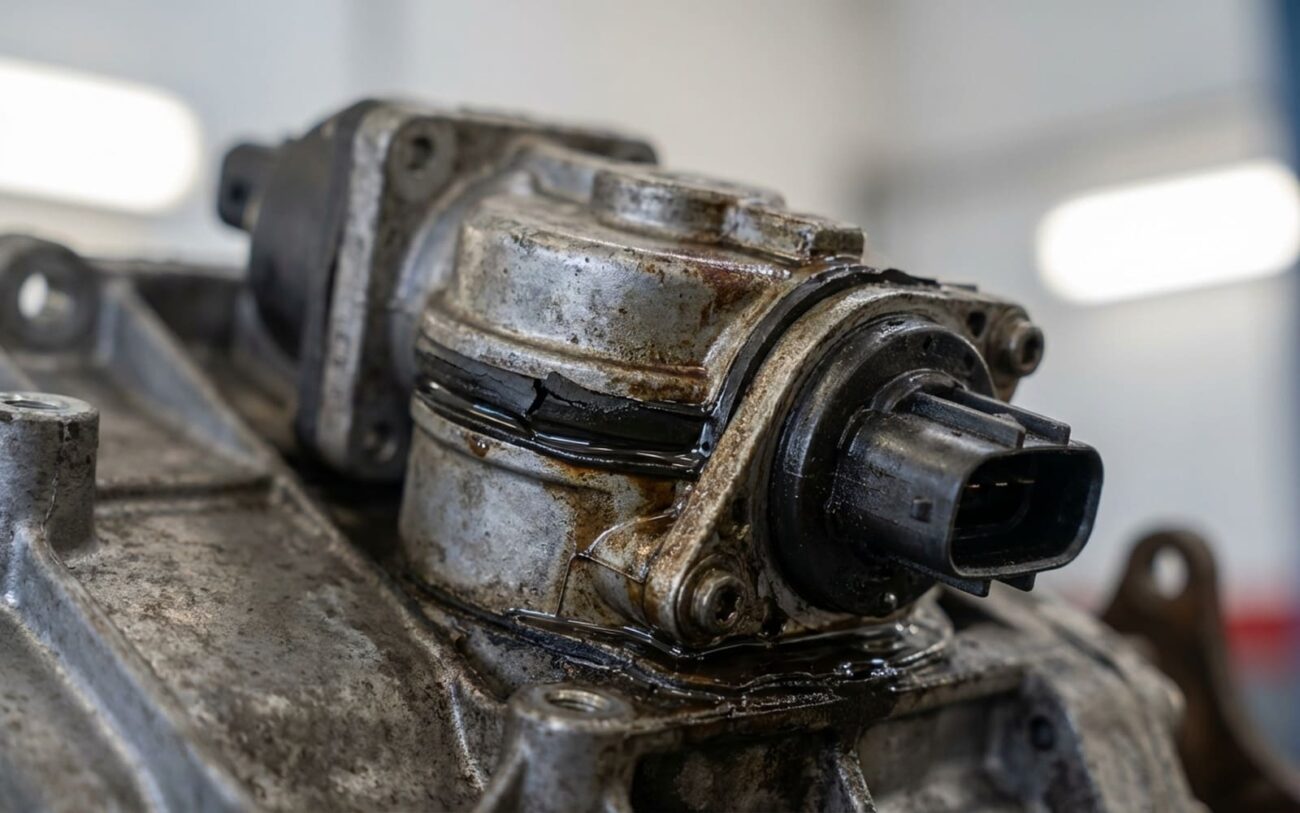
Alright, let’s talk about the Fiat 500 Dualogic. If you own one, chances are you’ve either dealt with or heard about the dreaded stalling issue, especially when the car tries to shift gears. After decades in this business, I can tell you this isn’t just a random hiccup; it’s a very specific problem that points straight to the Dualogic actuator, most of the time.
The Stall: What It Feels Like & Why It Happens
The key symptom here isn’t just any old stall. It’s that sudden, immediate engine cut-out that happens exactly when the transmission attempts a gear change. Think about it: you’re going from Reverse to Drive, or maybe you’re sitting at a light, and it tries to engage first gear, or even an automatic upshift on the road. The engine just dies, like someone flicked the ignition switch off. It’s not a gradual power loss; it’s an instant shutdown, perfectly synced with that shift command.
Why this specific timing? Well, the Dualogic isn’t your typical automatic. It’s a robotized manual transmission. No clutch pedal for you, but there’s a real clutch in there, and a robot (the electrohydraulic actuator) handles it along with gear selection. This actuator uses hydraulic pressure and electric solenoids to do its job. When the Transmission Control Module (TCM) tells it to shift, it coordinates with the engine’s ECU to briefly cut engine torque. This lets the clutch disengage smoothly. If that actuator fails to respond correctly during this critical window—maybe it loses hydraulic pressure, a sensor glitches, or something internal just gives up—the shift either doesn’t complete, or it jams up, and the engine stalls. Simple as that.
After a stall like this, you’re almost guaranteed to see a “Gearbox Fault” message light up on your dash. The gear selector might start flashing, manual mode usually stops responding, and the car will likely go into a limited “limp” mode. That’s the TCM trying to protect itself, detecting that something went seriously wrong. And listen, even if you haven’t stalled yet, any harsh, jerky shifts or long delays when you try to engage a gear are huge red flags. Those are signs of weakening hydraulic pressure, worn seals, or sticky solenoid valves inside that actuator. Ignore them at your peril; I’ve seen plenty of clutches, dual-mass flywheels, and catalytic converters ruined by unresolved stalling and the fuel dumping that comes with it.
Diagnosis: Don’t Just Guess – Confirm the Actuator
It’s easy to jump to conclusions and assume every shift-related stall is a failed actuator. And often, you’d be right. But I’ve seen enough cases where other systems mimic these symptoms to know that proper diagnosis is absolutely essential before you commit to an expensive repair. Things like a failing crankshaft position sensor (CKP), a weak ignition system, or even a faulty brake light switch can cause stalling that coincides with a shift. That’s why we don’t just go by symptoms alone; we rely on professional scan tools and real-time data.
| What You See | Usually the Actuator | Common Mimics (Look Here Too) | My Go-To Test to Pinpoint It |
|---|---|---|---|
| Stall during gear shift | Loss of hydraulic pressure, faulty turbine speed sensor, internal TCM logic error. | Failing crankshaft position sensor, severe engine misfire, intermittent clutch position sensor signal. |
Use a professional scan tool like MultiEcuScan (MES) to monitor “Actuator Pressure” in real-time. If it drops below 38–42 bar right when it stalls, the problem is almost certainly internal to the actuator. |
| “Gearbox Fault” message after stall | Failed pressure switch, solenoid valve electrical fault, internal TCM memory issues. | Faulty brake light switch (this is critical for shift logic, don’t overlook it!), low system voltage, corroded TCM connectors. |
Run the actuator’s self-diagnostic routine with a good scan tool. Look for specific codes like P1772. Clear codes, then always verify your brake lights are working correctly. I’ve seen too many shops chase ghosts because of a simple brake switch. |
| Harsh or jerking gear engagement | Worn internal hydraulic seals, failing pressure accumulator, sticking shift fork solenoid. | Glazed or worn clutch disc, damaged dual-mass flywheel, incorrect engine torque signal from ECU. |
Perform a full actuator adaptation reset using your scan tool. If the jerking persists, you’ll need to test the hydraulic holding capacity at the accumulator test port. That’s a direct measure of internal seal integrity. |
What Actually Breaks Inside the Actuator
So, you’ve confirmed it’s the actuator. Now, what exactly gives up inside this complex little unit? It’s a combination of high-pressure hydraulics, precision solenoids, and embedded electronics, all crammed into a compact housing bolted right onto the transmission. Over time, I’ve seen a few common failure modes emerge, usually starting with subtle performance changes before everything goes south and you get that stall.
One frequent culprit is the degradation of the solenoid valves. The electromagnetic coils inside are wound with insulation, and that stuff just breaks down over repeated heat cycles. Once it cracks, the coil either shorts out or can’t actuate properly. I’ve opened up units where the coil was visibly charred from thermal stress. Beyond the coils, the aluminum housing itself can develop porosity or even micro-cracks from casting imperfections. These might not leak externally, but they allow internal hydraulic cross-talk—meaning pressure meant for, say, the clutch actuator, bleeds into the shift circuit. That absolutely kills shift responsiveness.
The internal hydraulic seals, typically Viton, are another weak point. They sit on pistons that control both clutch engagement and shift fork movement. As the transmission fluid ages, it breaks down, hardens these seals, or gets contaminated with clutch dust. Once those seals lose their elasticity or the piston bores get scored, pressure leaks internally. This leads directly to delayed or incomplete shifts, and eventually, that stall you’re experiencing because the system can’t maintain control during torque transfer.
And let’s not forget the Transmission Control Module (TCM) itself, which is built right into the actuator. It’s exposed to the same heat and vibration as the rest of the unit. The circuit board undergoes thermal cycling—expanding and contracting over years—which can cause solder joints to crack or surface-mount components to fail. When the part of the TCM that manages shift timing or pressure control fails, the whole sequence collapses. The turbine speed sensor, which monitors the input shaft speed for synchronization, is also housed inside and prone to failure. A bad reading from it will confuse the TCM and can trigger an abortive shift attempt.
CRITICAL FLUID WARNING (Listen Up!):
I cannot stress this enough: Fluid quality is absolutely critical. This system requires Fiat specification 9.55550 fluid—typically branded as Tutela CS Speed or an equivalent. Using anything else—brake fluid, generic ATF, or some random hydraulic oil—will swell your seals, corrode aluminum passages, and leave varnish deposits that stick the solenoid valves. I’ve seen complete actuator failures traced back to a single incorrect fluid change. Don’t cheap out here; it will cost you dearly.
Just to be clear, a worn clutch or a bad CKP sensor might cause a stall, but they aren’t “Dualogic actuator failures.” They just mimic the symptoms, which is why proper diagnostics are non-negotiable. Don’t get fooled.
Fixing It: Your Repair Options Explained
Safety & Precision First – No Shortcuts!
How you approach the repair depends entirely on where the failure lies and how far it’s progressed. But no matter what, depressurization and calibration are mandatory steps. You need specialized diagnostic equipment for this; don’t even think about trying to wing it.
External Port & Line Repair
Internal Actuator Overhaul Specialist Only
Full Assembly Replacement & Calibration
Post-Repair Validation: Proving the Fix
A repair isn’t truly complete until it’s thoroughly verified. You can’t just rely on a quick test drive; some issues only show up under specific conditions or by monitoring live data on a scan tool. Trust me, I’ve learned this the hard way.
For an actuator overhaul or seal replacement, here’s my process: First, clear all fault codes and make sure none return. Then, use your scan tool to command the hydraulic pump to build pressure. The system should reach 45–50 bar and hold within a 5-bar range for at least 60 seconds after the pump shuts off. Any significant pressure drop indicates internal leakage—likely from a seal not seating correctly or a crack in the housing. Once it holds pressure, then you can do a road test. I’ll make at least 10 consecutive shifts across all gears, including Reverse and some low-speed maneuvers. Every single shift must be smooth, with no hesitation, clunking, or, God forbid, stalling.
For a full actuator replacement, the validation starts with the calibration process itself. Your scan tool will tell you whether each “learn” procedure—clutch, gear, and pressure—completed successfully. If any step fails, you need to stop and diagnose why before you go any further. After a successful calibration, review all live data parameters: actuator pressure, turbine speed, clutch engagement point, and solenoid response times. Everything should be within the normal operating range. Then take the car for an aggressive test drive: hard acceleration, uphill starts, frequent mode switches. It should respond predictably and, under no circumstances, stall.
Cost, Risk & When to Walk Away
Let’s be realistic about the costs and trade-offs here. A Dualogic actuator repair or replacement is not cheap. The decision often boils down to your car’s value versus the repair cost, and it’s a conversation I have with customers all the time.
| Type of Repair | DIY Cost (Parts Only) | Shop Cost (Parts & Labor) | My Expected Success Rate | Biggest Risk if it Fails |
|---|---|---|---|---|
| Hydraulic Line Seal Replacement | $50 | $200–$400 | 95% | Improper bleeding leaves air, causing harsh shifts and potential re-stalls. |
| Actuator Overhaul (Seals/Solenoids) | $150–$300 | $800–$1,500 | 70–80% | Undiagnosed housing wear means it’ll fail again, quickly. |
| Actuator Assembly Replacement | $1,000–$1,800 | $2,000–$3,200 | 98% | Incorrect calibration can damage the new unit and/or the clutch. |
Here’s the bottom line from my perspective: if the repair quote approaches 50% of your Fiat 500’s current market value, you’re probably making a lifestyle or emotional decision, not a financial one. Putting $3,000 into a car worth $4,500 might make perfect sense if you absolutely love it and plan to keep it for years. But for many, that’s usually the beginning of the end. Always weigh this repair against potential future issues—like clutch or flywheel wear—that may have been exacerbated by the initial actuator failure.
Prevention & Monitoring: Keep It Running Longer
Look, prevention is always far cheaper than repair, especially with these Dualogic systems. The single most important thing you can do is only use the correct hydraulic fluid—Fiat specification 9.55550. This isn’t optional, it’s mandatory. Using the wrong fluid, even just once, can kick off a chain reaction of seal degradation, valve sticking, and internal corrosion. There’s no official service interval for fluid changes, but if you’re planning to keep the car past 60,000 miles, I’d strongly recommend having the fluid inspected or replaced by a specialist every 60,000–80,000 miles. It’s a smart investment.
And please, listen to your car. Any new harshness, delay, or clunk during shifting is a warning sign. Don’t wait for it to stall on you. If you have access to an OBD-II scanner that can read transmission-specific codes (not just generic engine codes), use it periodically. Pending codes related to pressure, solenoids, or clutch position can give you a heads-up about developing issues long before they leave you stranded on the side of the road.
