Stuck in Gear? Here’s What I See (and What to Do)
Alright, let’s talk about automated manual transmissions (AMTs) like the Opel Easytronic. When one of these things gets stuck in gear, or more accurately, stuck between gears, it’s a real headache. You turn the key, the engine fires right up, you can move the shifter around, but the car just sits there. No gear engages. The dash might flash a blinking “N” or show some gear that doesn’t match what you’ve selected. I’ve seen this dozens, probably hundreds, of times over my 25+ years in the shop. It’s a dead giveaway that the transmission control module (TCM) has detected a serious internal problem and has basically thrown its hands up, refusing to engage anything to prevent further damage.
When I hook up a professional scan tool, I almost always find fault codes like P1770 or P1771. These codes are pretty specific; they usually mean “implausible gear position sensor signal” or a “mechanical transmission fault.” What that tells me is the TCM tried to command a shift, but the gear position sensor didn’t report the expected movement. That kind of mismatch points straight to a broken mechanical link between the actuator and the actual gears. Something inside just isn’t moving when it’s told to.
My Diagnostic Approach: Internal vs. External
Before I even think about cracking open a transmission, my first job is always to rule out the external stuff. A car stuck in gear can look exactly the same whether the problem is deep inside the gearbox or just a failed sensor or actuator on the outside. The electrohydraulic actuator, the hydraulic pump, the shift linkage, or even the clutch position sensor could be at fault. And let me tell you, those are a whole lot easier and cheaper to fix than digging into the gearbox itself.
Another common mimic is a failing clutch release bearing. When that goes bad, it can make a grinding noise that’s almost identical to internal gear damage, especially when you try to shift or when the clutch is engaged. But here’s the trick: unlike internal damage, a bad release bearing usually won’t prevent you from engaging a gear when the engine is completely off. That’s a key diagnostic clue.
Pro Diagnostic Tip: You Need the Right Tool
You absolutely cannot diagnose this properly with a basic OBD2 scanner. You need a professional-grade diagnostic tool—something like a GM TECH2 (for Opel/Vauxhall), or a high-end Autel or DSI scanner that can communicate directly with the TCM. This isn’t just about reading codes; you need to see live data from the gear position sensor, the hydraulic pressure sensor, and crucially, be able to command gear changes manually. That’s how I can tell if the system is trying to shift but failing mechanically, or if it’s not even trying because an external component is dead.
Key Tests I Perform:
Here’s how I narrow it down in the shop:
-
Scan Tool Command Test (Engine OFF): With the engine off (and the ignition on), I use the scan tool to command each gear change. I watch the live data for the gear position sensor. If the actuator moves (you might hear a click or whir), but the gear position sensor doesn’t show the commanded gear, or if it shows an “implausible” signal, that’s a strong indicator that the internal mechanism is disconnected or jammed. If I hear grinding without the engine running during this test, it’s almost certainly internal damage.
-
Hydraulic Pressure Check: I monitor the hydraulic pressure sensor live data. If the pressure is low or erratic, it points to a failing hydraulic pump, a leak, or a faulty accumulator pressure sensor. On older Opel Combo, Corsa, and Astra models, a faulty accumulator pressure sensor is a known issue that mimics a mechanical failure perfectly, causing aborted shifts and limp mode.
-
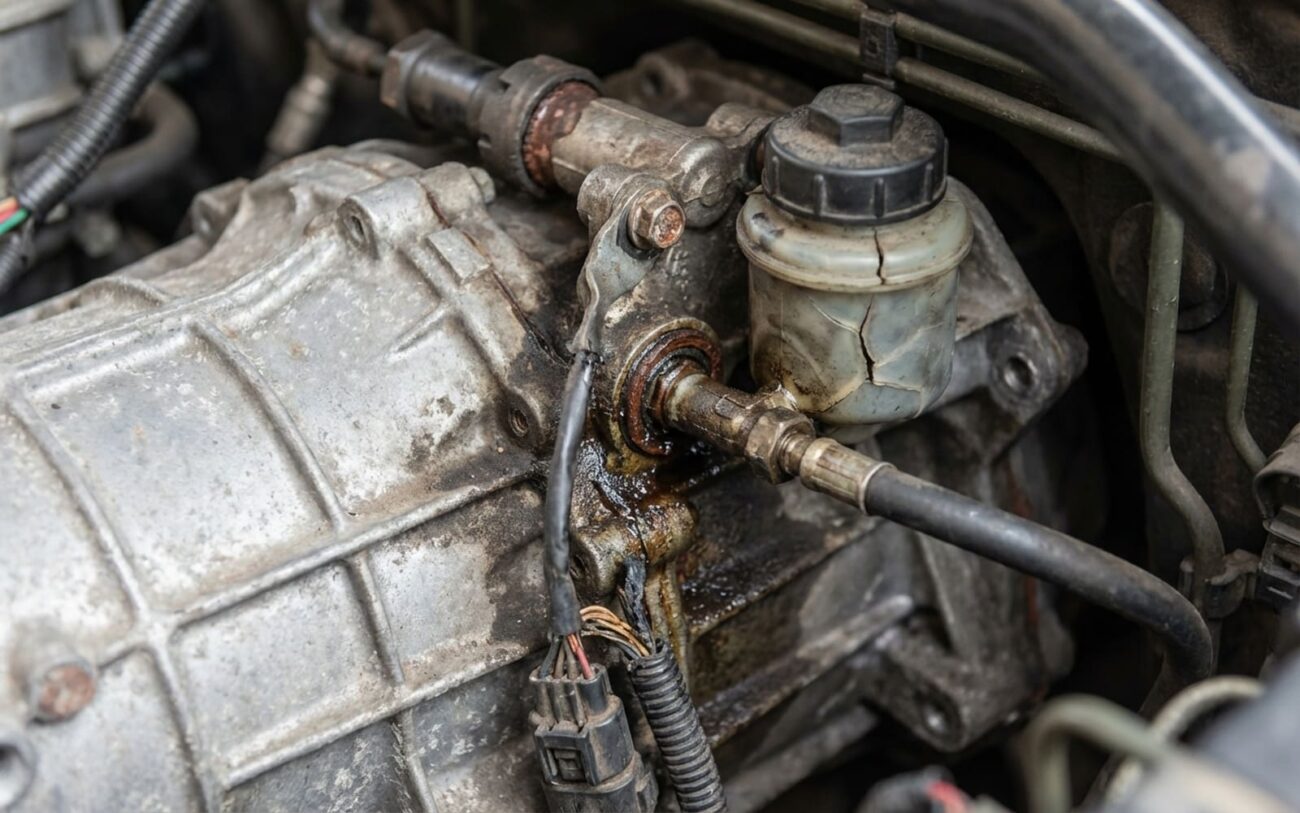
Visual Inspection of Linkage & Actuator: Sometimes it’s as simple as a detached shift linkage rod or a loose selector shaft pin. I’ll get under the car and physically inspect the external shift mechanism and the electrohydraulic actuator for any obvious damage, leaks, or loose connections.
-
Clutch Actuator & Release Bearing: If the clutch isn’t fully disengaging, it can prevent gear shifts. I’ll check the clutch position sensor readings and listen carefully for grinding noises that change with clutch pedal movement (if the system allows any). A bad clutch release bearing can sound very similar to internal gear damage, but typically won’t prevent shifts with the engine off.
What Breaks Inside These Things? (The Nasty Bits)
Once I’ve definitively ruled out all the external systems, then and only then do I focus on internal mechanical failure. Remember, these AMTs aren’t full automatics; they’re essentially manual transmissions with automated clutch and shift actuators bolted on. So, the failure modes are pretty much what you’d see in a standard manual gearbox, just triggered by electronic commands.
The most common internal failures I see in the M32 gearbox core (used in many Easytronic systems) include:
-
Bent or Broken Selector Forks: These forks, often made of stamped steel or aluminum, can bend or snap under stress. This usually happens if the system tries to force a shift when the gears aren’t fully synchronized, or if there’s an issue with hydraulic pressure not allowing a smooth engagement. A bent fork won’t move the engagement sleeve properly, leaving you stuck.
-
Worn Detent Mechanisms: The selector shaft uses spring-loaded ball bearings that snap into machined grooves to hold a gear in place. Over time, these balls or grooves wear down, allowing the shaft to “float” or settle between positions. When that happens, the TCM thinks it’s in a gear, but it’s actually in a false neutral.
-
Synchronizer Failure: The brass synchronizer rings wear down, or their teeth chip and break. A shattered syncro ring can jam the engagement sleeve, completely blocking any movement. This is often accompanied by that loud grinding noise I mentioned earlier.
-
Input/Output Shaft Bearing Failure: A worn bearing allows excessive play in the shafts, which can misalign the gears. This prevents the shift fork from properly engaging the synchronizer sleeve, leading to missed shifts or being stuck.
It’s critical to understand this: failures in the electrohydraulic actuator, the hydraulic pump, or the clutch actuator solenoid are not internal gearbox issues. Neither is low or dirty hydraulic fluid. But ignoring those external problems will absolutely, without a doubt, lead to internal damage. For example, a failing hydraulic pump that can’t generate enough pressure to complete a shift means the system retries, often forcing metal components under load. That’s how selector forks bend and synchronizers break. It’s a chain reaction.
Fixing It: Your Repair Options Explained
Professional Territory Only
Let me be clear: internal gearbox repairs are not a standard DIY job. Splitting a transmission case requires specialized pullers, precise torque-to-yield measurements, and a clean environment to prevent contamination. You’re dealing with delicate components and tight tolerances. One mistake, and you’re buying a whole new transmission.
External Linkage & Actuator Repair
Internal Gearbox Rebuild Professional Only
Full Unit Replacement Often the Smartest Option
Emergency Workaround (Last Resort!)
If the issue is solely a worn detent allowing the selector shaft to float, you can sometimes manually move the external selector lever on the transmission to force the shaft into 2nd or 3rd gear. This might let you limp the car to a shop. BIG WARNING: If there’s already internal damage like a bent fork or shattered syncro, forcing movement like this can make the problem significantly worse, turning a repairable issue into a total replacement. This is an emergency-only tactic when towing isn’t an option, and you proceed at your own risk.
Post-Repair Validation: Don’t Skip This!
After any internal repair or transmission replacement, you can’t just fill it with fluid, bolt it back together, and call it good. The system must be validated under real conditions. This is where a lot of DIYers and even some less experienced shops fall short.
First, with the transmission installed and filled with the correct fluid (e.g., GM Dexron III or Opel-specified GFF-050, P/N 93165447), I use my professional scan tool to command each gear—1st through 5th, reverse, and neutral. Every single shift has to register correctly on the gear position sensor within about 500 milliseconds, with no hesitation, no grinding, and no new error codes. If the TCM logs a “shift timeout” or “implausible signal,” something is still wrong, and it’s not leaving my bay.
Then, a thorough road test. The car needs to perform repeated stop-and-go cycles, engaging 1st, 2nd, and 3rd under light throttle, then under moderate throttle. It should handle downshifts smoothly, with no clunking, grinding, or slipping. I test both automatic and manual shift modes. If the car goes into limp mode or refuses a shift during testing, my diagnosis or repair missed something, and it’s back to square one.
Cost, Risk, and the “Is It Worth It?” Talk
Repair costs for these issues can vary wildly depending on what’s actually broken. Here’s a realistic breakdown based on what I see in the shop, considering parts and labor:
| Repair Type | DIY Cost (Parts Only) | Shop Cost (Estimated) | Success Rate (My Experience) | Secondary Risk |
|---|---|---|---|---|
| External Linkage/Actuator Adjustment or Replacement | $50 – $300 | $200 – $600 | High (>90%) | Low. If misdiagnosed, you’ll be back for more work. |
| Internal Selector Fork/Shaft/Detent Repair | $300 – $800 | $1,500 – $3,000 | Medium-High (~80%) | High. Incorrect diagnosis or improper assembly leads to repeat failure, sometimes quickly. |
| Complete Transmission Replacement (Remanufactured/Used) | $2,000 – $4,000 | $3,500 – $6,500+ | High (>95%) | Low, assuming a reputable remanufactured unit or thoroughly tested used unit with a warranty. |
Now, the big question I always discuss with customers: is it worth it? My solid rule of thumb is this—if the repair cost for a confirmed internal mechanical failure exceeds 50% of the car’s current fair market value, you need to seriously consider replacing the vehicle. For a 15-year-old Opel Corsa with 180,000 km on the clock, a $4,000 transmission fix rarely makes economic sense. You’re often better off putting that money towards a newer, more reliable car.
Prevention & Monitoring: Keep It Running Longer
For hydraulically actuated AMTs like the Easytronic, prevention starts with one thing, and it’s often overlooked: hydraulic fluid maintenance. You need to change that fluid exactly as the manufacturer recommends—typically every 3 years or 30,000 miles, sometimes even sooner if you’re in heavy stop-and-go traffic. Over time, that fluid breaks down, forms varnish, and starts to clog the tiny passages in the valve body and actuator. That leads to slow, incomplete, or harsh shifts, which then forces the system to “hammer” gears into place. And that, my friends, is what kills selector forks and synchronizers.
Always use only OEM-specified fluid—like Opel P/N 93165447 or a fluid meeting the GFF-050 specification. Don’t cheap out with off-brand or incorrect fluid; it might seem like a saving upfront, but it absolutely causes premature wear and actuator failure. I’ve seen transmissions fail in under 20,000 miles because someone used generic ATF that wasn’t designed for the specific hydraulic properties of these systems.
And finally, watch for the early warning signs. Any hesitation during shifts, a flashing “N” on the dash that comes and goes, or occasional grinding when selecting a gear are not things to ignore. These are often the very first indicators of actuator trouble, a failing sensor, or fluid degradation. If the transmission enters limp mode or throws a hydraulic pressure code, address it immediately. Letting it run in that compromised state just increases mechanical stress every single time it tries to shift, accelerating the damage.
