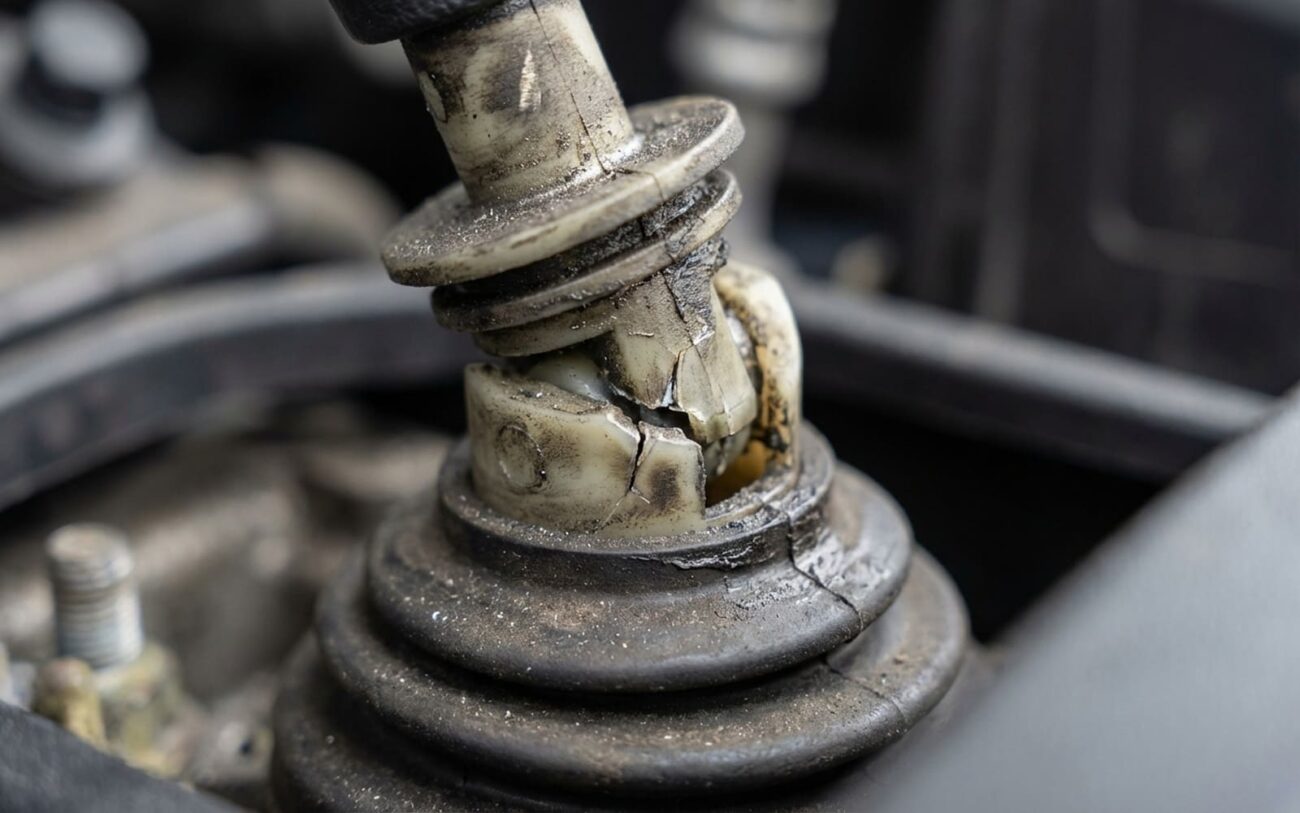
Your VW Shifter Feels Like a Spoon in a Bowl of Soup? Let’s Fix That.
If you’re driving a Mk5 Golf, Jetta, or Rabbit with the MQ200 manual transmission and your gear lever feels like it’s stirring a thick stew with a broken spoon, you’re not alone. I’ve seen this complaint come through my shop doors countless times over the years. That vague, sloppy, or completely disconnected feeling? It’s a classic sign of a failing shift selector mechanism.
In most cases, we’re not talking about a transmission problem here, which is good news. It’s usually a component right under your center console. I’ve probably replaced half a dozen of these selector units just in the last year. The trick is knowing what to look for, how to diagnose it right, and then deciding if it’s a job for your garage or mine.
What a Failing Shifter Feels Like
This problem rarely hits you all at once. Usually, it’s a gradual thing, giving you plenty of warning. The most common symptom I see is a distinct metallic click or pop right in the gear knob when you move the lever side-to-side, especially when you’re trying to find 1st/2nd or 5th/Reverse. That’s not just an annoying noise; it’s the sound of a failing pivot pin or a housing that’s cracking under stress.
Another big indicator is excessive side-to-side play before the shifter even starts to engage the shift cables. Think about it: you’re moving the lever, but it’s not actually doing anything for a good inch or two. In the worst cases, the lever might feel completely disconnected, moving freely without selecting any gears at all. Or, you might find yourself stuck, only able to select gears in one plane – like only 3rd and 4th. When it gets to this point, it almost always means the internal gate mechanism or the pivot pin has completely failed.
Diagnosing the Problem: Is It the Selector or Something Else?
Before you start tearing things apart or ordering parts, you need to be sure the problem is actually in the shift selector mechanism. A lot of other issues can mimic a failed selector – things like stretched or detached shift cables, internal transmission damage, or even just loose console mounts. I’ve seen it all.
The best first step is a quick visual inspection right under the shift boot. Here’s how I do it:
- First, pull off the gear knob. It usually just twists or pulls straight up.
- Next, carefully peel back the rubber or leather shift boot. On most of these VWs, it’s held down by four Torx T20 screws. Get those out of the way.
- Now, get an assistant to sit in the driver’s seat. With the car off and the parking brake on, have them gently move the gear lever through all the gears, side-to-side and front-to-back.
- While they’re doing that, you need to watch the metal ends of the shift cables where they attach to the selector mechanism. These are the two little ball-end connectors.
Here’s the key: If the gear lever moves around, but those cable ends don’t move at all, or only move a tiny bit, then your problem is definitely within the black plastic selector housing right there under the console. If the cable ends do move, then the issue is further down the line – maybe the cables themselves, or even inside the transmission. But in my experience, if you’ve got that “spoon in soup” feeling, it’s almost always the selector.
Pro Tip: If the lever feels completely detached, but the cable ends are still attached to the selector, try disconnecting one of the cables from the selector lever. Then, try moving the stub of the lever by hand. If it’s still sloppy or doesn’t move through the gates, the selector is shot. If the lever moves but selects no gears, and the cable ends do move, then you’re looking at broken or misadjusted cables, or something internal to the transmission.
If you’re getting that metallic clicking or popping, press down firmly on the black plastic housing itself while moving the lever. If the clicking lessens or changes, that points to a fractured housing or a loose pivot pin.
Why These Things Break
Once we’ve confirmed the selector housing is the culprit, the next question is always, “Why did this happen?” After seeing dozens of these fail, I can usually narrow it down to three main issues:
-
Shear Failure of the Steel Pivot Pin: This is probably the most common. There’s a small, press-fit steel pin inside that connects the gear lever to the internal selector arms. Over years of lateral force – especially if someone’s installed an aggressive short-shifter kit that increases leverage – that pin fatigues and eventually snaps. When that happens, you lose the solid connection to the shift mechanism.
-
Cracking of the Plastic Housing: The entire selector mechanism is housed in a black plastic assembly. This plastic can crack, usually right around where that pivot pin sits. Age, material fatigue, or someone really muscling a shift when the cables were misaligned can cause this. Once the housing cracks, the pivot point isn’t stable, and you get slop.
-
Damage to the Internal Interlock Gate: Inside the housing, there are plastic rails or gates that guide the shifter into the correct pattern. If a detent spring fails or gets weak, or if the shifter is constantly forced, these plastic tracks can get chewed up. When that happens, the shifter can’t find its way into the right gear, or it feels incredibly vague.
Just to be clear, this isn’t typically a problem with the shift cables themselves, your fancy aftermarket gear knob, or the internal forks of the transmission. The failure is almost always isolated to this selector mechanism, which is essentially the middleman between your hand and the transmission.
How to Fix It: DIY or Professional?
A Word on Safety and Precision
Look, some of these repairs are definitely DIY-friendly, but replacing the entire housing is a different beast. It requires precise alignment. If you get it wrong, you’re looking at skipped gears, cables that bind, and potentially permanent damage to the transmission internals. Don’t underestimate the need for the right tools here.
Here are your options, depending on what exactly has failed:
Pivot Pin Replacement DIY-Feasible
Selector Housing Replacement Professional Only
Making Sure You Fixed It Right
Once you’ve done the work, testing is crucial. Don’t just button it up and hope for the best. For a simple pivot pin replacement, the lever should move through all gears with a crisp, positive engagement. I usually perform at least 50 aggressive shift cycles, moving the lever side-to-side and through all gears, just to simulate real-world stress. If the feel holds up, you’re good to go.
If you’ve replaced the entire housing, the stakes are a bit higher. All gears must be selectable without any notchiness or resistance. The lever should return solidly to the 3rd/4th neutral position without any hesitation. A thorough test drive is absolutely essential here. Do some full-throttle upshifts and quick downshifts. Pay close attention to any gear pop-out under load – that’s a dead giveaway that the cables are misaligned, and you’ll need to go back and re-adjust them using those alignment pins.
What’s This Gonna Cost You?
Here’s a rough breakdown of what you can expect, based on what I see in the shop:
-
Pivot Pin Replacement:
- DIY Cost: $15 – $30 (for the pin)
- Shop Cost: $150 – $300
- Success Rate: Near 100% if done correctly.
-
Selector Housing Replacement:
- DIY Cost: $80 – $180 (for the part)
- Shop Cost: $400 – $700
- Success Rate: 98% if done by a pro with the right tools.
-
Internal Transmission Repair: (If you ignored the warnings and forced it)
- DIY Cost: N/A (this is heavy-duty work)
- Shop Cost: $1,200+ (and that’s just a starting point)
Keeping It from Happening Again
My Advice for Prevention
-
Go easy on short-shifter kits. I know they feel cool, but they increase the leverage on that pivot pin and housing. That’s exactly where this system is weakest, and you’re just accelerating its demise.
-
Inspect it annually. It only takes a few minutes. Pop off the boot once a year and just take a look. Are there any hairline cracks? Is the pivot pin starting to protrude? Catching it early can save you a lot of grief.
-
Shift smoothly. This sounds obvious, but avoid “crab-walking” through gears or forcing a shift when it’s just not ready. Let the synchros do their job.
My Mechanic’s Advice
Here’s a tough truth: If the repair cost for a full housing replacement starts to approach 40% of what that car is actually worth to you, it might be smarter to consider a good used 02J transmission assembly with a known-good selector. Sometimes, a bigger upfront investment is the smarter long-term play, especially on an older car.
