Parking Assistant Plus fails on BMWs aren’t always a software glitch—and diagnosing it wrong wastes time and money. I’ve torn into dozens of these systems, from early iDrive 7 units to the latest iDrive 8 setups, and what most shops miss is this: the symptom rarely tells you the real problem. That “picky” behavior? Could be dirty sensors. Aborting mid-maneuver? Might be a coding error, not a broken brain. Let me walk you through how I approach this in my shop—step by step, no guesswork.
What’s Really Going On?
When a customer says, “The car won’t park,” my first question is: What exactly does it do? Because “won’t park” could mean three completely different things—and each one leads to a different fix.
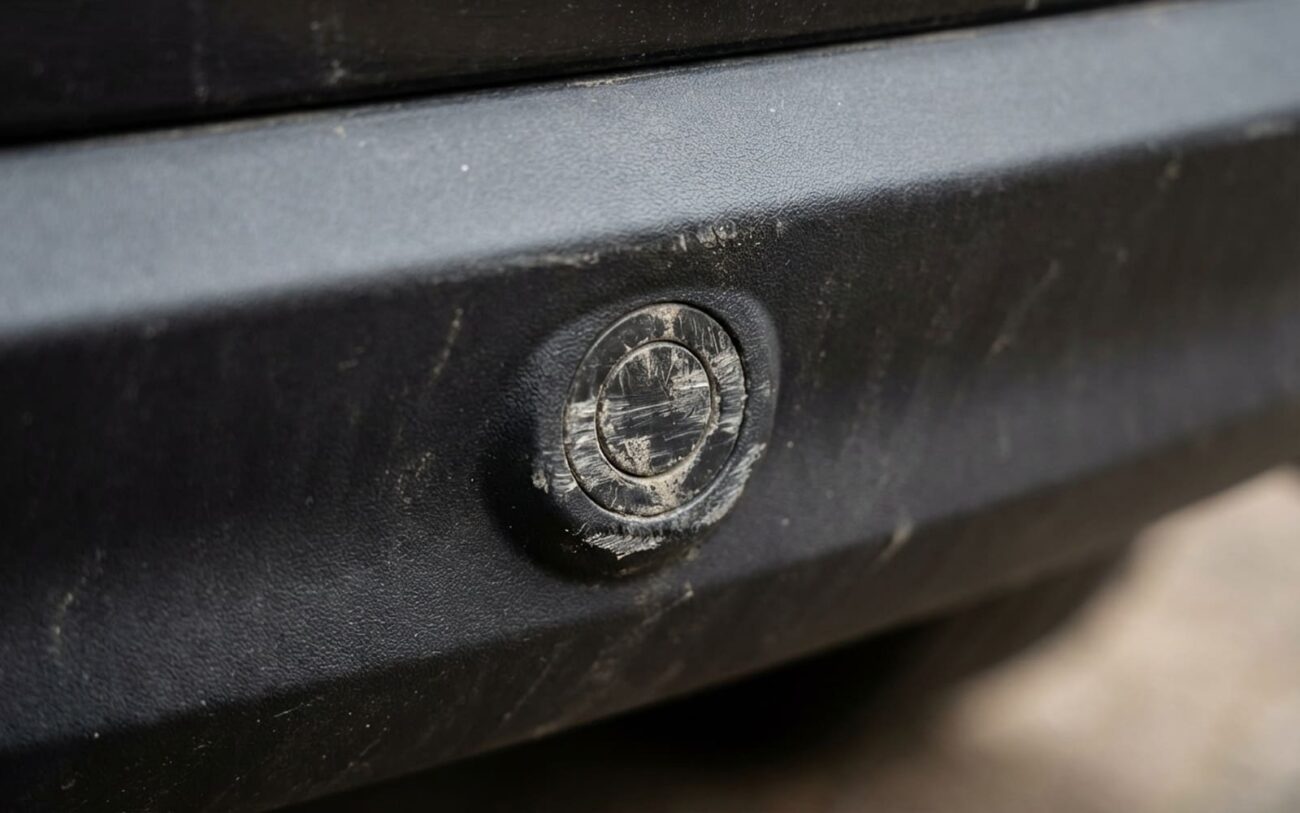
Scenario 1: No space detected at all. You drive past open spots, hit the button, and nothing. No highlight, no beep, no prompt. Most drivers assume it’s too tight—but I’ve seen this on gaps that were 2 meters longer than the car. Before blaming software, check the basics: are the sensors clean? Did someone wax over them last weekend? (Yes, that matters.) Are they cracked from a shopping cart hit? Even light grime scatters ultrasonic waves enough to blind the system.
Scenario 2: It sees the spot but wants way more room than it needs. Say your car is 4.8 meters long and it says you need 5.5 meters for parallel parking. That extra 70 cm isn’t random—it’s either a sensor alignment issue or incorrect vehicle data coded into the system. I once had a 340i with M Sport suspension coded as standard ride height. The system thought it was taller, added extra clearance, and refused smaller spaces. Fixed the FA VO code—problem gone.
Scenario 3: It starts parking, then aborts halfway. This one’s the worst. You’re halfway into the spot, the steering’s doing its thing, then suddenly: “Space too tight.” Driver’s left hanging, half-blocking traffic. Now, this can be software sensitivity—but it’s just as likely an intermittent sensor signal or a steering angle sensor that hasn’t been calibrated since the last alignment.
How I Diagnose (And What I Rule Out First)
I don’t touch ISTA until I’ve ruled out hardware. Too many shops skip straight to “update the software” and charge the customer $300 for something that could’ve been fixed with a paper towel.
Here’s my actual process:
Step 1: Visual inspection of all ultrasonic sensors. Front and rear bumpers. Look for cracks, yellowing, wax buildup, or misalignment from previous bumper work. I’ve had cases where a sensor was shifted 10 degrees after a minor fender bender—enough to throw off distance readings by 15–20 cm. Clean them with isopropyl alcohol, not window cleaner. Residue matters.
Step 2: Run the USS test plan in ISTA. This shows live data from each sensor. Watch for dropouts, inconsistent readings, or sensors reporting “out of range” when nothing’s in front of them. If one sensor flickers in and out, that’s your culprit—don’t waste time on software yet.
Step 3: Verify FA VO coding. Go into the head unit and pull up the vehicle order. Check wheelbase, suspension type, M package, tire size. If any of these are wrong, the Parking Assistant module is working off bad data. It’s like giving GPS wrong coordinates and wondering why you’re lost.
Step 4: Calibrate sensor aim if needed. BMW has specific targets for this—don’t eyeball it. Use the foam blocks or metal plates ISTA calls for. I’ve seen shops skip this and wonder why the update didn’t help. Bad data in = bad decisions out.
Only after all that—if the problem still persists—do I accept that it’s a software logic issue.
When It’s Actually a Software Problem
Okay, you’ve cleaned the sensors. Checked the coding. Calibrated the aim. ISTA shows clean data. And the system still won’t park in a space you know it should fit in. Now we’re talking software.
Here’s what I see most:
Overly conservative algorithms. BMW’s parking logic is designed to avoid liability, not maximize convenience. On some 2019–2021 G05 X5s, I’ve seen it demand 1.5x the car length for parallel parking—even with perfect conditions. That’s not a bug. It’s a design choice. But it feels broken when you’re trying to park in Munich.
No adaptive learning. The system doesn’t remember past successes. You’ve parked manually in tight spots a dozen times? It doesn’t care. It applies the same fixed buffer every time. This is especially noticeable on iDrive 7 and early iDrive 8 models without machine-learning modules.
Poor noise filtering. A passing motorcycle, a puddle, or a shiny surface can reflect a false echo. A better algorithm would average readings over time. But some versions treat a single spike as a solid obstacle and abort. I’ve traced this to specific REM (Rear Electronic Module) software versions—BMW fixed it in a 2022 I-Step update.
And yes, this has been confirmed in TSBs. For example, SI B 31 04 21 addressed premature aborts in X5/X7 models with Parking Assistant Professional. The fix? A software update. No parts replaced.
How I Fix It (And What Actually Works)
I-Step Update Professional Only
FA VO Coding Correction Professional Only
Operational Override Temporary / Driver-Compensation
Did It Work? Here’s How I Test
Don’t trust the “no faults” message. Test it like you’re training a new driver.
Set up a parallel spot—use cones or parked cars—that’s about 1 meter longer than the vehicle. Activate Parking Assistant Plus and let it run. Do it 2–3 times. Watch for hesitation, jerky steering, or sudden aborts. If it completes smoothly, check ISTA again: no DTCs, stable sensor data, no error logs.
After a FA VO fix, verify sensor accuracy. Park facing a flat wall. Use ISTA to read distance from front sensors, then measure with a laser. Same for the rear. Tolerance should be within ±3 cm. If it’s off, recalibrate.
And check TRSVC (Surround View) sync. If the camera overlay doesn’t match the ultrasonic warnings, you’ve got a module comms issue. Might need a reinitialization.
Is It Worth Fixing?
Here’s my honest take: if your BMW is newer than 2020, yes—do the I-Step. These updates are routine, and BMW keeps refining the logic. On a 2023 G60? Worth every penny.
On older models? Think twice. A $350 shop visit for a feature you can work around might not make sense. I’ve had customers spend that on software, then trade the car a year later. Could’ve just used the sensors manually and saved the cash.
If there’s no known TSB for your issue, and ISTA shows everything’s in order—chances are, it’s just how the system was built. And no amount of flashing will change that.
How to Keep It Working
Long-Term Reliability Tips
-
Get software updates during every service. These aren’t just infotainment tweaks—many include behind-the-scenes refinements to parking logic, sensor filtering, and path planning.
-
Wipe the sensors when you wash the car. Takes 10 seconds. Prevents false faults. I do it myself—even on my personal car.
-
After any bumper repair, insist on sensor recalibration. Not “check alignment”—demand the full ISTA procedure with targets. A 2-degree tilt changes everything.
-
Monitor behavior over time. If it starts failing only in rain or on uneven curbs, it’s likely environmental—not a system failure. But if it gets worse across all conditions, dig in.
