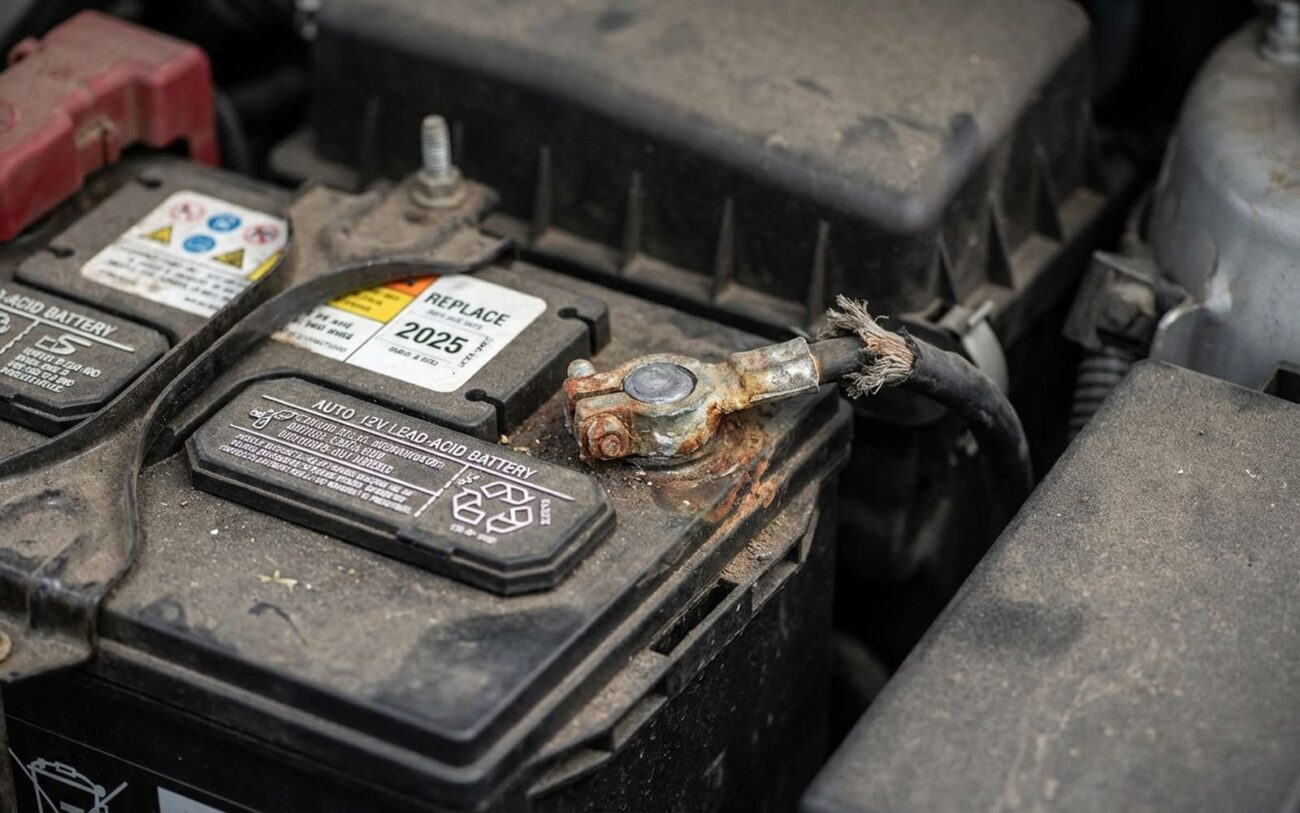
Look, if you’re swapping out your 12-volt battery every year or two, stop blaming the battery. Seriously, it’s almost never the battery’s fault. A good quality AGM or even a standard lead-acid battery should easily give you four to six years, sometimes more, under normal driving. If yours is dying prematurely, something else in the car’s electrical system is actively killing it. The battery? That’s just the messenger, showing you there’s a deeper problem.
The Symptoms I See Every Day
Most folks notice the obvious one first: you walk out to a completely dead car after it’s been sitting overnight. No dash lights, no starter click, just silence. You jump it, it fires right up, runs fine for a few days, and then the whole dance repeats. What’s happening there is battery damage. Every time that voltage drops below about 11.6 volts, the lead plates inside the battery start to sulfate. Do that enough times, and the battery loses its capacity permanently. Even a full charge won’t bring it back to full health.
But sometimes, it’s more subtle. I often see cars come in with what I call “chronically low resting voltage.” The owner thinks the battery is just old. Here’s how to spot it: after a good long drive, shut the car off, give it an hour to settle, and then check the battery voltage. If it’s hanging around 12.2-12.3V instead of climbing up to 12.6V or higher, that’s a red flag. It tells me the charging system isn’t doing its full job. This constant undercharging looks exactly like a dying battery, but it’s not. And in today’s cars, that persistent low voltage can wreak havoc, stopping control modules from waking up properly – sometimes they call it a “bricked” state. Worse, it can really stress out sensitive electronics like the Battery Management System (BMS) or the DC-DC converter, leading to even bigger, more expensive failures down the road.
Before You Panic: Check the Simple Stuff
Before we start tearing into complex electronics, let’s get real. A lot of times, what looks like a major electrical system fault is actually something simple. I’ve seen countless hours wasted because someone jumped straight to “design flaw” when it was just a bad battery, corroded cable, or a weak alternator. You gotta rule out the basics first. Here’s my quick checklist:
-
Test the Battery Properly: Yes, even though I just said it’s rarely the root cause, a bad battery can certainly mimic other problems. Fully charge it externally, then let it sit for 24 hours. If the voltage drops significantly (below 12.4V), you’ve got a bad cell. Replace it, then re-evaluate. Don’t skip this.
-
Inspect Terminals and Cables: Corroded battery terminals, loose ground straps, or even a frayed positive cable can cause high resistance. That means the battery isn’t getting a full charge, or it can’t deliver power properly. Clean ’em, tighten ’em, replace if damaged. This is a free check, so do it.
-
Check the Alternator (Conventional Cars): In older vehicles or non-hybrids, a weak alternator is still a common culprit. With the engine running and accessories on, you should see 13.8-14.8V at the battery terminals. If it’s low, or wildly fluctuating, your alternator might be on its way out. For hybrids and EVs, this isn’t a factor – they use a DC-DC converter instead.
-
Drive Belt Condition: Sounds basic, but a loose or worn drive belt can mean your alternator isn’t spinning fast enough to charge the battery. Quick visual check.
When It’s Deeper: The System-Level Battery Killers
Alright, you’ve checked the easy stuff, and everything seems fine, but your battery is still dying. This is where the real diagnostic work begins. We’re talking about issues baked into the vehicle’s design or its complex electronics – not user error, not wear and tear, but inherent flaws that turn normal operation into a battery killer. These are the four main culprits I chase down in my shop:
1. Chronic Parasitic Drain
Every car has a small key-off draw – usually 20-50mA (milliamps) is normal while the control modules “go to sleep.” But if a module, say your infotainment system, telematics unit, or even a body control module, fails to shut down properly, it can pull 100-500mA continuously. That’s enough to completely drain a healthy battery in 24-48 hours. I see these failures often due to internal circuit faults, corrupted firmware, or sometimes just water intrusion into a module. Some models are more prone to this than others, especially vehicles with always-on connectivity features. On 2015-2017 F-150s, for example, I’ve seen faulty telematics units cause this exact issue weekly.
How I Test for It: This is a classic parasitic draw test. Disconnect the negative battery terminal and connect a digital multimeter in series, set to read amps. Then, you wait. Modern cars can take anywhere from 20 to 90 minutes for all modules to fully “sleep.” Once it settles, if your draw is consistently above 50mA, you’ve got a problem. From there, it’s a methodical process of pulling fuses one by one until the draw drops. That tells you which circuit is the culprit. Then you dig into the wiring diagrams to pinpoint the specific module.
2. Battery Management System (BMS) Software Issues
Modern vehicles, especially hybrids, EVs, and stop-start systems, rely heavily on software to manage battery charging. If that BMS isn’t programmed correctly to trigger a full recharge after, say, a bunch of short commutes, the battery simply never gets topped off. I’ve seen this a lot in certain Toyota hybrids – short trips prevent the high-voltage system from engaging the DC-DC converter long enough to fully charge the 12V battery. There are known service bulletins (TSBs) for specific model years addressing this; often, a software update to the Power Management ECU is all it takes. It’s not a hardware failure; it’s a logic gap in the code. A scan tool capable of reading BMS parameters and charge cycles is essential here.
How I Test for It: First, I check for any relevant TSBs. If there’s a known software issue, that’s often the fix. Beyond that, I use a professional scan tool to monitor the charging voltage and current, as well as the BMS’s reported state-of-charge over time. I’ll also verify the charging voltage – it should be in the 13.8-14.8V range under load. If it’s consistently low, but the alternator (or DC-DC converter) tests good, then I suspect the BMS isn’t commanding a proper charge.
3. DC-DC Converter Failure (Hybrids & EVs)
In electric and hybrid vehicles, you don’t have an alternator. Instead, a DC-DC converter takes power from the big high-voltage battery and steps it down to charge the little 12V auxiliary battery. When this unit starts to fail – maybe due to heat, moisture, or internal component wear – it delivers inconsistent or simply no output to the 12V battery. So, even if your main traction battery is full, your 12V battery slowly drains. On vehicles like the Toyota Prius, this can happen independently of the main inverter’s health, even though they’re often housed in the same high-voltage assembly. I’ve seen BMW i3s and early Teslas come in with this exact problem.
How I Test for It: This absolutely requires a good scan tool. I’ll monitor the DC-DC converter’s output voltage and current in live data, both with the key on and key off (if applicable for trickle charging). It needs to match OEM specifications. If the output is low or intermittent, even when the high-voltage system is active, that converter is likely toast. You’ll also want to check for any fault codes related to the high-voltage system or charging.
4. Intelligent Battery Sensor (IBS) Faults
The IBS is a smart little sensor, usually mounted right on the negative battery terminal. It monitors voltage, current flow, and temperature, then feeds all that data to the BMS. This is how the car knows exactly when and how much to charge the battery. If that sensor fails or drifts out of calibration, it can send completely wrong information about the battery’s state-of-charge. The system might then undercharge the battery, thinking it’s full when it’s nowhere near it. I’ve diagnosed more than a few “phantom drains” that turned out to be a bad IBS sending garbage data. It’s a classic case of the system making perfectly correct decisions based on faulty inputs. BMWs and many European models use these extensively.
How I Test for It: I’ll use a scan tool to look at the IBS’s live data: reported voltage, current, and temperature. I’ll compare these readings to what my multimeter shows directly at the battery. If there’s a significant discrepancy, or if the IBS data looks erratic, that sensor is suspect. Sometimes, a simple recalibration with the scan tool can fix it, but often it’s a replacement job.
My Approach to Repair: What It Takes
Let’s be clear: these aren’t your typical DIY fixes. We’re talking about specialized tools, access to manufacturer data, and a solid understanding of vehicle electrical systems. And when high-voltage systems are involved, safety isn’t just a suggestion – it’s non-negotiable.
BMS Software Updates & Calibrations Professional Only
DC-DC Converter or IBS Replacement Professional Only
Parasitic Drain Diagnosis & Module Replacement Professional-only to DIY-feasible
Battery Maintainer Use Temporary / Last-Resort
Post-Repair Validation: Don’t Just Assume It’s Fixed
This is critical. Never, ever assume the job is done just because you replaced a part or flashed some software. You absolutely have to verify that the system is behaving exactly as it was designed to. Otherwise, you’ll be seeing that car back in your bay, or worse, the customer will be stranded again.
After a software update, I’ll put the vehicle through a normal driving cycle – some short trips, maybe a longer one, then let it sit overnight. The next morning, before starting, I’ll recheck that resting voltage. It needs to be at least 12.6V. Then, back on the scan tool to confirm the BMS is logging correct charge cycles and that no pending or historical codes have popped back up.
For any hardware repairs, I repeat the parasitic draw test. That draw must drop below 50mA after the sleep period. I also check live data: the alternator or DC-DC converter output should meet OEM specs (for example, 14.5V for AGM batteries) even when you throw on loads like headlights, the blower fan, and A/C. If that voltage drops below 13.5V under load, you’ve still got an unresolved issue, or maybe even a new problem.
And let me tell you, the right tools are non-negotiable here. You need a quality digital multimeter and a professional-grade scan tool. Not a cheap code reader, but something capable of reading generator status, IBS data, and all those BMS parameters. Without them, you’re just guessing, and that’s no way to run a shop or fix a car.
The Money Talk: Is It Worth the Fix?
Alright, let’s get down to brass tacks: cost and risk. These are just estimates, of course – prices will bounce around depending on where you are, labor rates, and parts availability. But you’ve got to weigh the repair cost against the car’s actual value. My rule of thumb? If the fix is going to be more than 40% of what the car is worth, especially on an older economy car, it probably doesn’t make financial sense to sink that money into it.
Here’s a rough idea of what you might be looking at:
-
BMS Software Update: If you’re doing it yourself and buying a J2534 tool and software access, you might spend $0-$300. A shop will typically charge $100-$200. Success rate is high, usually over 90%, and the risk is minimal if done right.
-
DC-DC Converter Replacement: This is a big one. Parts alone can be $500-$1,000 for OEM. A shop will likely charge $1,200-$2,200, given the labor and high-voltage safety requirements. Success is high if the diagnosis is correct, but improper handling means big risks – high-voltage faults, no charging, or even collateral damage to other systems.
-
Parasitic Drain Diagnosis & Module Replacement: The parts cost here can vary wildly, from $200 to over $1,000 depending on which module is bad. Shop costs typically run $500-$1,500+. The success rate is medium to high, but the biggest risk is replacing the wrong module, which just wastes money and leaves the underlying drain.
Sometimes, you run into an intermittent network issue that just defies diagnosis, no matter how many hours you throw at it. If you’re replacing batteries every 18 months and the real root cause just won’t show itself, it might honestly be time to consider if that car is still worth the headache and the money. I’ve had to tell customers that more than once.
Keeping Your Battery Alive: My Prevention Tips
If you’re driving a model known for 12V battery issues – and let’s be honest, that’s a lot of hybrids, luxury brands, and stop-start vehicles these days – being proactive is absolutely essential. A little prevention goes a long way, and it can save you from being stranded or shelling out for expensive control modules.
-
Keep that Software Updated: Always ask your shop about technical service bulletins related to charging or battery management. Manufacturers frequently issue updates for reduced power or charging issues that are tied directly to BMS logic. It’s an easy fix if you know about it.
-
Use the Right Battery Type: This is huge. If your car came with an AGM or EFB battery, you must replace it with the same type. Don’t try to save a few bucks by putting in a standard flooded battery. The charging voltage profiles are completely different, and using the wrong type will lead to either undercharging or overcharging, both of which will kill your new battery prematurely.
-
Monitor Voltage Monthly: Get in the habit of checking your battery voltage. Do it before starting the car, after it’s sat overnight. Anything below 12.4V is a warning sign that something isn’t right. Many modern cars actually display this in a hidden menu on the dash – find out how to access it for your vehicle.
-
Don’t Ignore Warnings: If your dash lights up with “Check Charging System” or “Battery Not Charging,” don’t just hope it goes away. These aren’t always traditional alternator issues; they could be pointing to a DC-DC converter failure or an IBS fault, especially in European models or those with “smart” alternators. Get it checked out.
Catching these problems early is the best way to avoid being stranded and, more importantly, to prevent collateral damage to those expensive control modules. In today’s cars, the 12V battery isn’t just for cranking the engine – it’s the absolute heart of the entire electrical system. Treat it with the respect it deserves.
