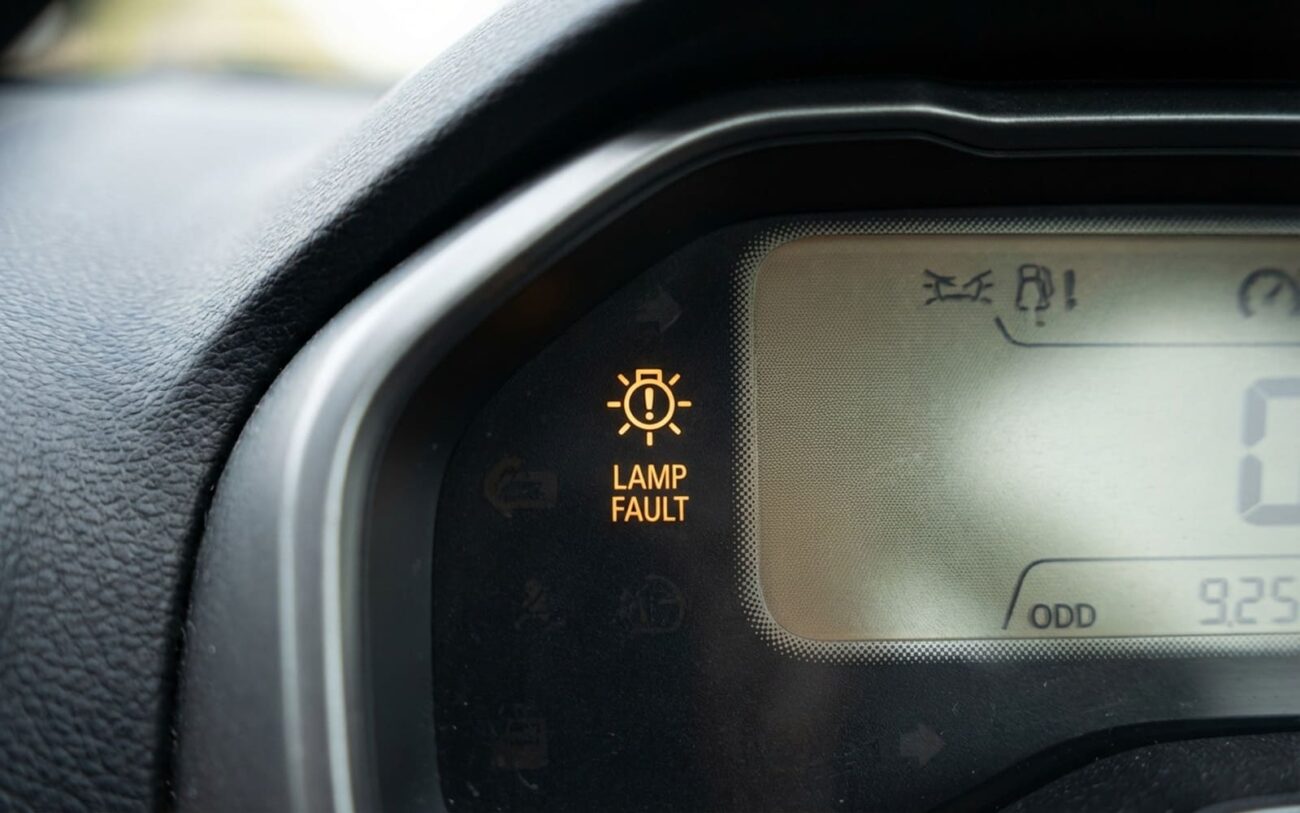
You’re driving down the road, everything looks fine, all your lights are working—tail lights, brake lights, turn signals—and yet that damn “lamp fault” warning is lit up on the dash. I’ve seen this a hundred times. And no, your car isn’t broken. It’s not even lying. What’s happening is the system’s brain thinks something’s wrong—even when it’s not. And if you don’t know how these systems work, you’ll chase ghosts for hours.
The Real Culprit: It’s Not the Bulb
Modern cars don’t just “see” if a bulb is out. They measure current. The Body Control Module (BCM), or sometimes a separate bulb outage sensor, monitors how much electricity each lighting circuit pulls. A working bulb draws a predictable amount. Too little? That’s a high-resistance fault. Too much? Could be a short. Either way, warning light.
But here’s the kicker: the bulb can be bright as hell and still trigger the warning. Why? Because the system isn’t fooled by light output—it’s reading current. And if that current is off—even slightly—the BCM throws a code.
Start Here: Rule Out the Obvious
Before you go blaming the BCM or swapping modules, check the wiring. I don’t care if the light looks fine—check the circuit under load. A loose connector or corroded socket might let enough current through to light the bulb, but not enough to satisfy the BCM’s expected range.
If the warning only comes on when you hit the brakes, that’s not a BCM failure. That’s a brake light circuit problem. Could be a worn switch, a pinched wire in the harness near the pedal, or a bad ground at the tail light housing.
Grab a digital multimeter and do a voltage drop test on the suspect circuit while it’s active. If you’re losing more than 0.5V between the battery and the bulb socket, the problem isn’t the sensor—it’s the wiring.
| Symptom | Likely Internal Issue | Common External Cause | How to Diagnose |
|---|---|---|---|
| “Lamp Fault” with all lights working | BCM lamp monitoring circuit failure or corrupted calibration | Corrosion, loose connector, poor ground | Use a factory-level scan tool to read live current values. If readings are normal but the warning persists, suspect the BCM. |
| Warning only during brake or turn signal use | Failed current-sensing channel in BCM | Worn switch, damaged harness, bad socket | Perform voltage drop test under load. >0.5V drop = wiring issue. Also check switch resistance. |
When It Actually Is the BCM or Sensor
After you’ve ruled out wiring and connections, and the lights are confirmed working under load, then—and only then—do you look at the BCM or bulb outage sensor.
These things fail. Not often, but they do. And when they do, it’s usually one of three things:
-
Thermal stress cracking solder joints on the circuit board—common near high-current drivers.
-
Moisture getting into the BCM housing, especially in older cars or flood-damaged vehicles. Corrosion on traces kills signal paths.
-
Firmware glitches. The BCM stores expected current values for each circuit. Power surge during jump-starts or failed software updates can corrupt that data.
If you’re dealing with a standalone bulb outage sensor—common on early 2000s VWs, Audis, and some BMWs—this is a DIY-FEASIBLE job. Unplug the battery, pull the kick panel, swap the module, reconnect. Just make sure you get an OEM unit. Aftermarket ones often have slightly off resistance values and can cause more false warnings.
But if the monitoring is built into the BCM—and it is on most post-2010 vehicles—you’re in for a full replacement and reprogramming. And no, you can’t just plug in a used BCM and drive away.
Don’t Disable the Warning
Some techs will tell you to just disable the lamp monitoring function with a scan tool and clear the code. Yeah, that’ll make the warning go away. But you’re also blinding yourself to real failures.
Imagine your brake light burns out. No warning. You don’t know. Next thing you know, someone rear-ends you because they didn’t see you slowing down. And good luck passing inspection in states like Texas or New York—phantom or not, that lamp fault will fail you.
How to Verify the Fix
After replacing a sensor or BCM, don’t just start the car and walk away. Test everything:
-
Parking lights, headlights (low and high beam)
-
Fog lights (if equipped)
-
Brake lights (use a helper or prop the pedal)
-
Turn signals and hazards (left and right)
-
Reverse lights
-
Interior lights—dome, map, trunk
Then, connect a professional scan tool. Check for active or pending codes in the BCM. Clear them, cycle the ignition, and rescan. If the code comes back, the fault isn’t fixed. Could be a bad ground you missed, or incomplete programming.
And if the car has advanced lighting—like matrix LED or adaptive beams—make sure the camera and radar functions still work. A misprogrammed BCM can kill automatic high beams or cornering lights even if the basics are fine.
Cost: Know What You’re Paying For
Here’s the reality:
| Repair Type | DIY Cost | Shop Cost | Success Rate | Risks |
|---|---|---|---|---|
| Standalone Sensor Replacement | $50 – $150 | $200 – $400 | Very High — near 100% if wiring is good | Misdiagnosis if real issue was corrosion or loose connector |
| BCM Replacement & Programming | $300 – $1000+ | $500 – $1500+ | High — if programmed correctly | Immobilizer failure, lost key fob, disabled accessories |
The labor cost on BCM jobs isn’t about swapping a box—it’s about programming, calibration, and system validation. That’s where the money goes.
And before you drop $1,200 on a BCM, ask yourself: is this car worth it? If the repair is 40% of the vehicle’s value, maybe it’s time to reconsider. But remember—many states require functional lights for inspection. You can’t just ignore it.
Prevention: Keep the System Happy
Most BCM failures I see aren’t random. They’re caused by voltage spikes from a failing alternator or bad regulator. I’ve had more than one customer come in with a dead BCM—turned out the charging system was putting out 16.8 volts. That’s not just bad for the battery. It fries sensitive electronics.
-
Keep battery terminals clean and tight. Voltage drop causes erratic signals.
-
Inspect sockets and connectors—especially on trailers or high-use circuits.
-
Use the right bulbs. Upgrading to LED? Make sure they’re CANbus-compatible. If not, add load resistors. Wrong current draw = false warnings.
-
Don’t ignore intermittent warnings. A lamp fault that blinks when you brake? That’s a loose connection waiting to fail completely.
And finally—modern lighting isn’t standalone. It’s part of the CAN bus network. A faulty body height sensor or a glitch in the auto-leveling system can sometimes throw a phantom lamp fault. Always diagnose the whole system, not just the symptom.
