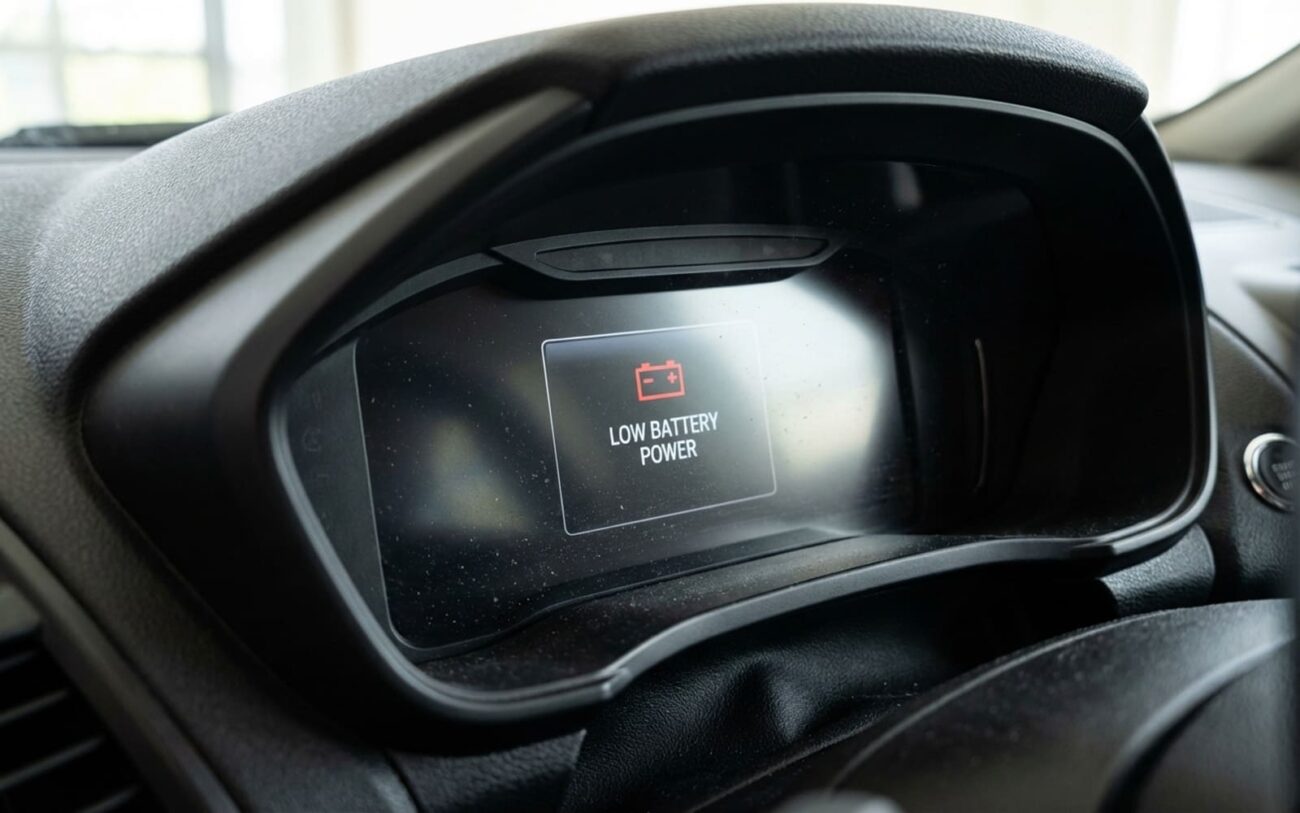
You’re driving down the highway at night and suddenly—your headlights cut out. No flicker, no warning, just darkness. But the engine’s still running. Radio’s on. Everything else seems fine. What the hell just happened?
I’ve seen this exact scenario hundreds of times in my shop over the last 25 years. It’s not a bulb, it’s not a fuse, and it’s definitely not “just one of those things.” This is your car’s Body Control Module (BCM) pulling an emergency move: load shedding. The system voltage dropped low enough that the BCM killed non-essential loads—like headlights—to keep the engine alive. And if you ignore it? Next time, the engine won’t restart.
It’s Not a Glitch—It’s Survival Mode
Modern vehicles don’t just “run on gas.” They run on stable 12V power. When that voltage sags below ~11.5V, modules start dropping offline. The BCM sees this and says: “We’re bleeding out—cut the limbs to save the torso.” Headlights go first because they’re one of the biggest continuous draws on the system. On a car with LED or xenon lights? That’s 60–100 watts per side—easily 15–20 amps total.
I had a 2018 Passat come in last month—same symptom. Owner thought it was a wiring issue. But we pulled the data: system voltage had dropped to 10.8V under load. BCM responded exactly as designed. No fault codes? That’s normal. This isn’t a failure—it’s a protection protocol.
And here’s the kicker: the engine keeps running because fuel pump and ignition get priority. But if voltage keeps dropping, even those will shut down. Once that happens, you’re stranded. That headlight blackout? That’s your only warning.
Don’t Just Swap the Battery—Test It
Yeah, the battery is usually the culprit. But I’ve replaced plenty of perfectly good batteries because someone jumped to conclusions. A weak alternator, corroded ground strap, or failing voltage regulator can mimic battery failure. And if you don’t test, you’ll keep coming back to this problem.
Start simple: check the basics. Terminals clean? Tight? No corrosion on the hold-down or tray? I’ve had cars come in with batteries rattling around—vibration damages internals fast. Fix that first.
Then test properly. Not just voltage at rest. That tells you nothing useful. You need to see how the system behaves under load.
| Symptom | Likely Culprit (Battery) | Common External Mimics | Definitive Test to Confirm |
|---|---|---|---|
| Headlights shut off, engine still runs. | Internal cell failure—open circuit or high resistance—causing voltage collapse under load. | Failed alternator diodes, loose terminals, poor ground connections, CAN bus errors. |
Run a loaded voltage test. With engine running, turn on high beams, rear defroster, blower motor max. Measure at battery terminals. If voltage drops below 11.5V and doesn’t recover, suspect the battery. Confirm with a conductance tester after full charge. |
| System-wide resets, flickering cluster. | Severe sulfation—battery can’t stabilize voltage during accessory use. | Bad alternator output, corroded ground straps, high-resistance connections. |
Check resting voltage (≥12.6V). Start engine—charging should be 13.5–14.8V at battery. If charging is good but voltage sags under load, battery is weak. Do a 3-minute charge acceptance test at 1500 RPM—if voltage doesn’t rise steadily, battery isn’t holding charge. |
I use a Midtronics conductance tester in my shop. It’s not perfect, but it’s better than guessing. And always, always test at the battery terminals—not the jump-start post under the hood. That’s too far from the source. Resistance in the cable can give you false readings.
What Actually Dies Inside the Battery?
A battery reading 12.6V at rest but collapsing under load? That’s not “weak”—it’s broken. And here’s what’s really going on inside.
Lead-acid batteries—especially AGM types used in start-stop vehicles—degrade in predictable ways. In hot climates (looking at you, Texas and Arizona), plate corrosion accelerates. Active material sheds from the grids and settles at the bottom. Eventually, it builds up enough to short the plates. Sulfation? That’s the big one. If a battery sits below 12.4V for hours, sulfate crystals harden and won’t re-dissolve. That kills capacity.
And internal connectors between cells? They corrode. I’ve seen batteries where one cell is completely open—no continuity. That’s why voltage collapses instantly under load. Surface charge fools you into thinking it’s okay.
Physical abuse matters too. A loose hold-down lets the battery bounce around. On rough roads, that can warp plates or cause internal shorts. I’ve torn open more than one battery that failed at 18 months—turns out the clamp was never tightened at the factory.
And don’t forget the charging system. A smart alternator with a bad voltage regulator can overcharge (boiling off electrolyte) or undercharge (keeping the battery in a constant state of partial charge). Both kill AGM batteries fast.
How to Fix It—Right
[DIY-FEASIBLE] Replace a Confirmed Bad Battery
If testing confirms the battery is dead—low CCA, failed conductance, open cell—replace it. No shortcuts.
You’ll need: a digital multimeter, OBD-II memory saver (to keep radio, ECU, and window presets), terminal brush, proper wrenches (usually 10mm or 13mm), and a new battery that matches OEM specs. For start-stop vehicles, that means AGM or EFB—don’t even think about using a cheap flooded battery.
Procedure: Plug in the memory saver. Disconnect negative first—always. Then positive. Remove hold-down, pull old battery, clean tray and terminals. Install new battery, secure hold-down, reconnect positive first, then negative.
Torque matters: 5–8 Nm for side terminals, 10–15 Nm for top posts. Overtightening cracks the post; undertightening causes resistance and heat. I’ve seen melted terminals from loose connections.
[TEMPORARY / LAST-RESORT] Recover a Deeply Discharged Battery
If the battery was healthy but drained—say, from a dome light left on—you might save it. But be careful.
A battery below 10.5V risks permanent damage. Sulfation sets in fast. Don’t jump-start it and drive off. That doesn’t recharge it—it just stresses the alternator.
Instead, use a smart charger set to AGM or 5–10A repair mode. Charge for 12–24 hours. Then test with a conductance tester. If it doesn’t hit 80% of rated CCA, replace it. This only works if you know the battery was good before the drain.
Did It Actually Work? Test It.
Swapping the battery isn’t the end. You have to prove the system is healthy.
Start the engine. Turn on everything: high beams, blower max, rear defroster, heated seats. Watch the headlights. If they dim or flicker, something’s still wrong.
Check voltage at the battery terminals. Should stay above 13.0V at idle with all loads on. If it drops below 12.6V, the alternator isn’t keeping up—or there’s still a drain.
Wait 24 hours. Then run a conductance test on the new battery. Input correct CCA and temperature. If it fails, either the battery is defective or there’s an ongoing issue.
And if your car has smart charging—BMW, Mercedes, VW, most start-stop vehicles—you must register the new battery. Without it, the alternator won’t charge properly. Some models will even re-trigger load shedding until registration is done. It’s not optional.
Is It Worth Fixing?
| Repair Type | DIY Cost | Shop Cost | Success Rate | Secondary Risk if Failed |
|---|---|---|---|---|
| Battery Replacement | $150–$300 (battery only) | $250–$450 |
~99% (when diagnosis is correct) |
Improper installation can damage BCM or alternator. Using non-AGM in AGM-specified car causes charging faults, early failure, or persistent battery-saving mode. |
The shop cost includes labor, registration, and proper disposal. On modern cars, skipping registration is a fast track to another failure in six months.
And if the repair costs 30% or more of the car’s value? Think hard. I had a guy spend $400 on a battery for a $1,500 Corolla. Six weeks later, the alternator died. He walked away. Could’ve put that money toward something newer.
How to Avoid This Next Time
Prevention starts with the right battery. If your car has start-stop, use AGM or EFB. End of story. A $90 flooded battery might fit, but it’ll fail in 12 months. And when it does, it takes the alternator with it.
Check resting voltage monthly. After the car sits 4–6 hours, measure at the terminals. 12.6V or higher = good. 12.4V = partial charge. 12.0V or below = investigate now.
Watch for early signs. When you start the car at night, watch the headlights. If they dim sharply and take a few seconds to come back, the battery’s struggling. That’s your window to act.
And check for parasitic drain. If the battery dies overnight repeatedly, test current draw with everything off. Should be under 50mA. I’ve found stuck infotainment modules, glove box lights, and even aftermarket trackers draining batteries at 200mA.
Oh, and one more thing: if you’ve got xenon or LED headlights, stable voltage isn’t just about convenience. Low voltage stresses ballasts and LED drivers. I’ve seen multiple VWs with failed ballasts—turns out, it was all due to a weak charging system. Fix the root cause, not the symptom.
